I'm now sharing interesting links from my Google Reader feed directly to this blog.
Check the sidebar for more. I've been trying to get this to work for a while; should result in less link posts.
.gif)
Monday, December 22, 2008

Wednesday, December 17, 2008
Hiatus explanation
Posting has been slow due to promotion + moving + love + proofing + trip to the Ngai Tahu AGM in Kaikoura + cognitive overload + gaming + learning to drive + life planning.
More later.
More later.
Tuesday, December 16, 2008
West Wing Season 6
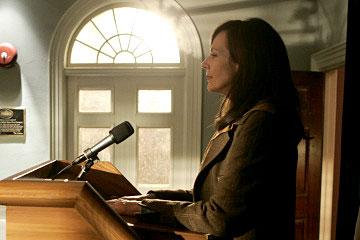
I have never seen a TV show bounce back so well. It's gone from fun (under Aaron Sorkin) to kind-of-a-slog in Season 5, to utterly compelling.
I love how, having heard spoilers for nearly everything, the show continues to surprise me with great developments for its leads. Especially CJ Cregg - she's entering a list I never knew I had: my Top 10 favourite characters.
Definitely a show to rewatch from the beginning. And I've still got the Santos-Vinnick election plot to come. In fact, check out this little article about the parallels between Santos-Vinnick and Obama-McCain. (THERE ARE SPOILERS ALL THE WAY THROUGH, BUT ESPECIALLY AT THE END)
Monday, December 15, 2008
Pop quiz: sexual chemistry
Pop quiz: name the last mainstream movie from Hollywood where there was sexual chemistry between the two leads.
Your answers will be assessed on (a) how recently it was made, and (b) how long the leads are on-screen together.
Your answers will be assessed on (a) how recently it was made, and (b) how long the leads are on-screen together.
Saturday, November 08, 2008
[The Gap] Finding people who are into what you're into
This one's for Morgue and Sean.
Colin Meek tipped me off to Twine.com. In Colin's words, it's:
This site is crucial to the development of Sean's and my new movie.
Colin Meek tipped me off to Twine.com. In Colin's words, it's:
a new social bookmarking site underpinned with semantic technology. For journalists it is Facebook on steroids.
Through Twine you can join groups (called Twines) where people post interesting links, bookmarks and resources on specific topics as diverse as the 'Financial Crisis' and 'Beer'. Based on your activity and items you have bookmarked, the site 'recommends' twines, connections with other members and other items people have saved.
This site is crucial to the development of Sean's and my new movie.
Wednesday, November 05, 2008
I don't care if it's repudiation or change
CNN just called Ohio.
Congratulations,President President-Elect Obama!
I will now go do something productive with my day to celebrate.
Congratulations,
I will now go do something productive with my day to celebrate.
Thursday, October 30, 2008
[Long Range Thinking] Negotiating through a complex problem (Part 3)
In 'Solving Tough Problems', Adam Kahane talks about his involvement in a negotiation about what post-apartheid South Africa would look like. Could they achieve the seemingly-impossible, and negotiate a peaceful transition in power that would lead to a prosperous country? The negotiations were held at the Mont Fleur Conference Center. What follows is part 3 of a series of direct quotes from the book:
*
The most extraordinary characteristic of the Mont Fleur process was the relaxed openness of the conversation. The team members not only spoke openly but, over the course of the meetings, changed what they said.
Open listening is the basis for all creativity - in business and engineering as much as in politics.
"[Work hard] to learn how to listen, without judging, to what the other person is trying to say-really to be there. If we listen in the normal closed way, for what is right and what is wrong, then we won't be able to hear what is possible: what might be but is not yet. We won't be able to create anything new."
The members of the Mont Fleur team had listened, not only openly, but also reflectively. When they listened, they were not just reloading their old tapes. They were receptive to new ideas. More than that, they were willing to be influenced and changed. They held their ideas lightly; they noticed and questioned their own thinking; they separated themselves from their ideas ("I am not my ideas, and so you and I can reject them without rejecting me "). They "suspended" their ideas, as if on strings from the ceiling and walked around and look at those ideas from different perspectives.
To create new realities, we have to listen reflectively. It is not enough to be able to hear clearly the chorus of other voices; we must also hear the contribution of our own voice. It is not enough to be able to see others in the picture of what is going on; we must also see what we ourselves are doing. It is not enough to be observers of the problem situation; we must also recognise ourselves as actors who influence the outcome.
Bill Torbet of Boston College once said to me that the 1960s slogan "If you're not part of the solution, you're part of the problem" actually misses the most important point about effecting change. The slogan should be, he said, "If you're not part of the problem, you can't be part of the solution." If we cannot see how what we are doing or not doing is contributing to things being the way that they are, then logically we have no basis at all, zero leverage, for changing the way things are - except from the outside, by persuasion or force.
*
The most extraordinary characteristic of the Mont Fleur process was the relaxed openness of the conversation. The team members not only spoke openly but, over the course of the meetings, changed what they said.
Open listening is the basis for all creativity - in business and engineering as much as in politics.
"[Work hard] to learn how to listen, without judging, to what the other person is trying to say-really to be there. If we listen in the normal closed way, for what is right and what is wrong, then we won't be able to hear what is possible: what might be but is not yet. We won't be able to create anything new."
The members of the Mont Fleur team had listened, not only openly, but also reflectively. When they listened, they were not just reloading their old tapes. They were receptive to new ideas. More than that, they were willing to be influenced and changed. They held their ideas lightly; they noticed and questioned their own thinking; they separated themselves from their ideas ("I am not my ideas, and so you and I can reject them without rejecting me "). They "suspended" their ideas, as if on strings from the ceiling and walked around and look at those ideas from different perspectives.
To create new realities, we have to listen reflectively. It is not enough to be able to hear clearly the chorus of other voices; we must also hear the contribution of our own voice. It is not enough to be able to see others in the picture of what is going on; we must also see what we ourselves are doing. It is not enough to be observers of the problem situation; we must also recognise ourselves as actors who influence the outcome.
Bill Torbet of Boston College once said to me that the 1960s slogan "If you're not part of the solution, you're part of the problem" actually misses the most important point about effecting change. The slogan should be, he said, "If you're not part of the problem, you can't be part of the solution." If we cannot see how what we are doing or not doing is contributing to things being the way that they are, then logically we have no basis at all, zero leverage, for changing the way things are - except from the outside, by persuasion or force.
Wednesday, October 29, 2008
[Long Range Thinking] Negotiating through a complex problem (Part 2)
In 'Solving Tough Problems', Adam Kahane talks about his involvement in a negotiation about what post-apartheid South Africa would look like. Could they achieve the seemingly-impossible, and negotiate a peaceful transition in power that would lead to a prosperous country? The negotiations were held at the Mont Fleur Conference Center. What follows is part 2 of a series of direct quotes from the book:
*
The first brainstorming exercise produced 30 stories. The team combined these and narrowed them down to nine for further work, and set up for some teams to flesh out the scenarios along social, political, economic, and international dimensions. The subteams worked from September through December, when the whole team reconvened at Montt Fleur for a second workshop.
They first addressed in nine scenarios in more depth and then narrowed the field to four that they thought, given the current situation in the country, were the most plausible and important.
After that workshop, the team went back to their own organisations and networks to test these four scenarios. At a third workshop, in March 1992, the participants reviewed and refined the write-ups of the final scenarios and agreed how they would be published and disseminated.
Finally, in August, the team held a fourth, one-day workshop to present and test the logic of the scenarios with a broader and more senior group. The team's final scenarios asked the question: How will the South African transition go, and will the country succeed in "taking off"? Each of the four stories gave a different answer and had a different message that mattered to the country in 1992.
Once the four scenarios had been agreed on, the team introduced them into the national conversation. They inserted a 25 page booklet into the leading weekly newspaper, arranged for the work to be discussed in the media, and distributed a cartoon video of the four stories. Most importantly, they ran more than 100 workshops for leadership groups of their own and other influential political, business and civic organisations, where the four scenarios were presented and debated.
*
The first brainstorming exercise produced 30 stories. The team combined these and narrowed them down to nine for further work, and set up for some teams to flesh out the scenarios along social, political, economic, and international dimensions. The subteams worked from September through December, when the whole team reconvened at Montt Fleur for a second workshop.
They first addressed in nine scenarios in more depth and then narrowed the field to four that they thought, given the current situation in the country, were the most plausible and important.
After that workshop, the team went back to their own organisations and networks to test these four scenarios. At a third workshop, in March 1992, the participants reviewed and refined the write-ups of the final scenarios and agreed how they would be published and disseminated.
Finally, in August, the team held a fourth, one-day workshop to present and test the logic of the scenarios with a broader and more senior group. The team's final scenarios asked the question: How will the South African transition go, and will the country succeed in "taking off"? Each of the four stories gave a different answer and had a different message that mattered to the country in 1992.
Once the four scenarios had been agreed on, the team introduced them into the national conversation. They inserted a 25 page booklet into the leading weekly newspaper, arranged for the work to be discussed in the media, and distributed a cartoon video of the four stories. Most importantly, they ran more than 100 workshops for leadership groups of their own and other influential political, business and civic organisations, where the four scenarios were presented and debated.
Tuesday, October 28, 2008
[Long Range Thinking] Negotiating through a complex problem (Part 1)
In 'Solving Tough Problems', Adam Kahane talks about his involvement in a negotiation about what post-apartheid South Africa would look like. Could they achieve the seemingly-impossible, and negotiate a peaceful transition in power that would lead to a prosperous country? The negotiations were held at the Mont Fleur Conference Center. What follows are direct quotes from the book:
*
The teams at Mont Fleur started off in mixed small groups, brainstorming possible scenarios for South Africa over the decade ahead. I asked them to talk not about what they or their party wanted to happen - their usual way of talking about the future - but simply about what might happen, regardless of what they wanted.
Each small group could present back to the whole group any story that day they wanted, as long as they could argue that it was logical and plausible. The listeners in the plenary were not permitted to shout down the story with "That couldn't happen" for "I don't want that to happen." They could only ask "Why would that happen?" or " What would happen next?"
The team found this scenario came to be fabulously liberating. They told stories of left-wing revolution, right-wing revolts, and free-market utopias. They told some politically incorrect stories, and also rejected as implausible some politically correct stories.
These scenario exercise also encouraged openness and reflectiveness. The scenarios were what if stories to play with, not predictions or proposals to sell. They emphasised multiple views about what might happen, rather than a single story about what would or should happen. They dealt with dynamic complexity because they addressed the whole situation in terms of causes and effects; with generative complexity because they addressed ways the future might be different from the past; and with social complexity because they created space not just for one "official future" but for many perspectives. Above all, they articulated links between the choices that the team members and their fellow citizens would make and the way in which the future would unfold.
(SJH: It appears that this exercise took place over a few days)
The first brainstorming exercise produced 30 stories. The team combined these and narrowed them down to nine for further work, and set up for some teams to flesh out the scenarios along social, political, economic, and international dimensions. The subteams worked from September through December, when the whole team reconvened at Montt Fleur for a second workshop.
*
I've broken this description of the Mont Fleur process into a series of posts. The next one will be up tomorrow.
*
The teams at Mont Fleur started off in mixed small groups, brainstorming possible scenarios for South Africa over the decade ahead. I asked them to talk not about what they or their party wanted to happen - their usual way of talking about the future - but simply about what might happen, regardless of what they wanted.
Each small group could present back to the whole group any story that day they wanted, as long as they could argue that it was logical and plausible. The listeners in the plenary were not permitted to shout down the story with "That couldn't happen" for "I don't want that to happen." They could only ask "Why would that happen?" or " What would happen next?"
The team found this scenario came to be fabulously liberating. They told stories of left-wing revolution, right-wing revolts, and free-market utopias. They told some politically incorrect stories, and also rejected as implausible some politically correct stories.
These scenario exercise also encouraged openness and reflectiveness. The scenarios were what if stories to play with, not predictions or proposals to sell. They emphasised multiple views about what might happen, rather than a single story about what would or should happen. They dealt with dynamic complexity because they addressed the whole situation in terms of causes and effects; with generative complexity because they addressed ways the future might be different from the past; and with social complexity because they created space not just for one "official future" but for many perspectives. Above all, they articulated links between the choices that the team members and their fellow citizens would make and the way in which the future would unfold.
(SJH: It appears that this exercise took place over a few days)
The first brainstorming exercise produced 30 stories. The team combined these and narrowed them down to nine for further work, and set up for some teams to flesh out the scenarios along social, political, economic, and international dimensions. The subteams worked from September through December, when the whole team reconvened at Montt Fleur for a second workshop.
*
I've broken this description of the Mont Fleur process into a series of posts. The next one will be up tomorrow.
Monday, October 27, 2008
[Long Range Thinking] Upcoming Articles
Here's some of the stuff I want to tackle soon:
- Profile James Hanson
- Profile Valev Smil
- Investigate the 100 months movement
Publish more notes from Solving Tough Problems by Adam Kahane- Discuss why long-range thinking could be a bad thing
- Summarise the WWF (wildlife, not wrestling) report, 'Weathercocks and Signposts'
- Summarise 'Plan B'
- Research VBN theory (Gardner and Stern)
- Conduct some polarity management between climate change deniers and believers
Sunday, October 26, 2008
[Long Range Thinking] An initial summary of the issues with LRT
Here's a summary of some of the important concepts I've been writing about for the last week or so. I'm trying to articulate some of the elements that make it more difficult for people to think long range:
The 'timeline' is the length of time a person is comfortable making plans for. A gambling addict can have a timeline of between 30 seconds and a couple of minutes. "Where's the next $2 coin for the pokies coming from?"
The 'responsibility' is how much action do you personally need to take, or think you should take, vs. how much action you think everyone else is taking.
The 'scope' is the limits of how complex a situation a person is comfortable making plans about. Many people are daunted by the scope of an issue like climate change. There are many variables involved, including a mass of scientific data to assess and reinterpret into terms intelligible to you, decisions to make about likely scenarios, and a global ecosystem to try and visualise. It is a complex problem.
In 'Solving Tough Problems', Adam Kahane defines three types of complexity:
- Dynamic - how close together are the problem's cause and effect?
- Generative - how familiar and predictable is the future suggested by the problem?
- Social - how much to the people affected by the problem agree about what's causing the problem?
Kahane suggests that to solve problems with a high dynamic complexity, you need to examine the interrelationships among the pieces and the functioning of the whole system.
If you want to solve a problem with a high generative complexity, you can't calculate the solution in advance, based on what has worked in the past; you have to work it out as the situation unfolds.
When solving problems with a high social complexity, the people involved must participate in creating and implementing the solution.
To solve a complex problem, we have to immerse ourselves in and open up to its full complexity. Dynamic complexity requires us to talk not just with experts close to us, but also with people on the periphery. Generative complexity requires that we talk not only about options that worked in the past, but also about ones that are emerging now. And social complexity requires us to talk not just with people who see things the same way we do, but especially with those who see things differently, even those we don't like. We must stretch way beyond our comfort zone.
Saturday, October 25, 2008
[Long Range Thinking] A game about climate change
Earlier this year, I spent about a week obsessed with this game:
Climate Challenge
It's a flash game where you play the president of the European Nations. Over 100 years, you must tackle climate change and stay popular enough with the voters to remain in office. It's really about the trade-offs between effective policy, electoral popularity, and earning enough money to keep the EU afloat.
For the first six days I played it, I was an ecological saviour at the cost of my policies crashing Europe into a new barbarism due to hyper-inflation.
Climate Challenge gives an entertaining intro to the feel of long-range thinking.
Climate Challenge
It's a flash game where you play the president of the European Nations. Over 100 years, you must tackle climate change and stay popular enough with the voters to remain in office. It's really about the trade-offs between effective policy, electoral popularity, and earning enough money to keep the EU afloat.
For the first six days I played it, I was an ecological saviour at the cost of my policies crashing Europe into a new barbarism due to hyper-inflation.
Climate Challenge gives an entertaining intro to the feel of long-range thinking.
Friday, October 24, 2008
[Long Range Thinking] The Wiki is up
I've created the Long Range wiki, to organise all of these thoughts. You can find it here:
Long Range
The wiki is a work-in-progress, so it may look a bit messy. My hope is that it helps me in creating some regular 'summary' posts, that'll keep the writing on track.
*
'Long Range' is my attempt to apply the lessons from my script blogging: I started to put everything onto a wiki way too late in the script blogging process, and the whole thing became quite unwieldy.
Long Range
The wiki is a work-in-progress, so it may look a bit messy. My hope is that it helps me in creating some regular 'summary' posts, that'll keep the writing on track.
*
'Long Range' is my attempt to apply the lessons from my script blogging: I started to put everything onto a wiki way too late in the script blogging process, and the whole thing became quite unwieldy.
Thursday, October 23, 2008
Useful links
I've been cleaning out the backlog from my Google Reader. Here's some stuff that survived the cull from last week and the last year:
Mint.com provides us with 30 free ebooks to learn about personal finance.
Trent at the Simple Dollar discusses how to build a master information document. This is:
Dane lists 20 things you shouldn't do when starting a business.
Jenni links to Instructables and Wikihow - two sites that tell you how to do most of the things you need to know how to do. (And happy 5th blogday, Jenni!)
David Milch (Deadwood) discusses writing.
David Simon (The Wire) gives a talk at Harvard University.
Mint.com provides us with 30 free ebooks to learn about personal finance.
Trent at the Simple Dollar discusses how to build a master information document. This is:
a guide to the executor of your estate, containing all important information not contained in the other documents and also explaining online account access and other such information, like where a safety deposit box key should be and such. This may also include personal letters to people for them to read in the event of your passing and so forth.Trent also talks about creating a silent room to enhance productivity.
Dane lists 20 things you shouldn't do when starting a business.
Jenni links to Instructables and Wikihow - two sites that tell you how to do most of the things you need to know how to do. (And happy 5th blogday, Jenni!)
David Milch (Deadwood) discusses writing.
David Simon (The Wire) gives a talk at Harvard University.
Wednesday, October 22, 2008
[Long Range Thinking] The dilemma
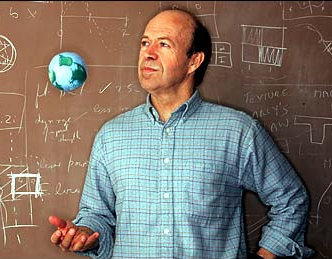
Hypothesis: People make the best decisions they can. When deciding, their short-term interests (the ones that have an immediate impact on them) usually outweigh their long-term interests.
I suspect that one's reasonably uncontroversial.
I wonder if you could say this, though: People make the best decisions they can. Under extreme circumstances people could be persuaded to think about their best interests in terms of things that will happen in their lifetime. They might possibly think about it terms of their children, and maybe maybe in terms of their grandchildren.
People who voluntarily think at the century or millenia level - like Jim Hansen or Professor Vaclav Smil - are extremely rare. What makes them different?

Tuesday, October 21, 2008
[Long Range Thinking] Types of LRT
So, what types of long-range thinking am I talking about? Here's the start of a brainstorm:
- Pressed upon you. You have a big life decision to make, and not much time to make it in. A job opportunity has come up that will require you to move cities. You've been dating for a few months and now you have to assess if it's going anywhere.
- Big picture, little person. There's stuff going on that's so big you can't solve it by yourself. And yet it's caused by the contributions of you and thousands or millions of people like you. What do you do? In fact, do you have any obligations to do anything?
- Known unknowns. You've heard about something (like climate change). You think it might require understanding, but something's stopping you or you're procrastinating.
- Unknown unknowns. Paraphrasing from Adam Kahane's 'Solving Tough Problems' again, the future's tough to predict because it can be influenced.
- Predictable. Known knowns. At the moment, you need money food and shelter to survive. How will you provide those for yourself and your family?
Monday, October 20, 2008
[Long Range Thinking] What inhibits LRT?
Hypothesis: your ability to think long-range gets better or worse depending on the situation.
In some areas of your life, you'll be great at it (finances or writing, for example), and in others you will suck (finances or writing, for example).
Pressure is probably a factor. Situations that have long-range implications but require an immediate response may lead to you not making the best decision. Pressure may inhibit long-range thinking.
... But I'm not entirely sure that this is what I mean when I talk about 'long-range'. Probably time to start unpacking that, and figuring out the different types of 'long-range thinking' there are.
Any suggestions?
In some areas of your life, you'll be great at it (finances or writing, for example), and in others you will suck (finances or writing, for example).
Pressure is probably a factor. Situations that have long-range implications but require an immediate response may lead to you not making the best decision. Pressure may inhibit long-range thinking.
... But I'm not entirely sure that this is what I mean when I talk about 'long-range'. Probably time to start unpacking that, and figuring out the different types of 'long-range thinking' there are.
Any suggestions?
Sunday, October 19, 2008
[Long Range Thinking] Why don't we recognise problems?
To paraphrase a synopsis of Stumbling onto Happiness, we're not very good at recognising what the future will be like.
To mash-up a famous quote, the problems of the future are already here. They're just not evenly distributed yet.
To mash-up a famous quote, the problems of the future are already here. They're just not evenly distributed yet.
Saturday, October 18, 2008
[Long Range Thinking] The simplest way to think about it
Understand there's a problem.
Understand what the problem is.
Understand how to solve the problem.
Understand what the problem is.
Understand how to solve the problem.
Friday, October 17, 2008
[Long Range Thinking] The Goal
The goal is to improve our ability to see problems that aren't problems yet (or that don't seem to be problems yet).
Subscribe to:
Posts (Atom)