Tuesday, March 09, 2010

Games: February

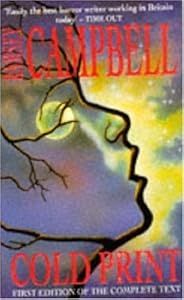
Cover of "Cold Print"Cover of Cold Print

I took UnSpeakable, the HP Lovecraft supplement for InSpectres, for a test drive with my Tuesday night group. The results for the first part of the adventure have been spectacular. As a group, we've worked together to create a mood and I've gradually been putting the characters under more and more pressure. I'm quite proud of the sense of unease I've helped create, and of my description of the abomination that Jenni's character discovered in the bedroom.

The adventure situation was inspired by a Ramsay Campbell short story from Cold Print, called - I think - Voices on the Beach. Each of the characters had a relationship with a writer, Micah Brody, who lived in a beach house on the east coast of America and had recently written them a series of disturbing messages before disappearing. Into that mix, I threw a possibly racist sheriff (Micah and his brother, portrayed by one of the players, were African-American) and some non-Euclidean geometry. Based off the players succeeding in their investigation rolls, it became clear that an invasion from another universe was underway - with the beachhead being peoples' dreams.

UnSpeakable has a great narrative device built into its rules: the game can't end until one player's character has gone permanently insane. This encourages the person who's running the game (in this case, me) to really throw details and events into the story that unnerve, dismay and (ultimately) unleash madness into the universe. I took about a session and a half to get really comfortable with this but it was extremely late at night by the time we reached a point where the players were being confronted by a series of scenes of unspeakable madness on a regular basis - we had a player who had to catch the train home and I had begun to tread water with the stuff I was inventing. So we called it a night around the point that three of the characters had to burn down a church and euthanise a kindly chaplain in order to escape the horror, leaving the fourth (African-American) character to face the town's wrath.

Which left us totally disturbed without invoking the permanent insanity rule that'd mean one of the players would have to make their character start acting as the villain.

A group of us are beginning to organise a long run of Bliss Stage (my favourite game of the last 6 months). We met up after a series of emails to do some brainstorming about which teenage survivors in a ruined future version of Wellington we'd be playing and what the alien menace they'd be trying to defeat would look like. This brainstorming session was really interesting - for most of us, there were at least one or two other players we hadn't met before, and I could actually feel the trust being built between us as we learned to listen to each others' ideas, learned how to disagree with each other, and started learning how to talk through potentially difficult subject matter. One of the rules of Bliss Stage is that each session needs to begin with a bit of hanging out and connecting with each others' real lives before starting to play the game - that feels particularly wise in this situation.

We've created a nice tightly-wound situation where the teenagers are living in the tunnels under Wrights Hill, trying to learn how to farm and starting to play the next (first?) steps in their war to drive off the aliens. First session is tomorrow night!

Read Over the Edge by Robin D. Laws. I have wanted to really study a copy of this ever since one slipped through my fingers when I was working at Mind Games. In reality, this game about Naked Lunch style conspiracies on a Mediterranean island would have been great when I was gaming in the 90s. Now it feels a little too ... full. Of setting details. Of rules details (which is odd for a legendarily light game). In all, an interesting read and a great step in the career of an excellent game designer.

Finally unlocked the second-to-last level of my cellphone poker game.

Tried to play the Flash version of the Torquemada game from Dice Man. Got irritated and quit when (a) my character accidentally killed his own wife, and (b) I realised I couldn't cheat.

Played, enjoyed, and gave up quickly on Scrambled - a great idea for a path-finding game where you guide a robot through a series of obstacles.
Reblog this post [with Zemanta]

Friday, March 05, 2010

Made to Stick: Using Suprise

To deliver your message successfully, you have to get the audience's attention and then hold the audience's attention. One way of doing this is through using surprise and the unexpected.

Unexpected ideas inspire us

In a speech to Congress in 1961, President Kennedy clearly summarised a new goal for America:


(Transcript, here.)

Kennedy's idea is huge, surprising, and (obviously) provoked reactions like "Is this worth it?", and "Why should we do it?" Kennedy clarified the reasons America needed to embark on this endeavour in a speech at Rich University in 1962.(*)

(*) Let's leave aside discussion of the real motivations for the Apollo project for now.


(Transcript, here.)


Get the audience's attention

You can get your audience's attention by surprising them. This works because we tend to think we're good at predicting what's going to happen next; we think we have a good understanding of the world around us. Surprise heppans wehn taht understanding fails us; when things occur that we don't expect.

After experiencing something unexpected, we then start paying extra special attention - trying to understand why we failed to predict what was going to happen (which is something I've hopefully just demonstrated).

Surprise means we've failed to predict what's going to happen, which causes us to pay attention so that we can make better predictions in the future.

So, how do you create surprise when you're trying to design and deviler a message?

In the previous post, I talked about identifying the core of your message. I used the example of 'time management', and narrowed my message down to the core of: Only do stuff that adds to you being the person you want to be.

To surprise people you need to explore what's counter-intuitive about your message's core. What are its unexpected implications? The authors of Made to Stick, the Heath brothers, have a nice turn of phrase about this: "Uncommon sense". Things that are common sense are obvious, and therefore easy to ignore (because we'll have guessed what's coming and won't be surprised). It's the part of your message that makes uncommon sense that will "break your audience's guessing machine".

In an attempt to illustrate, I will try and figure out what's counter-intuitive about "Only do stuff that adds to you being the person you want to be." I expect this will be reasonably hard - consider what's about to follow to be a bit of a brainstorm, rather than a final draft:

+ Without time management you'll never be happy
+ The person you want to be needs to be deliberately created
+ Creating yourself involves sculpting in time - paring away the bits that aren't you
+ Doing whatever you want is like junk food for your soul

I like that last one. I could think a bit harder and come up with more options, but let's go with that for now. So my counter-intuitive example is this:

Not using time management is much like eating a king-sized block of chocolate every day. Regularly eating junk food is a bad idea if you want to be healthy. In the same way, doing whatever you want, whenever you want, without thinking about it, tends to stuff your life with things you don't really want or need. And the end result is you don't end up with enough time to do the things you really want or need to do.

Hold the audience's attention

Curiousity comes from recognising that we have gaps in our knowledge. Apparently we have a psychological need to fill those gaps (as the number of morning tea conversations I have that involve me consulting Wikipedia will attest).

The process of raising audience's awareness that they have gaps in their knowledge leads to them wanting to stick around until you fill those gaps with answers, facts or stories.

Made to Stick outlines a bunch of ways you can create these gaps in your audience:

+ make them publically predict something which they get wrong
+ make them realise that they disagree about the topic with other audience members
+ provoke their interest with something unfamiliar
+ highlight their current knowledge and then point out some specific knowledge they're missing
+ make them realise they need your facts.

Made to Stick highlights a principle here that's also true in screenwriting: shift your mindset away from "What information do I want to convey?" to "What questions do I want them to ask?" People will stick around to find out the answers to questions that interest them, and (according to Made to Stick) they'll even stick around to find out the answers to questions that don't.
Reblog this post [with Zemanta]

Monday, March 01, 2010

Movies: February

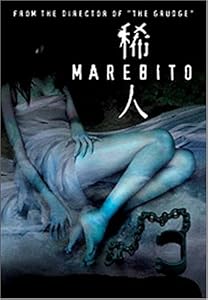
'CoverCover of Marebito

I can tell February was busy because of the small number of movies I watched.

I got through the first third of Marebito, a J-scare from the director of The Grudge and Reincarnation. I actually ended up napping instead of watching, and still haven't gotten to the point where the story actually kicks off ... I'll probably go back to it and give it another 10 minutes, but so far it seems less solid and more pretentious than Reincarnation.

Doctor Who: The End of Time (Part 1) was a nice 'moving the pieces into place' episode with a great scary kick at the end of the episode that absolutely makes me go "What the hell is the Doctor going to do?" *and* may give me some closure on Donna Noble.

Doctor Who: The End of Time (Part 2) made me cry. An effective payoff to the "He will knock four times" set-up, and a series of scenes that provided closure on a number of Russell T Davies plots. This part was less about the plot and more about the emotions, and I choked up as David Tennant finished his run. I think I'll miss his Doctor about as much as I miss Tom Baker's.

Started watching my favourite film, The Insider, but had to go do something else. Even watching the first 20 minutes though has reminded me how good this script is. An expanded review is definitely coming.
Reblog this post [with Zemanta]
A Nightmare on Elm Street played like a sit-com to me. The last half hour of this movie consists of idiot cops and ultra-violent pratfalls as Freddy Kruger falls victim to a series of booby-traps that Nancy has set up in her home. An odd, hilarious movie.

Friday, February 26, 2010

Made to Stick: Keeping things Simple

Made to Stick by Chip and Dan Heath is about creating ideas that stick in people's minds, ideas that make people want to spread them. The first element of 'stickiness' is simplicity.


Simplicity is a proverb

When you're creating an idea, you want it to be short, easy to remember. Ideally you want your idea to be short and WORTHWHILE for people to remember. For instance, think about these phrases:

"A bird in the hand is worth two in the bush."

"Do unto others as you would have others do unto you."

Proverbs are worthwhile ideas that are simple, profound, and (most importantly) useful. They provide a guide about how to behave in a complex situation or a principle to live by. Proverbs provide wisdom. And people share them - the bird-in-the-hand proverb can be found in Spain, Russia, Iceland, and even in medieval Latin documents. Its origin may be from one of Aesop's Fables, dating from around 570 B.C.


Simplicity is the most important thing

Think about a subject you know a lot about. Now, if you want to, try this mental exercise - it should take about 10 seconds. Imagine a friend asks you to explain a bit about that subject to them. They'll give you a couple of minutes to give them a bit of an overview of it.

Have a think about a few of the things you'd want to explain to them.

While you're doing that, I'll try it with the idea of time management. Skip past the bullet-points and I'll keep on with the post:

  • write everything down
  • review stuff regularly
  • keep a list of tasks you want to do
  • have a list of goals (yearly and monthly)
  • do stuff that's important but not urgent
  • do things in small chunks
  • do stuff that excites you
  • do stuff that adds to the person you want to be
  • eliminate unimportant stuff
  • keep a notebook with you to write stuff down
  • time management is a habit - start small
  • there are lots of good books to read.

So, here's why simplicity is good. People who are experts want to communicate a lot to their audience - and the tendancy is to communicate too much. I have 12 things in my list above - the chances are that 10 minutes after I explain this stuff, my friend is going to remember nothing. Maybe one or two things at most.

When an idea is simple, it means you've found its core - the most important thing about the idea that you want to communicate.

You can't have 5 'most important' things that you want to communicate. You've got to prioritise by weeding out the important ideas that aren't the most important idea. You've got to eliminate the superfluous.

What's left is like a proverb or a haiku: the most important thing about your idea.

If I were to do this with my list above, getting rid of stuff that'd merely be nice to talk about, I'm left with this:

  • have a list of goals (yearly and monthly)
  • do stuff that's important but not urgent
  • do things in small chunks
  • do stuff that adds to the person you want to be
  • eliminate unimportant stuff
  • time management is a habit - start small

If I then eliminate the stuff that I think would be really beneficial to know, I get this:

  • do stuff that's important but not urgent
  • do stuff that adds to the person you want to be
  • eliminate unimportant stuff
  • time management is a habit - start small

Those are four principles of time management that I think are really important to know. But four is still too many - if I were forced to choose only the most important thing, then what would it be?

Only do stuff that adds to the person you want to be.

So, I didn't know that before I did this exercise. For me, the purpose behind time management is to help you live the life you want to live, and to help you be the person you want to be. Now, discussing that idea any further would be irrelevant to this post but it's a good illustration of this principle.

***

The chapter on Simplicity goes into more detail about how to achieve short, profound, essential statements of your idea. It talks about relating your idea to concepts your audience is already familiar with, and with using analogies (especially analogies that allow the audience to extrapolate a lot of information from them).

The whole chapter is a worthwhile read, but essentially it emphasises again and again the reason why we should aim for simplicity: when people remember the core of your idea, they know what's important. They know what to focus on in any given situation. Knowing the core allows them to make good choices under pressure.

Next up, ... Surprise!

Previous posts in the series:

In which I am impressed by the cover
An overview of the book

Monday, February 22, 2010

Time Management: Tips and hacks

I thought I'd follow up on some ideas from the Facebook post about how to stop myself from wasting time on the internet. Please let me know your ideas for not procrastinating, both online and in real life.

* I've started breaking my internet addiction through giving myself designated 'offline hours' and a dedicated half-hour in the evening where I can do guilt-free browsing and read anything I want. Also: no internet before 9 in the morning (which, it turns out, is quite hard for me to stick to)

* As part of this, I went on a one-week media fast - no news sites, or political sites, or newspapers/radio/TV. This felt great, and freed up an amazing amount of time.

* I built up some strong negative emotions
(like loathing, frustration, or boredom) towards particular websites - which motivated me to block them in my hosts file. This means I can't access these sites without manually unblocking them. Seems to be working - I don't miss them, and I think I *wanted* an excuse not to go back to them. (And unless Facebook makes some changes to its new homepage design - which has made the site way more irritating - it's another site that might be joining this group.)

* Decided to not follow or read
blog posts comments or discussions - this is tougher, but I've realised that I don't really process these conversations very well. They sort of swim in a haze through my eyes and brain and don't really sink into my long-term memory. A complete waste of my time, really, to look at them or check back in on them.

* I've re-categorised all my Google Reader feeds, allocating them to either 'Must Read' blogs, 'Skippable' blogs (where I can delete their posts if I'm running out of time). I also have a Probation' category now - where I put all the new blogs I'm subscribing to. I give them about a month in Probation and then decide whether to unsubscribe from them or not. Having a Probation category has also prompted me to delete several big blogs from my feed - most notably Aintitcool - which has significantly reduced the amount of infocrap I need to wade through.

Also a big shout-out to Billy from the previous Facebook post: he introduced me to the studyhacks site, which led me to this long but good talk by Merlin Mann about time and attention, and his recommendation of the 4 Hour Work Week was the tipping point into me getting the book out and having a read. Fascinating stuff.


What about you? What do you do?

Thursday, February 18, 2010

Lost: Second Impressions III

The finale of Season 1 was exciting stuff, had a great momentum, and we would have continued straight on into Season 2 if the disc had worked.

A couple of weeks later we managed to watch the opening three episodes of Season 2 in a row. This is something I've wanted to do for a while - my memory of watching these week-by-week was that they were a bit frustrating in the way they replayed the same events from different points-of-view. Watched in sequence ..., well it was good fun but the repetitiveness was still there. And perhaps that's a part of the explanation for the start of the huge drop-off in Lost's audience during Season 2: a slow, repetitive start followed by a huge dose of mythology (with buttons to be pushed and Dharma Initiative orientation films to be watched).

... Also, my advice is never to play a drinking game where you have to scull every time Michael yells either "WALT!" or "They took my boy!"

Based on reading a few 'Favourite Episode' lists that are floating around the net, we decided to skip forward to the highlights of Season 2. This meant we missed out much of the Dark Charlie, and the long con with the guns stuff.

Instead we skipped forward to the one-two punch of Shannon's spotlight episode followed by 'The Other 48 Days'. Shannon is still a favourite character, and her spotlight episode goes to great lengths to make her sympathetic and someone we're willing to root for. And then Ana-Lucia shows up. Unfortunately, Shannon may be a sympathetic character but she's not iconic in the way Jack, Kate or Locke are - therefore: bye-bye Shannon.

(Is it worth noting here that I like Ana-Lucia? I'll go into that in more detail if it seems relevant.)

The Other 48 Days, which I thought would be terrible given that most of the characters it developed are now gone (although at least one of them will return in Season 6)
was great, actually. Really rewarded rewatching - even though some of Goodwin's behaviour bugged me now that he's been fleshed out as a character in subsequent episodes. It just seemed to me that his conversation with Ana-Lucia should be much more reasonable and less darkly villainous ... but it wasn't really a deal-breaker for me.

In our next re-watch session we sat down to the very character-centric The 23rd Psalm, an Eko flashback episode that I found moving and involving.

This contrasted with an episode I thought I was really going to enjoy: Meet Henry Gale. The introduction of Henry Gale into the show is one of the pivotal moments of Lost, but rather than being character-focused, it's an episode about people shouting at each other and using torture as the option of first resort. So, it felt plot-heavy and not particularly insightful. Pretty great Sayid performance though.

Sunday, February 14, 2010

Play: Looking back on February

So, at the end of PLAY!, here's what's I've done:

Read Mixtape: I did enjoy this script. It's sweet and light, with five or six laugh out loud moments. The structure of having a thirteen year old trying to track down the songs her parents (who have died) loved is excellent and leads to nice character growth. The film feels very much like Freaks and Geeks to me. Here's a link to Scriptshadow's review, and an interview with the author.

The Orphans: continued plotting out my creepy 'kids stuck in a haunted orphanage' movie. Have written another couple of sequences, and am getting to the point where I really need to start thinking about the film's tone: its pretty grim, but is there going to be a happy ending? Or a pyrrhic victory? Or will I embrace nihilism? I think I've realised that I'm writing a Saphhire and Steel story in which Saphhire and Steel never show up. and I'm definitely at the point where I want to find out how it all turns out for them.

Free writing: Spent a little bit of most days just jamming on different story ideas, putting absolutely no pressure on myself. So far I've played around with LARP ideas, status updates for lovebites characters, and a best-selling thriller.

Artificial (the AI story): I said that I was thinking about how to make the Pessimist character interesting. Well I did nothing on this until the very last evening of the last day of PLAY. I was reading this excellent interview with the author of Source Code, and his comment on his focus on character awoke something in me. I saw the moment between the Pessimist and the AI that I needed to work towards, and then came up with a diagram that defines the relationship between the three of them (AI, Pessimist and Optimist). That gives me pretty much all I need to start outlining the movie.

Destinies: I think I'm pushing this back a little - to focus on finishing Bad Family, and then outlining these other ideas. Need to discuss, re-negotiate timeframes with my brain-storming collaborators.


And for extra credit ...

Read The Second Session: INCOMPLETE! In fact, unstarted. My first draft script about musicians trying to record an album is still in my to-read pile.

Made to Stick: I've blogged 1.5 more posts in this series - cued up to publish in March.

The Limit: Still need to assemble a contact list of emails for producers.


I've also decided to shift the time I spend playing and working again. For the next little while I'm going to spend four weeks working and two weeks playing. See how that feels.

Friday, February 12, 2010

Test: Please comment on this post

Hi all. Regan just told me that she's been having problems commenting on the blog.

Could you reply to this post, please? If you have any problems, give me an email or comment on facebook.

Hell, let's even make it constructive: what would you like to see me blog about this year?

Wednesday, February 10, 2010

Books: January

Salammbo by Gustave Flaubert is the story of an army of mercenaries laying seige to Carthage in the third century BC. I was enjoying it until I lost the library's copy of it on the train. But ... go Project Gutenberg! Here's an online copy of it.

Illium by Dan Simmons took me by surprise. I thought it was a simple re-telling of the Trojan War where the role of gods is taken by time-travelling humans with advanced technology. It's more complicated than that - there's an inter-cutting storyline between three planets that doesn't fully pay off by the end of this first book, but has helped to set up a pretty amazing change in the situation. Favourite subplot: a bromance between two robots.

The Left Hand of Darkness - a simple, ultimately moving book about first contact. Le Guin creates a world that simulataneously feels real and like an parable.

The Four Hour Work Week is filled with some quite inspiring ideas about creating more time for yourself. I'll be re-reading this one more closely.

Olympos is the sequel to Illium (above). If Illium was about exploring the novel's setting, then this is about exploding it into action. There's a game called Sorceror which has a concept called a Kicker: a starting situation that radically upsets everyone's lives and the status quo, forcing unpredictable responses from everyone. Olympos starts with a great Kicker, and continues to place the characters in terrible situations where they must choose, choose and choose again while under time pressures and limited information. It is great stuff, and Achilles is once again a bad-ass.

This stuff has inspired me to give the Illiad and the Odyssey a go.

Mixtape turns out to be a sweet, funny little script. I really liked it and wish it the best in its journey towards becoming a movie.

Saturday, February 06, 2010

Movies: January

Surf's Up is a surprisingly enjoyable animated film. It's a story about a penguin trying to win a surfing competition, and the film takes advantage of the fact it's shot in a handheld reality TV style to create a relaxed (almost-improvised feeling) series of jokes.

Pirates of the Carribean: The Curse of the Black Pearl is a film I remember as being long and dull. I was wrong - this time round it played out as a fun romp with engaging characters.

Pirates of the Carribean: Dead Man's Chest is a film I remember as being long, dull and overly-complicated. I was mostly wrong - it is extremely long, but I think my two main problems when I watched this in the movies in 2006 were (i) I'd completely forgotten who all the characters were in the two years since I'd seen the first one (like, who is this 'Norrington' guy, again?), and (ii) in the cinema this played out like an ADD assault on my senses with a volume at somewhere around 120dB. Both Dead Man's Chest and its sequel play better watched as part of a trilogy - they play even better when viewed as a single epic fantasy film that you can break up into easily digestible pieces on your computer.

Avatar was good.

I watched Mike from Milwaukee's video review of The Phantom Menace. It's a 70 minute long work of incisive, cruel comedy gold. Among the many highlights, a two minute explanation of why Qui-Gon Jin's strategy to free Anakin Skywalker from slavery makes no sense whatsoever. It also spends a lot of time pointing out the biggest flaw of the movie for me: that it lacks a main character, and that the most obvious choice for a main character (Anakin) doesn't show up for 45 minutes and then proceeds to do basically nothing for the rest of the story. What I hadn't noticed before was the story potential to be mined from amalgamating Qui-Gon and Obi-Wan's characters. Anyway it's great: here's a link to all seven parts of the review. I've embedded the first part, below.

Pirates of the Carribean: At World's End. Again, I enjoyed this, breaking it up into smaller chunks. (Perhaps I have become influenced by watching too much TV on DVD, and 45 minutes seems like a natural amount of time to sit down to watch something.) Particularly liked spending alone time with Jack, and the battle at the end.

Inglourious Basterds doesn't actually feel like a Tarantino film to me, and I think that's a good thing. I suppose what I mean by that is that there's a focus on the story that I appreciate (as opposed to focusing on making sure that you'll perceive that the story is being told in a way that's cool). As a script, I guess the main character is Shoshanna, the protagonists are Shoshanna and Aldo Raines, and the antagonist is the German education system - which seems to produce perceptive and resourceful soldiers. I broke this in a multi-day viewing - because the film itself is broken into chapters - and I found it immensely satisfying.

Watched Reincarnation at Chris' recommendation. An excellent J-scare by the director of the Grudge, involving a movie being shot about a horrible slaughter at a hotel 35 years ago. Past lives, repressed memories and multiple timelines ensue. What's great about this film is that it slowly trains to you keep looking into the backgrounds of shots, because weird and disturbing shit keeps happening there in really subtle ways. After about 25 minutes of that, the movie had me on the edge of my seat without really needing to do anything scary at all - it had made the ordinary terrifying. Bonus points for NOT playing out a twist with one particular character, and for having a very very appropriate ending. I, too, now recommend this film.

Monday, February 01, 2010

Games: January

Battlestar Galactica: The Boardgame. It's a good game that nicely captures the 'struggle for survival' dynamic of the earlier seasons, and has the 'all the players co-operate against a common pressure but one of them might be a traitor' structure that I love. However, I'm not convinced I ever need to play it again.

My third one-shot of D&D 4th Edition was an almost-dungeon-crawl undertaken by a group of all 'arcane' (magic-using) characters. Most important thing I took from this game: Skill challenges can be great. I really enjoyed how they give scenes importance and weight. Skill challenges take encounters that previous editions of D&D would have solved via conversation, GM fiat or a single dice roll ... but under the skill challenge system, role-playing conversations and investigations is encouraged and then converted into successful and unsuccessful tests. If you accumulate a pre-defined number of successes or failures and the plot advances. Luke (as DM) was great at making them 'follow the fiction' rather than just be dry dice rolls.

Biggest problem? I found that combat was an excuse to unplug from being involved with the character for LONG periods of time. Combats are fine and will go faster when you know the system, and running encounters using video game logic and level design would be great.

I also think you have to aggressively work to contribute to the game's fiction when you're in combat. For instance, me narrating tentacles coming up around a platform to drag an enemy to his death works far better than simply activating a power. But that's something I have to push for and remember, rather than something that's encouraged or mandated by D&D's rules (for a completely different experience, try playing Dogs in the Vineyard sometime).

I spend a couple of weeks in January taking a deliberately low-key approach to gaming. I reduced or postponed game pre-Kapcon, to avoid burnout.

In that time, I played VVVVVV, a brilliant platformer that's challenging, but not too challenging. Click on that link to play the first two levels for free.

I also checked out the Doom Roguelike, an overhead ASCII version of Doom I. This was my first experience with Rogue-like games. I liked it, and decided to uninstall it before I got too deep in, as I could feel the addictive properties starting to well up inside my brain. Basically, I asked myself, "Is it 'worth' spending the time learning the interface and mastering?" In this case the answer was, no. But I recommend it, anyway.

Canabalt is a nice simple adrenaline boost of a Flash game. Got about 5 minutes amusement out of it.

One of the reviewers on Play this Thing described Avalanche as the best Flash game ever. I found it completely frustrating.

Despite my commitment to not continuing to play Poker on my cellphone, I cracked another level on this game. I continue to be impressed by the economics of this game - and by the way each level forces you to develop a feel for different aspects of poker.


KAPCON

Kapcon 19 is a two-day games convention held in Wellington, NZ, in late January. This was the third year where I was helping run Games on Demand, where we pick the games to run based on player enthusiasm.

In the first session, Jenni insisted I run Bad Family. Excellent peer pressure from her. Mike summarises the session nicely here. This was my first test-run of the revised rules, and I thought for the most part they worked splendidly. I'm particularly happy with a section in the set-up of the game where everyone asks one question of everyone else's characters - it generated a lot of good material to use in the game. Probably one more revision from here, which will focus on creating an Apples to Apples style simplicity, and fleshing out a few bits of the text to make them more readable.

Poison'd, Vincent Baker's game about nasty pirates was very satisfying. My first time running it: we captured a ship, took down two of His Majesty's vessels, killed a plantation owner after setting his mansion on fire, betrayed the captain twice (once, successfully), and made deals with both God and the Devil. Playing this helped me see how you can adjust the dial from extremely brutal to fun romp, and that you really need to, depending on the players you have.

Two-thirds through the game, I was a little worried that after a couple of ship-to-ship combats and some time on shore that things would get a little repetitive. Fortunately, the design of the game and some excellent characterisations from my players shifted the story into a revenge/atonement finale that proved extremely satisfying.

Bliss Stage was a highlight of the con - a powerhouse of gamers I respect sitting down at the table to create a gritty, incredibly tough story about the cost of war on a group of teenage soldiers. Apparently just as good, if not better the second time it was run.

ACTION CASTLE! is a work of genius. It's the game of 1980s text adventures. One person plays the computer telling you what you see, and every other player gets to take a turn giving the computer one single command. ('Go north'. 'Examine tree'.). Remember to save!

A World of Possibilities was an excellent scenario created by Mash. In discussing it, I need to give away a little bit: this is one of the games of TORG (*) I've always wanted to play, and I got a lot of satisfaction out of fighting in a war for reality. My only advice to Mash might be to emphasise the cost of our decisions a little more - spend a little more time milking the denoument for pathos. On the other hand, it featured a brilliant Mash-created cosm that was plausible, freaky, and stunningly clever in its Twilight Zoneness.

(*) Don't worry if this means nothing to you. It's totally a 90s RPGeekery thing.

In Session 5, I decided that I was feeling exactly in the mood to run some Primetime Adventures. I got together a large group filled with some welcome familiar faces and some people I'd been curious to meet for a while. The brainstorming session to decide on a show, I decided to run it in an extremely relaxed, no-pressure style. I wanted us to take our time, build some trust and share some ideas about the types of TV we find excited. We actually found a show idea that 'clicked' pretty early - after talking about the "Anything's possible" vibe of New Dr Who, and getting a hit from the whole group when Sapphire and Steel was mentioned, we started creating a show about an organisation that fixes problems with reality. We spent a bit of time mining the show for ideas and structuring the series, and ended up with the group playing members of two rival teams - one that solves problems through creativity and compassion, the other using guns and murder.

We decided to play an episode where the two teams collide on a mission, and an excellent conflict-filled series of scenes and time-loops followed. Props to Eric in his second Kapcon experience for playing a real bastard of a military leader, to Andy for playing his minor role with comedic aplomb, and to Rohan for a great characterisation of an intellectual who really didn't look like he was capable of saving the day.

I finished Kapcon by running my craziest game of Inspectres ever (and that includes the game set in the town of Footloose). I've been feeling a little burned out on InSpectres, and was tired and headachey, so I warned everyone I'd be running it mean, activating the death and dismemberment clause, and pushing hard. By the end of the game, we had recruited an entirely new second (and rival) franchise of InSpectres who were sitting at the other end of the table, solving a parallel mission - team one consisted of three beta-male losers struggling to make their business work, and team two consisted of their extremely aggravating ex-wives. Featured: a ghost with Alzheimers, the transformation of Brian Tamaki into an immortal, an ex-husband and wife meeting-cute over an alien abduction, and regular spots in the confessional chair to call out to our sponsor: Hell Pizza.

Great stuff.

Sunday, January 31, 2010

Play: January-February 2009

I've just finished a big re-draft of my game about dysfunctional family sitcoms, Bad Family. Which means it's time to kick back and spend another two weeks exploring new projects. Here's what's on my plate at the moment:

Read Mixtape: this coming-of-age script ranked highly on this year's Black List. It's about a thirteen year old who finds a mixtape that belonged to the deceased parents she never knew, accidentally destroys it, and uses the song list to go on a journey to find all the music in an attempt to get to know her parents. Really looking forward to this one.

AI story: Gino and I were talking a couple of weeks ago about how having an AI in a sci-fi story never ends well for the humans. Which got me wondering - what would a 'good' AI story look like? I'm going to have an explore and see if I can find out.

Destinies: it's time to push this web-series project a bit further and have a meeting with some of my brain-storming collaborators.

The Orphans: plotting out my creepy 'kids stuck in a haunted orphanage' movie will continue. Looking forward to seeing what these kids do next, because the situation is getting pretty grim for them.

Free writing: I'll spend a bit of each day just jamming on different story ideas and see where they go. The key will be to put absolutely no pressure on myself.

And for extra credit ...

Read The Second Session: my first draft script about musicians trying to record an album has been in my to-read pile for a while now.

The Limit: next step here is to assemble a contact list of emails for producers.

Made to Stick: I'd like to blog a bit more, and lock this series of posts off.

Wednesday, January 27, 2010

Speculation: Media in 2030

Following on from the last post, I wondered what life will be like for a teenager in 2030. (*) I want to hear your thoughts - add them in the comments:

***

Do you want to listen to something? Watch something new? Well, for the most part it's available instantly. You want it? Say it to your voice-activated googler and there it is.

Which means there's no cachet for someone who's dedicated themselves to collecting rare singles, B-sides or concert footage. All that stuff is just ... there.

What you do get cachet for is having a reputation as an explorer and a discoverer. Can you introduce your friends to the new, the old, the unfamiliar and the fresh? Can you discover and point out the history and inter-connections between music (its sounds, producers, rivalries and riffs)? In the world of 2030, there's so much stuff to experience, that most of it has never been heard or watched before. The shit that's been lost due to quantity and the death of the mainstream would boggle your mind. It means that media archaeologists are cool.

And pretty much everything's digital, right? I mean, your grandparents have shelves full of books. Your parents might have a few. But you? Everything's stored, waiting for you to access and project onto your wall or your hud.

But what use is a book? You can't search it, except you know via eyeball. You can't tag it, rec it, comment on it or read what your friends or the author thought of your favourite passage. Books are dumb.

(They're also maybe, like, increasingly unnecessary. For some of your friends it's a mark of pride not to be able to read. I mean, when do you really need to? But post-literacy is like way out on the fringe. Maybe for your grand-children it'll be normal but you don't even want to think what the world'll be like when your hypothetical grand-children are teenagers.)

Oh, yeah. And everybody who wants to create something, can. The engines of creation have been open-sourced for decades now. Record an album, remake Lord of the Rings again - you're a teenager: you've got tech and free time. Go nuts.

***

(*) Of course, all of this assumes the continuation of civilisation as we know it.

Anyway, add your ideas in the comments. And let's apply brainstorming rules: don't disagree or say why someone's idea wouldn't happen. Just write something different.

Saturday, January 23, 2010

New Media: Kung Fu Monkey on Netflix

Here's your essential post to read about the changes to online distribution that are coming: Netflix will win. And with your newspapers, too.

Bullet-points:
  • Netflix now gets to stream Warner Brothers movies to their customers, 28 days after the movies have been released on DVD.

  • E-readers (like the Kindle) will be replaced by tablet computers. This totally makes sense, but John Rogers goes on to point out that the Kindle is deliberately a gateway drug, to get people used to the idea of paying for downloading books to a convenient piece of hardware.

  • TV networks will probably be replaced by content-aggregating sites like Hulu, Netflix and the Apple store.

... oh, and Seth Godin speculates about what happens to libraries, when everyone can download any book ever printed whenever they want. His answer: they become training centres, to teach people how to find and use information.

I'd say we're looking at 20 years max until print becomes a novelty rather than the default. 50 years until printed goods become artifacts and souvenirs rather than common-place possessions. And when I actually try to imagine the media-world for a teenager in 2030, I think I'm being way too conservative with those timelines.

Tuesday, January 19, 2010

2009: Favourite Games

I think I'm reaching the end of my run of 'What did I think was cool in 2009' posts. This one is about four notable games I played last year, and why they were fun.

-1-

Stephanie Pegg ran "Sitting Shiva", a LARP (short for Live Action Roleplaying) for about eight players. A LARP is kind of like improvised theatre: the players are expected to be fully committed to acting as their characters, moving around, continuously speaking in-character. "Sitting Shiva" took place at the wake of a friend (who was also a participant in the game, bringing a supernatural air to the event, and making our faux-mourning even more tangible).

There were two things that really struck me about this game. First, I loved how it dug into quite emotional material - we played heightened versions of ourselves, dealt with grieving and our attitudes towards death, and learned a lot about the recently-deceased (played by Frank P, in this game). There was an intense focus and full commitment to maintaining a mood as we played.

Second, with only 8 players I was able to feel involved in all of the unfolding story. My previous experience with a LARP had about 80 players, and by necessity I could only keep track of maybe 2 or 3 of the unfolding plotlines, maintain an awareness of about 5 others, and was completely oblivious to at least 5 more. Obviously, this amount of story complexity is pretty awe-inspiring and I felt like I had a complete story-experience for my character in this 80-player LARP, but I found the inability to experience the totality of the story extremely frustrating.

Stephanie's thoughts on Sitting Shiva are here.


-2-

I also played the second season of 'The Other Side', a game which lasted about six months and deals with a fantasy kingdom that's been colonised by modern-day America. Taking that basic conflict as our starting point, we created a rich cast of eccentric characters and a sprawling uber-plot that actually sort-of tied together (concerning an attempt by the Kingdom of Hell to invade the fantasy kingdom as well).

As a group, we exercised a tremendous amount of awareness of each other's strengths and weaknesses, pushing each other into hilariously uncomfortable conflicts and in-character romantic entanglements. I was also impressed at how Celeste grew to dominate the game (and discover her affinity for conflict-creating characters) through her portrayal of Fifi, the fairy godmother from Hell.

This is one of the games that my Tuesday night group has had the strongest committment to, I think and it was a pleasure to play (even if my character hardly ever got what he wanted, and when he did he was usually misunderstood). To use some RPG theory, in Big Model terms I think our group were pretty much totally on the same page when it came to the game's creative agenda: we were strongly encouraging each other to help create an inventive anime / soap opera with lots of romance, culture clash and teen angst.

There's a partial write-up about the Other Side, here.


-3-

I've played and run one-shots of Dogs in the Vineyard before, but they did not prepare for what happens when you sit down with a group of good friends and play through seven towns over half a year.

In Dogs you (effectively) play teenaged Mormon missionaries in 1840s Utah. The idea is that you travel from town to town, sorting out the extremely human problems to do with sex, pride and jealousy that inevitably emerge in tiny isolated communities holding each other to impossible religious standards. If Dogs has a genre, I think it's 'biblical noir'.

Our characters consisted of two outsiders (Emma played a prostitute who'd converted to the Faith; Malcolm played a Native American convert), and two philosophical opposites (Simon played a 'golden boy' who was completely confident in his Faith and authority; I played an intellectual from 'back east' who challenged the Faith and tried to rely on his own judgment).

We rotated the responsibility for designing towns and running them for the others. Each time we GM'd, we tried to focus on the character issues that had been revealed in previous towns. To me, it felt like an excellent TV series directed with a 1970s Western aesthetic by directors like Robert Altman and Clint Eastwood.

For me, the big discovery was that I changed from 'trying to solve the town' to 'treating the fictional townsfolk as real people, and just trying to make their lives better'. I also developed a lot of admiration for Emma's no-bullshit approach - at least once a game, she would make people surrender in a conflict just by saying the exact right thing that would cause them to realise they'd fucked up. At one point, she made Simon's character decide to retire, shattering his confidence and his Faith.

By the end, it was obvious that the game was really about the future of the Faith, as it was under threat by the arrival of settlers and railways from Back East. What was at stake was how we Faithful would respond: with violence, by running away, or by trying to assimilate, change and exercise passive resistance. The ending of the game was melancholic, and it haunts me still.

Dogs in the Vineyard: play it if you like totally character-based campaigns set in the Wild West.


-4-

At Post Box Con, I had the opportunity to jump in to a fully-prepped game of Bliss Stage. It was incredibly satisfying to unleash my inner emo for the second time this year.(*) Bliss Stage feels gritty, desperate, and deals with sweaty, troubled relationships. I love it and I want to play a full game to its conclusion.

(*) The first time I emo'd this year was during Jenni's excellent parody of Twilight.

Friday, January 15, 2010

2009: Favourite Books

I read this year! Here are some highlights:

Sharp Teeth: a verse-novel about rival tribes of werewolves using LA gang culture to survive.

Presentation Zen: a simple, colourful guide to making your presentations easier to engage with and be remembered. The subject of many many posts this year, and (crucially) started my line of reading books about the essence of story.

The Garden of Last Days: a gruelling, extremely slow-burning thriller about one night in a Florida strip-club. By the author of The House of Sand and Fog. Highly recommended, but ... yeah ... did I mention 'gruelling'? It's an extremely very rather tense read.

The Sleep Dep Online Exquisite Corpse: Chris' collaborative story-telling game that started moody and ended insanely. Led to ...

The Event: a collaborative story about Wellington in the throes of an apocalypse. Great writing from everyone, but especially worth checking out for the character of Margaret's special POV.

The Dip: a book about quitting that led to the toughest-to-write series of blog post I've done so far.

Made to Stick: I have struggled to take notes on this book for the last couple of months, but I'm now ready to start blogging about it. Made to Stick is all about finding ideas that people want to spread (whether that be urban legends, inspirational anecdotes or jokes).

Under the Dome: Stephen King returns to small-town Maine and then nukes it.

Passengers: a script written entirely in first-person, about what it's like to be possessed by a pleasure-seeking parasite that takes over your body and wipes out your memory. A good story, and a brilliant technical exercise.

Buried: a script for a low-budget feature film set entirely in a coffin. It's a quick read, and slightly claustrophobia-inducing.

Monday, January 11, 2010

2009: Favourite Movies

Here are the stand-out movies I saw this year:

500 Days of Summer: A playful structure, a melancholic mood, and a conflict between the characters that I really cared about.

District 9 is great fun. An excellent action film that reinvigorated my love of movies.

The Fountain: Beautiful, emotional, and the first Aronofsky film that I can imagine myself rewatching.

It Might Get Loud: I am the target audience for a movie about how Jimmy Page, The Edge and Jack White became guitarists.

The Room is the Plan 9 from Outer Space of '90s indie movies. I suspect that within 2 to 10 years, The Room will be as well known as Plan 9.

Shortbus: an extremely explicit movie about people trying to overcome sexual problems in their lives. Provocative, funny, moving, and dealing with conflicts that most movies prefer to ignore. I thought this movie was fantastic.

Soul Power covers the 1974 concert in Zaire that took place at the same-ish time as the Ali-Foreman fight. Lots of great performers including James Brown, favourite-bluesman-ever BB King, and new favourite singer Bill Withers. For me it's a movie that really illustrated the joy of playing music, and the satisfaction of playing music yourself rather than receiving it from some 'star'. Great stuff.

Zombieland: a feel-good romantic comedy with an attitude that's perfectly pitched to my tastes. Taught me that interesting things can happen in a zombie movie when you dial the zombie threat down to about a 2 out of 10.


Rather than pick a best film of 2009 (whatever that means), I can see myself rewatching all of these. But the ones that I think I will continue to get something from are (500) Days of Summer and Shortbus.

Thursday, January 07, 2010

2009: Favourite Single Episode of TV

Here are the contenders.

Mad Men, Season 1: The Marriage of Figaro. The third episode of this show opens up what it's really about - social conformity and people caught in lies about their own lives. It's like Pleasantville without the gimmicks. I'm looking forward to seeing how these characters survive the 60s, but I doubt it will be a pleasant journey for most of them.

Lost, Season 5: Le Fleur. The episode that established that Sawyer is amazing, that gave him a home and people to care about, and then reintroduced Jack to screw it all up. Le Fleur not only gives us our first real behind the scenes look at Dharmaville, it begins the process of making all of the main characters sympathetic again that Season 5 would continue.

True Blood, Season 1: Episode 6. I just felt so sad for Sookie's loss, which was magnificently displayed in sub-text during a scene where she ate her grandmother's pie.

Dollhouse, Season 1: Man on the Street. A episode filled with brutal, series-defining plot points in this show about people who can copy and download their personalities into other bodies. It also contains a gimmicky series of news interviews with people about the urban legend of the Dollhouse. ... 'Gimmicky' that is, until the very last interview - where a scientist says that if this technology is real, then it's the end of humanity. "We are over. As a species," he says, referring to the idea that the people who control this technology will inevitably use it for their own gain. At the very least it will create a class of rich immortals who use our bodies as rides. From there, two or three minutes of consideration, a set of nightmare scenarios emerge that (in later episodes) Dollhouse will spectacularly not shy away from.

Supernatural, Season 4: The Monster at the End of This Book. Probably the most 'meta' episode of television I've ever watched. Magnificent. Inspirational.

And the winner is: Dollhouse, Man on the Street. Dollhouse is the only show I've had arguments about this year. Despite all of its many many flaws, Man on the Street is the point where it demonstrates its incredible potential.

Sunday, January 03, 2010

Dollhouse: One scene from Season 2

Bad idea to begin a post by discouraging people to keep reading, but I want to analyse a particular scene in the first episode of Dollhouse, Season Two. So, yes this post contains

SPOILERS

IF YOU HAVEN'T SEEN ALL OF DOLLHOUSE: SEASON ONE, YOU PROBABLY DON'T WANT TO READ MUCH FURTHER.


The centrepiece of this first episode is a conversation between Topher (the genius who designs and uploads the artificial personalities into people's brains) and Dr Saunders, who has recently discovered that she isn't real - that she is in fact one of these artificial personalities.

I love this scene for three reasons:

1. It's long
2. It introduces a big idea that gets explored throughout the rest of the season
3. There are clear changes between the start of the scene and the end (in both emotion and character).


The scene begins as a seductive confrontation. Saunders (who despises Topher) tries to overcome her programming and make love to him. In the process of doing this, she acts like a doll, trying to be her best - basically adopting the role of everything she hates. Which raises the question of 'why'. Why is she doing this.

The scene immediately answers that, dancing through a complex series of beats that climax in Saunders identifying Topher as God. After all, he created her with a specific series of qualities. He obviously had a 'divine plan' in mind. Why should she fight it?

The next section of the scene is great: as Topher explains why he designed Saunders the way he did, there's the resonance of God explaining himself to his creation. Anyway, Topher resists Saunder's take on the situation. He tells her that he programmed Saunders to question and challenge him, not hate him. Saunders has chosen to do that.

It's a good end-point to the scene: identifying that Saunders has free will and she chose to hate Topher. A nice emotional twist that reveals a truth about a character. But the scene continues, and the material it begins to explore opens up a whole new dimension of understanding what 'Dollhouse' is really about.

That's the first reason I love this scene. It's unafraid to spend time with these two characters and dig into the hearts of what they're about, what's driving them, and what they're afraid of. Sure it's a little 'tell, don't show', a little theatrical. But screw it: I like plays.

So, the scene continues with Saunders wanting to know how she can continue living, knowing that that she's not even real, knowing that everything about what she is and who created her disgusts her.

But when Topher offers to give Saunders back her original personality, Saunders refuses.
And she refuses because she doesn't want to die. "I'm in someone else's body, and I'm afraid to give it up."

And that's the big idea that this season introduces: these artificial identities think of themselves as real. These 'imprints' have their own existence, their own drive for survival. It's an idea that's expanded on in the next episode, 'Vows', which features the first entirely successful (at least to me) assignment-of-the-week episode, and subsequent episodes dive into the concept whole-heartedly.

One of the reasons I admire love Dollhouse is that it's a show about big ideas that haven't been fully explored on TV before. A 13-part season is just about big enough to (a) explore the idea of self-preservation in people who know they aren't real, and (b) throw in an enormous amount of patented Whedon-esque plot twists and character reveals.

Finally the scene ends with this recognition: that Saunders knows she isn't real but doesn't want to give up her body to the personality it originally belonged to. And it ends with Topher appreciating the enormity of her problem. The scene moves from seduction to isolation, and from Topher being glib to being to move into another phase of his character arc.

Thursday, December 31, 2009

Dr Who: My theory on Season 5

OK, prediction time: Matt Smith is a decoy Doctor.

I'm actually pretty confident that Matt Smith will be good in the role of the new Doctor. Team
Who have excellent taste in casting and he's got a really interesting look about him.

But I remember the rumours about casting the new Dr Who before it was relaunched. James Nesbitt's name was floated a few times and (based off my impressions of his performance in Cold Feet) I felt he would make a great shambling around Doctor in the spirit of Tom Baker. When I couple that rumour with his performance in Steven Moffat's Jekyll, well ...

My prediction is that Matt Smith will be killed off mid-way through Season 5 and replaced by James Nesbitt.

Sunday, December 27, 2009

Movies: October to December

There will be Blood was great on a rewatch, but I still haven't managed to perfect my Daniel Plainview impersonation.

I expected Rescue Dawn to be a man-against-the-jungle movie, but it turned out to be far more of a prison break film. Nice to see Jeremy Davies and Steve Zahn get some serious screen-time (and it reminded me of my favourite Steve Zahn performance - in Sahara, where he plays a cocky guy who doesn't realise that he's Matthew McConaughey's sidekick.)

Drag Me to Hell: Torment porn from Sam Raimi. I really enjoyed it, even though the last half hour had that inevitability that comes from figuring out a key plot point a little too early. This film provided a powerful reminder to me that inappropriate bodily fluids being forced through people's mouths is what true gross-out horror is all about.

The Science of Sleep is Michel Gondry's film about dreams, love and hope. At first it uplifted me, but in the end it left me terribly terribly sad.

The Godfather Part 2 didn't seem as clearly plotted to me as Part 1, perhaps because the identity of Michael's antagonist is hidden for so long, but the intercutting between timelines is elegant. It's a satisfying, classy story of revenge, and a timely reminder never to go fishing on Lake Tahoe.

Priceless is a fun sexy French comedy with a totally coherent storyline and sexy selfish characters I really cared about.

Twilight was brilliant because when it turned out that Bella's mum was played by Sarah Chalke (Nina Myers on 24), I learned that my flatmate is a huge fan of 24 too, so we spent the last half hour of the film talking about that.

Green Street Hooligans is a fun B-grade movie (that wants to be an A-grade movie) about Elijah Wood learning to be a football-hooligan. Worth watching for the climactic fight where the film-makers were unable to afford the rights to Dire Straits' Brothers in Arms, and instead had to create a similar-sounding song.

2012 is totally worth $16 at the movies. It feels like a video-game with some pretty annoying things to say about how women should look after the kids and not take any independent action, but it blows stuff up amazingly. A really (often unintentionally) funny film, with the best cast of actors of any Roland Emmerich film so far.

I still like Miami Vice, but I suspect my opinion may change after a few more viewings. Perhaps it is the The Phantom Menace of Michael Mann films.

12 Monkeys is a movie I'd forgotten I'd owned. It gets increasingly strong as the film goes along, and Bruce Willis gets saner and saner. I'm not a fan of overly expressive camera angles, but I am a fan of doom.

Last Days is Gus van Sant's take on Kurt Cobain's suicide. I got through about half of it before having to turn it off. While it's brilliantly shot, performed and written, with a really quiet quiet way about it, Last Days was just taking me into an emotional place that I didn't want to go.

The Waters of Mars had some nice scary imagery in it - reminiscent of The Event, actually - but overall felt like stuff I'd seen before. Loved the final two or three minutes though. The Doctor as 'arrogant' is something I'd like to see more of, and I can't wait for the fifth Dr Who special.

Torchwood: Children of Earth. I don't know if I'm on the record about Torchwood, but I don't think it works as a show. Season 1 veered between broad comedy and OTT angst; while it had a few good episodes, I found Season 1 so inconsistent that I didn't even bother watching its finale. I certainly didn't bother watching any of Season 2. So bear that in mind when I say that Torchwood: Children of Earth, a 5-part mini-series about alien abduction. Is. Fucking. Awesome. If you're in to dark British SF at all, it's a must-see.

Enemy of the State is a movie I've only watched in bits and pieces before. Having now sat through the whole thing, I feel exactly the same way. It's excellently crafted to stress you out though, and quite amazing in how quickly (and implausibly) they make scenes move through plot points in order to destroy Will Smith's life.

Zombieland is one of the feel-good films of the year. The way it turns zombies into an element of the setting, rather than a threat helps focus the story on the survivors and their rom-com / buddy movie relationships. Also: a fascinating example of how you can make splatter completely acceptable as long as you surround it with a sight gag or a really funny line of dialogue. Highly recommended.

The Plan is the final film in the Battlestar Galactica reboot. It's the story of two Cavils who find themselves in different parts of the war. I found that seeing the Galactica-based events of Season 1 from Cavil's POV gave me a lot of insight. Unfortunately, the other Cavil (based on Caprica) didn't have enough screen-time to really justify his change of character for me. As a result, I'm calling this one insightful but not essential.

I found Where the Wild Things to be a melancholic film about gently damaged people. It was not the movie I'd hoped for. Rather than being full of subtext, there were a few too many sequences for me where what was happening on screen was all that was happening - which made the movie a little too simple in places. It is, however, beautifully shot, with spectacular images, great performances and an interesting message about how complicated human relationships are. I'm torn about this one - but I'm coming down on the side of "it's good and worthwhile seeing."
It's pretty much an art film in

Wednesday, December 23, 2009

The 2009 Black List: Stories I'm interested in seeing

The Black List is an annual ranking of the year's most-talked-about unproduced screenplays in Hollywood. The 2009 Black List has just been published, and I thought I'd copy down the log-lines that particularly appealed to me.

I've divided the log-lines into three groups:
  1. my favourites
  2. noteworthy premises
  3. ideas I'm totally curious about - depending on how they're executed.
As with the Scriptshadow Logline Competition, I may dig into these a bit later on to see what I can learn about my tastes in stories or hooks. In the meantime, check out the projects below and the rest of the ones on the list. What do you think?
 
My Favourites

Owens' Manual by Greg Ferkel
What's it about: "A mild-mannered IT guy finds an 'owners manual' to his dull life but struggles to manage the realities of it when he reaches the end of the manual."

Allies with Benefits by Elizabeth Wright Shapiro
What's it about: "The female President of The United States falls for her old college fling, the now Prime Minister of England."

 
Notable Premises

The Voices By Michael R. Perry
What it’s about: Jerry, a schizophrenic worker at a bathtub factory, accidentally kills an attractive woman from accounting. While trying to cover his bloody tracks, Jerry starts taking advice from his talking (and foul-mouthed) cat and dog.
 
The Days Before By Chad St. John
What’s it about: A man from the future keeps hopping one successive day into the past desperate to stop a vicious race of time-traveling aliens from wiping out humanity.
 
BURIED by Chris Sparling
"A civilian contractor in Iraq is kidnapped and awakens to find himself buried in a coffin in the desert." (I've read this. Thought it was a great, quick read and a great idea for a low-budget film: set it all in a coffin.)
 
JIMI by Max Borenstein
"The life story of rock legend Jimi Hendrix."
 
RENKO VEGA & THE JENNIFER NINE by John Raffo
"Renko Vega, once a hero and now a rogue thief wandering the galaxy with his hyperintelligent spaceship the Jennifer 9, is forced to become a hero once again when the young daughter of the President of Earth is kidnapped." (According to Scriptshadow, this is a rolicking sci-fi action movie. The script is available for download, but I don't want to know too more about it.)
 
Ones I'm curious about
 
MIXTAPE by Stacey Menear
"A thirteen year old outcast finds a mixtape that belonged to the deceased parents she never knew, accidentally destroys it, and uses the song list to go on a journey to find all the music in an attempt to get to know her parents."
 
NEIGHBORHOOD WATCH by Jared Stern
"A suburban ‘neighborhood watch’ group, actually a front for dads to get some male bonding time away from the family, uncovers a plot bent on destroying the world."
 
THE DIVERSIFICATION OF NOAH MILLER by Adam Cole-Kelly and Sam Pitman
"A liberal New Yorker realizes he isn't as open-minded as he thinks he is and sets out to make a black friend."
 
THE GUYS GIRL by Nick Confalone and Neal Dusedau
"Three male best friends realize they’re each in love with their mutual female best friend when she gets engaged."
 
THE UMBRELLA ACADEMY by Mark Bomback
"Based on the comic book written by Gerard Way. After being raised by a brilliant scientist and a hyper-intelligent chimp, six super-powered former ‘child superheroes’ reunite to stop one of their own from leading a violin symphony that will destroy the world." (Obviously I've included this one for Svend)
 
THE HAND JOB by Maggie Carey
"A coming-of-age comedy about a teenage girl who gives her first hand job (among other life experiences)." (This one seems squicky. I'm fascinated about how you execute it without making it gross.)
 
THE CURSE OF MEDUSA by J Lee and Tom Welch
"An origin story of Medusa the Gorgon."
 
MEDIEVAL by Alex Litvak and Michael Finch
"An unlikely group of imprisoned warriors are forced on a suicide mission to steal the King's crown in order to gain their freedom. They soon realize they've been set up to take the fall for the assassination of the King."

Saturday, December 19, 2009

New Media: Create ideas that will be spread

Seth Godin gives a talk on the publishing industry that adds a powerful new question to my process of deciding which project to work on next:


Will this idea spread?
Here's the link to Seth's talk: http://toccon.blip.tv/file/970223/

And here's a summary of the points he's making:

1. Ideas that spread, win.
This implies that I need to ask myself, "Is this an idea that people will want to spread?"

2. Free ideas spread better than ideas you need to pay for.

3. An idea spreads when people benefit from telling others about it.
You'll do way better if other people blog, tweet or talk about what you've created. Ideas should be designed to encourage (or make) other people write about it. Seth's talk gives 10 real world examples of how he's marketed his books.

... wait, wait, wait, I said at this point. How do you make money if you're giving your ideas away? That's when Seth completely turned the idea of publishing on its head for me.

4. You're not selling a book; you're selling a souvenir (of the experience of having read the book).
The idea is that people will want an souvenir of an experience they've already had and enjoyed. Instead of thinking you're in the business of selling books, think of yourself as being in the business of creating souvenir editions of ideas that have already spread.

Seth goes on to discuss how this is unnecessary for people who've already established themselves as a brand (Stephen King, Dan Brown, Vincent Baker, Meg Cabot). I've seen this in action for myself - I am sorely tempted to buy a paperback copy of Cory Doctorow's 'Little Brother', which he distributed for free online.

Friday, December 18, 2009

Earlier in the afternoon, Tuvalu's Prime Minister, Apisai Ielemia, said the aim should be that global temperature rises should peak at well below 1.5 degrees Celsius, which was "non-negotiable".

"This meeting is about our future existence," Ielemia said.

But New Zealand backed a 2 degree cap on temperature rise, Key said, because the harder the target, the harder it would be to get an agreement.

"I think we all understand the anxiety of some of these small island states and the very real risk that climate change presents to them, but we're also in a position where there are now 193 countries who need to collectively agree on a target that can be achieved and who are prepared to take the necessary steps in their own economies to see that target achieved.

"In my view it would be better to take a more realistic view to that and see some progress made because unless we do that then this conference is going to fail."

From stuff.co.nz.

Tuesday, December 15, 2009

Interested in discussing how to organise your life?

I'm thinking about doing a series of posts about ways to organise your life so it runs more smoothly. The series would draw off books and blogs I've been reading over the last 5 years, and stuff I've been trying out in my own life. It'd cover a mix of big and small stuff, like:

- to-do lists
- managing projects
- keeping track of the big picture of what you want to do with your life
- paying bills on time

Is this something you'd be interested in? I imagine it'd depend quite a lot on people asking and answering questions in the comments, so I thought I'd throw it open for discussion now.

Friday, December 11, 2009

New Media: Audience, Self-Authorisation, and the Death of Video Stores

A couple of excellent videos linked to by Bill Cunningham at Pulp 2.0.

Here's an excellent panel discussion about how to build an audience on the internet. Some points I took away from it:
  • I really like internet celebrities like Kos and Jonathon Coulton. They have a really low-key vibe about them
  • Coulton talks about building an audience by releasing a song every Friday, regardless of whether he thought it was good
  • The idea that people surf the internet by rotating through 5 to 10 bookmarks rings true for me. The trick is to get into that rotation.
  • Go and get involved in popular sites, and be available to communicate with people. Schedule time to keep in contact ... but have a 'hub', an site that's yours that people can come back to
  • Get your audience involved in a project; give them ownership of something they think is cool
  • Don't neglect to actually spend time creating
Here's the video:


This second video is about the importance of net neutrality, but I loved the first two minutes which provide inspirational examples of how easy it is to start creating web-based solutions to problems. It's helping me do some thinking about what my next New Thing might be.


And David Poland identifies something that eluded me: while everything is going to get digitally streamed to us, it's going to be increasingly difficult for third-parties like Netflix to do it. The studios who own the movies, music and TV will try to be the ones providing us with the content in order to maximise their profit. The studios will try and eliminate video stores, Fatso, and pretty much anything that draw eyeballs away from themselves.

Monday, December 07, 2009

Synopsis: Made to Stick (An Overview)

Made to Stick is the most interesting book I've read this year.(*) It shows you how to make your arguments and presentations more memorable and more believable.

(*) 'Made to Stick' ties with 'In Praise of Slow' for the book I've read this year that's been most useful in my life.

The authors, two brothers called Chip and Dan Heath, describe six principles that make your story 'sticky'. By 'sticky', they mean that an audience is likely to remember what you've said, believe what you've said, and then tell other people what you've said.

The six principles are:
  • Simplicity
  • Unexpectedness
  • Concreteness
  • Credibility
  • Emotions
  • Stories
In the spirit of using acronyms to help you remember, the Heath brothers point out that these six principles spell out 'SUCCESs'.

I'm going to go into more detail on each principle in later posts. For now, here's a preview:

Simplicity: you need to create a proverb
In order to make your message sticky, your message needs to simple and profound. Easy to remember and easy to pass on. A good example of what you're aiming for is a proverb (for instance, 'Do unto others as you would have others do unto you').

To achieve this simplicity, you'll need to be ruthless in your efforts to reduce your message to its core. You'll need to exclude everything that doesn't matter.


Unexpectedness: this sub-heading demonstrates my point
People will remember your message if you suprise them. Be counter-intuitive; violate their expectations.

You can also ask questions that reveal to your audience they have gaps in their knowledge. That generates interest and curiousity, and they'll listen to you as you fill those gaps.


Concreteness: talk about people, not percentages
You need to explain your ideas at a human, everyday level. Use real examples, vivid images, and natural speech.


Credibility: how do you make people believe you?
This section talks about how to craft your message so that it helps people test your idea for themselves.


Emotions: how do you make someone care?
Mother Teresa once said, "If I look at the mass, I will never act. If I look at the one, I will."

You make someone care by making them feel. We are wired to feel things for people: specific people, who are known to us, or seem real. It's not easy for us to feel something for a mass of people or an abstraction.


Stories: preparing us for action
Stories teach us how to act once we believe in the message.

Keep a message simple so that people can remember it and pass it on. Craft your message so that people want to learn more, believe what you're saying, and know what you want them to do next.


Why do we need these principles?

Can you remember ever explaining something and then suddenly realising that your audience wasn't really following what you were saying?

Specifically, can you remember doing stuff like:

  • discovering while you were talking that there was something vital they needed to know in order to understand your point
  • using jargon
  • assuming your audience knew about things that had happened earlier in the week
  • skipping over the basics and discussing reasonably advanced or complicated details
  • not finishing sentences, because it was very clear in your own head what you meant
  • realising that you'd told the story out of order
The Heath brothers call this "the Curse of Knowledge". This is a flaw common to most people (I certainly have it): we forget what it's like to NOT know something. As a result, we forget what it's like to know absolutely nothing about the things we're interested in.

The six principles are weapons that can be used to fight the curse of knowledge and create a story that your audience can follow, understand, remember and spread.

I'll dig into them in later posts. In the meantime, here' sTrent's review of 'Made to Stick', over at The Simple Dollar.

Here are my first impressions of the book.

I first mentioned Made to Stick way back when I was synopsising Presentation Zen.

Thursday, December 03, 2009

Under the Dome: The Conclusion

As I mentioned in the previous post, Stephen King's is a 900 page novel about a small town that's been cut off from the outside world by an invisible force-field. By the time we hit pages 600 to 700, Under the Dome has to resolve three big questions:

+ What is the Dome?
+ Will they get out?
+ How will the political situation in the town be resolved?

I felt the end of Under the Dome was a bit of a let-down, actually. The book spents most of its length setting up a series of impossible-to-resolve-happily relationships, bringing everybody into conflicts that seem like they will only be resolvable through extended guerilla warfare and public executions. King instead chooses to spin this around and in one vividly written sequence refocuses the story on three scattered groups of people, and chooses to completely ignore the conflicts between them.

I'm being intentionally vague about this section of the book, because I don't want to spoil anything. However, this choice removes a lot of the Lord of the Flies-esque tension I saw in the premise of the book. I have heard that a TV series version of Under the Dome is being planned, and I can totally get behind that as a concept - using the novel as a starting point, I think there's a lot of tensions that can be explored (and subplots that can be invented) that will give this story the sense of epic scale that I sense its striving for.

In fact, if I were to sum up the reason why I don't think Under the Dome quite works as spectacularly as I think it should, it's that it feels caught between doing two things well: being an extremely fast-paced airport novel about people under pressure versus being a mean-spirited and leisurely observer of humans trying not to give in to the worst elements of their nature.

I also think that it doesn't play hardball enough. I won't go into details, but at about page 500 I started giggling because I thought I'd figured out where the novel was going to go. It suddenly occured to me that in the sort of novel King was writing, there was actually no guarantee that any particular character would survive. (And no particular reason for them to, either - this is a pretty great example of an ensemble cast of characters.) The story is primed to deliver a sucker-punch of such magnitude that it'd leave the reader reeling, wondering what would happen next. I leave it to you to discover what actually happens.

As for the resolution to the story: What is the Dome? Do they get out? ...

... You might remember I pointed out that this town exists in the same universe as Castle Rock and Derry. The long-term King reader might also note that this implies it exists in the same universe as Haven - which in turn implies a pretty neat explanation for the existence of the Dome.

(But that's not where the story goes.)

I was actually fine with the explanation for why the Dome exists, and the finale reveals that the whole novel has an admirable thematic consistency - it's a nice examination of hate and empathy, qualities that all the characters have been touched by.

In total, I enjoyed Under the Dome but felt it played a little too safe. A slow start, an INCREDIBLE middle section, and a resolution that I felt deflated a lot of the tension that had been built up. (However, that resolution did contain a great little scene in a fallout shelter.)

I'm looking forward to re-reading this one.