This run of episodes has been the strongest Lost has been for me since the end of Season 2.
*** SPOILERS, JENNI. ***
*** YEAH, I KNOW YOU'RE NOT WATCHING IT, BUT YOU TOTALLY SHOULD BE. ***
*** WHY BOTHER, YOU ASK? BECAUSE SAWYER IS AWESOME AGAIN ***
*** TRUST ME. I WAS RIGHT ABOUT VERONICA MARS AND SUPERNATURAL, WASN'T I? ***
Introducing time travel is proven to be an extremely elegant way of getting a lot of backstory about people whose lives have been touched by the island. More importantly, by taking the pressure off people like Sawyer we've seen them blossom. From Sawyer's character arc lows in Season 2 (the long con with the guns) and Season 3 (he freakin' shot Tom in cold blood), he's now become a hero, a leader, a person to admire.
And all the people who stayed on the island now have a lot to lose. I'm totally invested in them.
Meanwhile, they've given Kate something interesting to do - seriously, giving her a mission that doesn't have anything to do with the boys and that goddamn love quadrangle will (I assume) make her way more fascinating to watch, and lead to further exploration of the island. I'm also in awe of the character transformation they're making Jack go through - his acceptance of the island is planned for him undercuts all the potential Jack-Locke conflict we've been expecting, and opens up many new areas of their personalities to explore.
Plus it's so nearly came close to unbelievable, top-moment-of-TV-everness with that cliffhanger between Sayid and Ben. I would probably have tried to have this show's babies if it had followed through on opening up an alternate timeline in which one of the lead characters never existed.
The show is totally recapturing the magic of Season 1 for me. It's ambitious, inventive, and driving towards the finish line. And I have to wait two more weeks for the next episode.
.gif)
Monday, May 18, 2009

Saturday, May 16, 2009
Learning how to play - Process
I've played an enormous amount of cellphone poker over the last 2 days. It's made me think about some broad phases of skill acquisition when I play games. For me, it breaks into:
There are a lot of games that I think I'd enjoy where I'm simply not comfortable with the process: poker, D&D4E, Capes, The Committee for the Exploration of Mysteries.
The thing that makes me comfortable with process is repetition. And that's where having poker on my cellphone comes in handy. Normally I might play three games of Texas Hold 'em a year. In between times, all of those skills simply get lost. Any insights I've made, fade away. In the last 48 hours, I've played at least 3 games a day (probably more), and in the course of doing that I've become way more comfortable with checking, calculating outs and pot odds, and bluffing.
Games where the human element isn't so important (and I think I include D&D4E in that - despite loving the way it plays and its apparent tactical depth), are really amenable to these rapid cycles of practice and learning.
... huh. I just taught myself something. Taking that idea of process (which has also been talked about here, with the idea of how do you introduce someone to a game), I think I'm going to add an 'introductory' round to Bad Family - an opportunity for players to get used to narration and introducing complications, without introducing the rules.
- Process (what do I do and when do I do it?)
- Tactics (what are the best options for me?)
- Understanding (the point at which the game becomes fun)
There are a lot of games that I think I'd enjoy where I'm simply not comfortable with the process: poker, D&D4E, Capes, The Committee for the Exploration of Mysteries.
The thing that makes me comfortable with process is repetition. And that's where having poker on my cellphone comes in handy. Normally I might play three games of Texas Hold 'em a year. In between times, all of those skills simply get lost. Any insights I've made, fade away. In the last 48 hours, I've played at least 3 games a day (probably more), and in the course of doing that I've become way more comfortable with checking, calculating outs and pot odds, and bluffing.
Games where the human element isn't so important (and I think I include D&D4E in that - despite loving the way it plays and its apparent tactical depth), are really amenable to these rapid cycles of practice and learning.
... huh. I just taught myself something. Taking that idea of process (which has also been talked about here, with the idea of how do you introduce someone to a game), I think I'm going to add an 'introductory' round to Bad Family - an opportunity for players to get used to narration and introducing complications, without introducing the rules.
Thursday, May 14, 2009
Star Trek (2009)
It's an amusing diversion filled with performances that range from satisfactory to excellent.
Most Satisfying: the rowdy, pulp action. Swordfights! Gun battles! Perilous Footchases!
Most Suprising: that the space battles didn't really engage me.
Biggest Regret: reading ANYTHING about the film before I saw it.
Biggest Failing (*) : that quite a bit of the storytelling felt functional rather than gripping; that the outcomes of conflicts seemed inevitable.
* I'm going to have to see it again (probably on DVD) before making final judgments about this, but there were moments and conflicts between core characters that just felt bland to me. I mean, there's basically a scene where a character says "This is what you need to do," followed by a scene of it happening. I haven't seen writing like that since the end of Bonfire of the Vanities.
Kirk: Is hilarious. For the first half of the movie, Ed and I were sniggering in our seats every couple of minutes at how outrageous he was being. Top marks.
All in all, a reasonably fun way to reintroduce the franchise to a new generation of fans so that Paramount can suck money out of them for the next 20 years. It's a sexy, rowdy, funny Trek that's gotten better in my memory.
And here's the thing: the original actors played these roles into their 60s and 70s. Given that, and given a movie every two or three years, that means we could expect another 12 to 15 films from this iteration of Trek (**).
** Given that sort of timeframe, I'd prefer it if the Kirk-Spock relationship had been developed a little slower - across multiple movies.
I have no idea what that means for the future of the Trek franchise. No more stories in the original TV universe? A reboot of The Next Generation? Star Trek movies shot back to back, Pirates of the Caribbean styles?
Most Satisfying: the rowdy, pulp action. Swordfights! Gun battles! Perilous Footchases!
Most Suprising: that the space battles didn't really engage me.
Biggest Regret: reading ANYTHING about the film before I saw it.
Biggest Failing (*) : that quite a bit of the storytelling felt functional rather than gripping; that the outcomes of conflicts seemed inevitable.
* I'm going to have to see it again (probably on DVD) before making final judgments about this, but there were moments and conflicts between core characters that just felt bland to me. I mean, there's basically a scene where a character says "This is what you need to do," followed by a scene of it happening. I haven't seen writing like that since the end of Bonfire of the Vanities.
Kirk: Is hilarious. For the first half of the movie, Ed and I were sniggering in our seats every couple of minutes at how outrageous he was being. Top marks.
All in all, a reasonably fun way to reintroduce the franchise to a new generation of fans so that Paramount can suck money out of them for the next 20 years. It's a sexy, rowdy, funny Trek that's gotten better in my memory.
And here's the thing: the original actors played these roles into their 60s and 70s. Given that, and given a movie every two or three years, that means we could expect another 12 to 15 films from this iteration of Trek (**).
** Given that sort of timeframe, I'd prefer it if the Kirk-Spock relationship had been developed a little slower - across multiple movies.
I have no idea what that means for the future of the Trek franchise. No more stories in the original TV universe? A reboot of The Next Generation? Star Trek movies shot back to back, Pirates of the Caribbean styles?

Movies to Look Forward to
The Hurt Locker - a bomb disposal thriller by Katherine Bigelow
Solomon Kane - it sounds badass
Moon - indie SF film set on the moon, starring Sam Rockwell, and the voice of Keyser Soze as the possibly-crazy computer.
What about you?
Tuesday, May 12, 2009
Why I'm Not Writing today - Portable Edition
I'm jazzed by my new cheap cellphone - I can shoot two hours of footage on it, store the names of all the books I want to read from the library, record voice messages to myself, listen to mp3s and play games.
Currently, I'm getting the hang of Texas Hold 'em Poker. (Di: if you're reading this, I'm gunning for you now.)
Currently, I'm getting the hang of Texas Hold 'em Poker. (Di: if you're reading this, I'm gunning for you now.)
Sunday, May 10, 2009
True Blood 1.7
Less convinced by this episode. Ep 1.6 gripped me because it dealt with the ramifications of a single situation; this one started out looking like it was going to focus heavily on exploring the pros and cons of a vampire-human relationship but it kind of drifted away from that, into a reconnection with (and amping up of) everyone else's subplots.
It also looks like True Blood is moving into that dangerous territory: where it could be less about normal people in a setting with supernatural elements, and more about supernatural people in a supernatural setting.
I don't mind that - in fact there are parts of that (like the possible explanation for Tara's behaviour) that I think could be fun. It just means that the show is starting to remind me of a mature version of the soap opera elements of Buffy, minus the 'Monster of the Week' structure to give episodes a payoff and Joss Whedon's authorial voice.*
* I haven't really detected a distinctive 'voice' to this series yet.
The show's moving faster than I expected though - partly cos' it's meaner to its characters than I expected, and partly because Sookie's telepathy has allowed us to develop a lot of subtext about minor characters within very few episodes.** However, there's also a lack of a compelling over-riding question that's drawing me in to watching the show - the cliffhangers aren't enough for me yet.
** It's a great technique, and one that I'll consider to be extremely lazy if any other show picks up on it.
Great to finally recognise two of the actors though. The guy who plays Detective Andy Belfleur was Frank Sbotka in Season 2 of the Wire, and is almost unrecognisably due to his lighter, goofier body language. And the Iraqi War veteran is played by the same guy who was Zach in Gilmore Girls - again, a very different performance, and one that could assure him a solid career of supporting roles.
It also looks like True Blood is moving into that dangerous territory: where it could be less about normal people in a setting with supernatural elements, and more about supernatural people in a supernatural setting.
I don't mind that - in fact there are parts of that (like the possible explanation for Tara's behaviour) that I think could be fun. It just means that the show is starting to remind me of a mature version of the soap opera elements of Buffy, minus the 'Monster of the Week' structure to give episodes a payoff and Joss Whedon's authorial voice.*
* I haven't really detected a distinctive 'voice' to this series yet.
The show's moving faster than I expected though - partly cos' it's meaner to its characters than I expected, and partly because Sookie's telepathy has allowed us to develop a lot of subtext about minor characters within very few episodes.** However, there's also a lack of a compelling over-riding question that's drawing me in to watching the show - the cliffhangers aren't enough for me yet.
** It's a great technique, and one that I'll consider to be extremely lazy if any other show picks up on it.
Great to finally recognise two of the actors though. The guy who plays Detective Andy Belfleur was Frank Sbotka in Season 2 of the Wire, and is almost unrecognisably due to his lighter, goofier body language. And the Iraqi War veteran is played by the same guy who was Zach in Gilmore Girls - again, a very different performance, and one that could assure him a solid career of supporting roles.
Friday, May 08, 2009
Changing my posting schedule
Writing is tough, but it should be also be fun. And if it's not fun, I tend to try and figure out why not and then make adjustments.
I've been running an experiment with the blog over the last month or so: writing posts whenever I've been inspired to, and then auto-scheduling their publication.
It's a system that fits with my writing style a lot better; I tend to write in bursts, which usually means multi-dimensional goes through periods of posting 5 or 6 times a day, followed by several months of silence.
So, I'm enjoying blogging again for the first time in ages ... but to take the pressure off myself even further, I'm going to slow down the rate at which I'm auto-publishing my posts. Expect something every couple of days for the next month or two.
We'll see how that goes.
I've been running an experiment with the blog over the last month or so: writing posts whenever I've been inspired to, and then auto-scheduling their publication.
It's a system that fits with my writing style a lot better; I tend to write in bursts, which usually means multi-dimensional goes through periods of posting 5 or 6 times a day, followed by several months of silence.
So, I'm enjoying blogging again for the first time in ages ... but to take the pressure off myself even further, I'm going to slow down the rate at which I'm auto-publishing my posts. Expect something every couple of days for the next month or two.
We'll see how that goes.
Thursday, May 07, 2009
Review: 279 Days to Overnight Success
JP and I have been having a little bit of a conversation about 279 Days to Overnight Success in the comments.
At a simplistic level, 279 Days describes a strategy for building your blog in such a way that you can make a living (or at least a side-income) from it.
Is it the sort of thing you'll be interested in? Well, that depends on what you want:
There's quite a lot I like about this manifesto. First off, it encourages you to think about why you're blogging - I've had to do a bit of that over the last year (and came to the conclusion that I just want to enjoy it - more fun, less profundity).
Second, I absolutely agree with the philosophy that if you're going to try and make money off your blog, do it with your own creations, not Google ads. As part of that, 279 Days describes the process of listening to your audience and discovering what they want. I find the process of finetuning the balance between my writing needs and what people who comment here say they want to be really fun.*
* Actually, JP, based on an earlier comment of yours, look for quite a bit more TV reviewing to show up here in the near future.
279 Days also mentions some other principles I agree with:
This is not for every writer. The desire to expand your community - whether or not you intend to make money from blogging - isn't for everyone. But there's enough good stuff here that I have to recommend it.
Questions, JP?
(BTW, JP's blog is one of my top five reads on the internet: literate, thoughtful, funny meditations on growing up and parenting. This is a perfect example.)
At a simplistic level, 279 Days describes a strategy for building your blog in such a way that you can make a living (or at least a side-income) from it.
Is it the sort of thing you'll be interested in? Well, that depends on what you want:
- Do you want lots of people to read your blog?
- Do you want to sell stuff that you've created?
- Do you want to build a community of people interested in the same topic(s) as you?
There's quite a lot I like about this manifesto. First off, it encourages you to think about why you're blogging - I've had to do a bit of that over the last year (and came to the conclusion that I just want to enjoy it - more fun, less profundity).
Second, I absolutely agree with the philosophy that if you're going to try and make money off your blog, do it with your own creations, not Google ads. As part of that, 279 Days describes the process of listening to your audience and discovering what they want. I find the process of finetuning the balance between my writing needs and what people who comment here say they want to be really fun.*
* Actually, JP, based on an earlier comment of yours, look for quite a bit more TV reviewing to show up here in the near future.
279 Days also mentions some other principles I agree with:
- Figure out your writing style
- Commit to a publishing schedule
- Know why people should read what you write
- Ignore vampires (critics who try to vapourise your will to write)*
This is not for every writer. The desire to expand your community - whether or not you intend to make money from blogging - isn't for everyone. But there's enough good stuff here that I have to recommend it.
Questions, JP?
(BTW, JP's blog is one of my top five reads on the internet: literate, thoughtful, funny meditations on growing up and parenting. This is a perfect example.)
Wednesday, May 06, 2009
True Blood 1.6
This is the first episode of True Blood I've been eager to watch. Following on from the first riveting cliffhanger I feel the show's done, Episode 1.6 dealt with a whole mess of nasty emotions coming to the surface: grief, suspicion, resentment ... while still laying out the possibility for hope.
We've also seen enough of the characters in action so that subtext is starting to come effortlessly to the scenes. And Anna Paquin's scene with her grandmother's pie is the first classic moment of the series for me.
Andrei Tarkovsky wrote about how cinema was the art of 'sculpting in time', and I could see that here. This episode felt cohesive, in comparison to the way that previous episodes have been entertaining but a bit all-over-the-place. It probably has a lot to do with the single event that this episode is based around, and its ramifications for all the characters. (Yes, I'm being vague here. If you haven't seen it, I totally don't want to spoil it.)
And one hell of a cliffhanger to finish off with. This series is totally hitting its stride.
We've also seen enough of the characters in action so that subtext is starting to come effortlessly to the scenes. And Anna Paquin's scene with her grandmother's pie is the first classic moment of the series for me.
Andrei Tarkovsky wrote about how cinema was the art of 'sculpting in time', and I could see that here. This episode felt cohesive, in comparison to the way that previous episodes have been entertaining but a bit all-over-the-place. It probably has a lot to do with the single event that this episode is based around, and its ramifications for all the characters. (Yes, I'm being vague here. If you haven't seen it, I totally don't want to spoil it.)
And one hell of a cliffhanger to finish off with. This series is totally hitting its stride.
Tuesday, May 05, 2009
Dracula - updated in realtime
You may have seen this already: someone's blogging Dracula, publishing each diary entry on the day that it was written.
Dracula.
Jonathon Harker still hasn't reached Castle Dracula yet, so there's plenty of time to jump on board the experience.
(JP:My thoughts on 279 Days are coming I'm posting my thoughts on 279 Days tomorrow ...)
Dracula.
Jonathon Harker still hasn't reached Castle Dracula yet, so there's plenty of time to jump on board the experience.
(JP:
True Blood - The first half of Season One
I'm really enjoying this. The word on the street is true: it does take a little while to warm up. I'd say it doesn't really become a TV series until about 40 minutes into the pilot, when Sookie and Bill the vampire spend a long, long scene together, firmly establishing them as the relationship that's going to be our hook into the show.
Prior to that, all we have is a setting. A small town in the American South, in a world very much like our own except that vampires exist and have recently outed themselves to the world. The show plays that part fairly matter-of-factly; the existence of vampires is pretty much as novel and filled with unknown dangers as the internet was about 10 years ago. What show-runner Alan Ball (and presumably novelist Charlaine Harris) is interested in at a setting level is using vampires to explore ideas of bigotry and integration. Setting the show in the south allows them to create parallels between vampires and African-Americans; the fact that vampires have recently revealed themselves but looking just like everyone else gives the show an opportunity to play around with ideas of being gay.
The show feels very different to Ball's previous series: Six Feet Under. I imagine it's a relief to be able to write episodes that explore a different emotional pallette (which I'd describe as sultry pulp, with a bit of comedy of human weakness thrown in there).
Over the last four episodes, True Blood has gradually deepened the supporting cast - several of them now seem like interesting characters embedded in pretty fascinating situations - and that's helped it go from a fairly functional show to an entertaining one. Very much looking forward to the next episode.
Prior to that, all we have is a setting. A small town in the American South, in a world very much like our own except that vampires exist and have recently outed themselves to the world. The show plays that part fairly matter-of-factly; the existence of vampires is pretty much as novel and filled with unknown dangers as the internet was about 10 years ago. What show-runner Alan Ball (and presumably novelist Charlaine Harris) is interested in at a setting level is using vampires to explore ideas of bigotry and integration. Setting the show in the south allows them to create parallels between vampires and African-Americans; the fact that vampires have recently revealed themselves but looking just like everyone else gives the show an opportunity to play around with ideas of being gay.
The show feels very different to Ball's previous series: Six Feet Under. I imagine it's a relief to be able to write episodes that explore a different emotional pallette (which I'd describe as sultry pulp, with a bit of comedy of human weakness thrown in there).
Over the last four episodes, True Blood has gradually deepened the supporting cast - several of them now seem like interesting characters embedded in pretty fascinating situations - and that's helped it go from a fairly functional show to an entertaining one. Very much looking forward to the next episode.
Monday, May 04, 2009
Parker, now in comic form
As a long-time fan of Richard Stark's Parker novels, I'm glad to see this comic. Particularly like the sense of time and place that Darwyn Cooke's creating.
Click here for the preview, if you're interested in reading about a bad-ass heist planner looking for revenge.
Click here for the preview, if you're interested in reading about a bad-ass heist planner looking for revenge.
Sunday, May 03, 2009
The Room is a great bad movie
Saturday, May 02, 2009
Sharp Teeth

A novel about werewolves, written in verse.
Spends the first two-thirds getting up to speed
And the last third delivering
On its promise.
Friday, May 01, 2009
Flashforward
Robert Sawyer's novel takes a starting situation I found pretty interesting (due to an experiment gone wrong, everyone in the world gets a two minute glimpse of their lives 21 years in the future), and uses that as a springboard to examine the conflict between free will and determinism.
And it's soon to be a TV series. The book provides an excellent tapestry for a show, and so far it seems to be making changes that make it (a) less cerebral, and (b) more likely to sustain a 3+ season TV series.
Flashforward's inspired me to seek out other sci-fi novels with strong 'What if' premises and good characterisations. Anybody got any suggestions?
And it's soon to be a TV series. The book provides an excellent tapestry for a show, and so far it seems to be making changes that make it (a) less cerebral, and (b) more likely to sustain a 3+ season TV series.
Flashforward's inspired me to seek out other sci-fi novels with strong 'What if' premises and good characterisations. Anybody got any suggestions?
Thursday, April 30, 2009
Bad Family - still hammering away
The outline is nearly finished, and I'm about to send off the final requests for artwork. Not sure I'm going to make my self-imposed May 16 deadline, though.
The common wisdom around goal-setting is that you should always include a realistic but challenging deadline to achieve your goal by. I generally don't find deadlines that useful - I find them frustrating and de-motivating if I miss them. My preference is to set an objective and then stubbornly keep at it until it's done.
The one enormous exception to that is when I decided to film hopeless within a year. That got things done.
I'm still trying to reconcile these two things.
The common wisdom around goal-setting is that you should always include a realistic but challenging deadline to achieve your goal by. I generally don't find deadlines that useful - I find them frustrating and de-motivating if I miss them. My preference is to set an objective and then stubbornly keep at it until it's done.
The one enormous exception to that is when I decided to film hopeless within a year. That got things done.
I'm still trying to reconcile these two things.
Wednesday, April 29, 2009
Supernatural - the Season 2 finale
Hmm. It was good, but it makes me wonder what the season would have looked like if it had focused on telling the over-aching story as opposed to filling a 22-episode order. I suspect it would have been considerably shorter.
Definitely interested in checking out Season 3, though. No spoilers: A main character made a decision very early on in the final episode that has set up a 'ticking clock' situation that I'm fascinated to see play out.
Definitely interested in checking out Season 3, though. No spoilers: A main character made a decision very early on in the final episode that has set up a 'ticking clock' situation that I'm fascinated to see play out.
Tuesday, April 28, 2009
Why I'm Not Writing today
I'm busy pretending to be a hacker - playing Exploit, by Gregory Weir. Try it: it's got a fun, War Games, 1990s cyberpunk vibe to it.
Monday, April 27, 2009
You tube time travel
And to continue with the time travel theme, a choose-your-own adventure delivered via youtube. Any ideas how make one of these things?
Sunday, April 26, 2009

Saturday, April 25, 2009
Go Zack Kim!
If you are into guitars, music, the Simpsons or things that are awesome, then this is worth 1 minute and 38 seconds of your time.
Friday, April 24, 2009
Bad Family - Progress Report
Bad Family is the Old Thing #3 that I've been working on. I've nearly finished restructuring the outline. I'm trying to far easier for readers to visualise how to play the game. I've sort of been using Jason Morningstar's process:
No idea if I'll make my May 16 deadline for producing an ashcan of this, but I'm making lots of progress towards getting the thing done and out of my life.
the rules have to be crystal clear about procedures, and call out what to do when, and flag points where what you do is a little off kilter. So how to do that?Jason's comment about stuff that's presented subtly out of order is very true of my project.I’ve been steadily revising a cheat sheet, a “what to do when” document, so I atomized that into a very detailed outline. Like this detailed:
3.2.4.3 Keep any die that resolves a spotlight scene for your character in front of you throughout the game.
It’s four pages long and was a pain in the ass to put together. Then I cut and paste my current text into the outline by paragraph, wherever it referenced the outline. And here’s what I learned - there are big chunks of assumption, places where I don’t talk about what to do, when. There’s redundancy. There’s stuff that is presented subtly out of order. It was a really instructive and eye-opening exercise. It’s going to make the game text much, much clearer. I recommend it!
No idea if I'll make my May 16 deadline for producing an ashcan of this, but I'm making lots of progress towards getting the thing done and out of my life.
Thursday, April 23, 2009
[RPG] Why I'm enjoying PTA - The Other Side
I mentioned how much I'm enjoying our Tuesday night game of Primetime Adventures. Here are a few reasons why:
1.
We've created a setting that we all love, and want to expand on. Our sessions are filled with improvising new details and quirks, and creating incidental characters. I'm keeping a chart of all the characters we've met, which we refer to regularly to reincorporate them. I, for one, want to see a return of the married animated doors that guard the King's treasury.
2.
This is our second season with the show. We're familiar with what works, and we've fine-tuned what didn't.
3.
Not only that, but the characters are all in really interesting and totally unstable positions that have emerged naturally from the events of Season One.
4.
More focused. Previously Svend and I were co-producing, and playing a character each. Now Svend is the solo producer, he's dropped his character. It's more screen-time for each of us.
5.
Celeste is playing a KICK-ARSE character, and her performance is riveting to watch. She has taken a secondary character who we all loved from last year, and turned her into something magnificent.
6.
There's a lot of trust between all of the players that at any point we'll be able to come up with something fun/cool/inventive/appropriate.
7.
We playing by the rules, which funnily enough is making the game easier to run. In particular, we're doing two things. First, we're focusing the conflicts on what the characters want, rather than trying to invent possible outcomes for the conflicts. Second, we're trying to keep the game 'in the moment', roleplaying stuff out rather than just saying "Then [this] happens, and then [this] would happen." Both those things are making the game flow more smoothly and more vividly.
8.
We're using fanmail to reward the things we want to see more of - like Wayne being emotional, and Celeste being bold and evil. It's not just about input that we think is funny. I think the game is deepening as a result.
1.
We've created a setting that we all love, and want to expand on. Our sessions are filled with improvising new details and quirks, and creating incidental characters. I'm keeping a chart of all the characters we've met, which we refer to regularly to reincorporate them. I, for one, want to see a return of the married animated doors that guard the King's treasury.
2.
This is our second season with the show. We're familiar with what works, and we've fine-tuned what didn't.
3.
Not only that, but the characters are all in really interesting and totally unstable positions that have emerged naturally from the events of Season One.
4.
More focused. Previously Svend and I were co-producing, and playing a character each. Now Svend is the solo producer, he's dropped his character. It's more screen-time for each of us.
5.
Celeste is playing a KICK-ARSE character, and her performance is riveting to watch. She has taken a secondary character who we all loved from last year, and turned her into something magnificent.
6.
There's a lot of trust between all of the players that at any point we'll be able to come up with something fun/cool/inventive/appropriate.
7.
We playing by the rules, which funnily enough is making the game easier to run. In particular, we're doing two things. First, we're focusing the conflicts on what the characters want, rather than trying to invent possible outcomes for the conflicts. Second, we're trying to keep the game 'in the moment', roleplaying stuff out rather than just saying "Then [this] happens, and then [this] would happen." Both those things are making the game flow more smoothly and more vividly.
8.
We're using fanmail to reward the things we want to see more of - like Wayne being emotional, and Celeste being bold and evil. It's not just about input that we think is funny. I think the game is deepening as a result.
Wednesday, April 22, 2009
Dollhouse 1.9
Spectacular. If this is the show, then it's the most interesting thing Joss Whedon has ever created.
Tuesday, April 21, 2009
Supernatural - the rest of Season 2
Supernatural continues to be a entertaining horror-for-TV show. It's been interesting seeing it mix:
All the episodes have been fun, but the standouts for me are: No Exit (their take on 'Saw'), Nightshifter (weirdly, I feel it's inspired by 'Inside Man' and it's a great sequel to a Season 1 ep), Heart (werewolves, and a pretty amazing conclusion), and Hollywood Babylon (an satire of trashy Hollywood movies - Pearce, if there's one episode you should watch it's this one).
This second season has basically put all the pieces into place for a third season dealing with a war of demons vs hunters. I'm about to watch the two part season finale, and my expectations are high. The end of Season 1 had the highest proportion of cliffhangers-and-twists to running time of any episode of TV I've seen since the Season 1 finale of Twin Peaks.
- brotherly banter and matter-of-fact attitude towards dealing with monsters
- an episode of the week structure that uses several genre tropes (the Rashomon episode, the episode where they live a completely different life)
- serious emotional character developments and philosophical arguments, and
- a solid mythology for the show.
All the episodes have been fun, but the standouts for me are: No Exit (their take on 'Saw'), Nightshifter (weirdly, I feel it's inspired by 'Inside Man' and it's a great sequel to a Season 1 ep), Heart (werewolves, and a pretty amazing conclusion), and Hollywood Babylon (an satire of trashy Hollywood movies - Pearce, if there's one episode you should watch it's this one).
This second season has basically put all the pieces into place for a third season dealing with a war of demons vs hunters. I'm about to watch the two part season finale, and my expectations are high. The end of Season 1 had the highest proportion of cliffhangers-and-twists to running time of any episode of TV I've seen since the Season 1 finale of Twin Peaks.
Dollhouse - The original pilot screenplay
Just finished reading the screenplay for the original pilot of Dollhouse. Interesting stuff: overall, I'd say was a good idea for Team Whedon to do a rewrite/reshoot - not because the original version of the pilot is weaker than the broadcast version; in some ways the original pilot is stronger, particularly in its Act One introduction of what Actives are and what they do.
The problem is that it condenses a lot of beats that appear in later episodes into a single 54 page burst. That means that moments and plot developments don't have time to breathe or gain significance.
I feel there's a balance to found between this hyper-compressed version of Dollhouse and the first six episodes that were broadcast, but Team Whedon were right to unpack it they way they did.
The problem is that it condenses a lot of beats that appear in later episodes into a single 54 page burst. That means that moments and plot developments don't have time to breathe or gain significance.
I feel there's a balance to found between this hyper-compressed version of Dollhouse and the first six episodes that were broadcast, but Team Whedon were right to unpack it they way they did.
Monday, April 20, 2009
[RPG] PTA - The Other Side
The Primetime Adventures games that I'm playing on Tuesday nights is fantastic. Season One was set mostly in a fantasy kingdom (orcs, elves and wizards) that's been colonised by American multi-national corporations. We're on to the second season now, which is flipping between that fantasy world and contemporary Earth.
The fantasy world has just suffered through a regime changes and is now struggling with the crappy leadership of a dangerously naive king (played by me). Back on Earth, Sam (an extremely emo teenager) is battling for the soul of his 9-year old sister with a fairy godmother from hell (literally).
It's great fun, and I'll go into more detail about why, later.
The fantasy world has just suffered through a regime changes and is now struggling with the crappy leadership of a dangerously naive king (played by me). Back on Earth, Sam (an extremely emo teenager) is battling for the soul of his 9-year old sister with a fairy godmother from hell (literally).
It's great fun, and I'll go into more detail about why, later.
Sunday, April 19, 2009
Supernatural - Season 2, the first 5 episodes
Supernatural: a show about two brothers who drive around the States in a Ford Impala killing monsters.
It should be the sort of show I hate with its 'kill a new monster every week' episode structure, but I really like it for two reasons: (i) attitude - the brothers are sarcastic, listen to metal, and kick monster ass with a variety of shotguns and crowbars, and (ii) sub-plots.
Right now, the show is juggling the grieving process, a hunters-bar sub-plot complete with an (I'm guessing) unwitting incestuous romance for Dean, the mystery of what Dad said to Dean, Dean is a psychic, (possibly) a crazy hunter who wants to get revenge on the brothers, (possibly) a peace-nik vampire, and a demon who wants to bring about the apocalypse. And it's doing it all fairly effortlessly while telling satisfying, self-contained stories every week.
I'm also a fan of the characterisation: what started out as a fairly simplistic 'Dean is a bad boy, Sam is a good boy' dynamic got nicely complicated about halfway through Season 1 when we realised that Dean has always tried to live up to his father's dreams, and plays the peace-maker between his Dad and Sam, who rebelled by quitting the family business of monster-hunting and going to university. I admire this because it was simply a matter of viewing facts we already knew in exactly the opposite way - and as a result it elegantly demonstrates that both brothers have elements of each other in them.
Nice, solid, 'horror movie but for TV' entertainment.
It should be the sort of show I hate with its 'kill a new monster every week' episode structure, but I really like it for two reasons: (i) attitude - the brothers are sarcastic, listen to metal, and kick monster ass with a variety of shotguns and crowbars, and (ii) sub-plots.
Right now, the show is juggling the grieving process, a hunters-bar sub-plot complete with an (I'm guessing) unwitting incestuous romance for Dean, the mystery of what Dad said to Dean, Dean is a psychic, (possibly) a crazy hunter who wants to get revenge on the brothers, (possibly) a peace-nik vampire, and a demon who wants to bring about the apocalypse. And it's doing it all fairly effortlessly while telling satisfying, self-contained stories every week.
I'm also a fan of the characterisation: what started out as a fairly simplistic 'Dean is a bad boy, Sam is a good boy' dynamic got nicely complicated about halfway through Season 1 when we realised that Dean has always tried to live up to his father's dreams, and plays the peace-maker between his Dad and Sam, who rebelled by quitting the family business of monster-hunting and going to university. I admire this because it was simply a matter of viewing facts we already knew in exactly the opposite way - and as a result it elegantly demonstrates that both brothers have elements of each other in them.
Nice, solid, 'horror movie but for TV' entertainment.
Saturday, April 18, 2009
Zombies - Bad Plans and Romero films
Hat-tip to Simon for showing me this thread: a simple-minded teenager high on sugar products describes what he would do in the event of a zombie outbreak, and has his plan ripped to shreds by various asshats, gun fanatics, and people who take George Romero films EXTREMELY seriously.
BTW, I just watched 'Diary of the Dead', Romero's latest flick. Good cheap fun, not ground-breaking, but nice to see Romero doing a road-trip version of the zombie film. While the idea that the survivors travel around in an RV felt a little like 'The Walking Dead' to me, it was a great way of cheaply conveying a sense of scope to the outbreak (and that scope was nicely helped along by lots of internet footage).
Biggest problem: it doesn't quite figure out the right tone of how to mock its student film-maker protagonists.
Biggest asset: Samuel the Amish zombie fighter.
Biggest innovation: unlike 'Cloverfield', 'Blair Witch', 'Rec', or 'Doom', this film occasionally managed to really capture the thrills and terror of a first person shooter. Nice work.
BTW, I just watched 'Diary of the Dead', Romero's latest flick. Good cheap fun, not ground-breaking, but nice to see Romero doing a road-trip version of the zombie film. While the idea that the survivors travel around in an RV felt a little like 'The Walking Dead' to me, it was a great way of cheaply conveying a sense of scope to the outbreak (and that scope was nicely helped along by lots of internet footage).
Biggest problem: it doesn't quite figure out the right tone of how to mock its student film-maker protagonists.
Biggest asset: Samuel the Amish zombie fighter.
Biggest innovation: unlike 'Cloverfield', 'Blair Witch', 'Rec', or 'Doom', this film occasionally managed to really capture the thrills and terror of a first person shooter. Nice work.
Friday, April 17, 2009
Why I'm not writing - The Geography edition
Here's Globetrotter XL, a Flash game that tests your geography knowledge. I am fighting the urge to play it for the next couple of hours.
Thursday, April 16, 2009
What I'm watching
With the end of Battlestar Galactica, my viewing habits are going to change. I'll be dabbling in TV shows, rather than following simply watching one till it finishes and then starting on another one. Currently, the shows I'm interested in seeing more of are:
- Dollhouse
- Lost
- Supernatural
- True Blood
- The Wire
- The Shield
- Rome
More on these, later.
Wednesday, April 15, 2009
Progress Report
Old Thing #2: I've sent off an enquiry email about The Limit. The second round of producer submissions has finally begun. Sean, you are now under strict instructions to stage an intervention on me if I attempt another unpaid rewrite.
Old Thing #3: I've figured out a way to structure the game's presentation; hopefully it'll be way easier to follow now. But there is much writing to be done.
Old Thing #3: I've figured out a way to structure the game's presentation; hopefully it'll be way easier to follow now. But there is much writing to be done.
Tuesday, April 14, 2009
Old Thing #1 is done
I've sent off the outline for this feature to the director. Probably a few more emails and meetings before it's all closed off, but as far as I'm concerned it's finally done.
Now to send the enquiry email and close off Old Thing #2.
Now to send the enquiry email and close off Old Thing #2.
Monday, April 13, 2009
Sunday, April 12, 2009
Dollhouse - The First 8 Episodes
Here's what I think: Dollhouse has the most untapped potential of any TV show I've seen in years.* The premise is that there are people ("dolls") who have 'volunteered' to have their minds first wiped and then replaced by programmable personalities. The show explores what happens to these dolls, and to the people who look after and control them.
Here are four reasons I want to keep watching this show:
1.
It's using its premise to create inventive soap opera storylines and weird-ass relationships that are extremely uncomfortable and dysfunctional.
2.
Caroline's backstory (as hinted at in the first scene of the pilot, and the most recent episodes) has been enough to hook me into watching the show to completion.
3.
The sense of paranoia that pervades everything. This show has a mood, and it's not typical Joss Whedon wise-cracking territory.
4.
From episode 6, I'm watching a show that's growing more interesting and layered with every passing scene. This is a show that's not afraid to take its time establishing its characters.
***
If you watch Dollhouse, I recommend you skip the third episode (which is weak). I'd recommend you skip the fifth episode (which I felt had a weak payoff) but it contains a small plot development which has an influence on future episodes.
Episodes 6 and 8 are strong and (coupled with the amount of exposition that dolled out in Ep 7) have me believing that Whedon is either aiming to:
- complete his overall story for the series in a single season (in case Dollhouse doesn't get renewed), or
- setting the groundwork for an amazing second season where the stories come primarily from the characters and situation, rather than an arbitrary 'Genre Movie Premise of the Week but with Dolls' episode structure.
* Heroes felt like it had this sort of potential in its first 12 episodes, but it gradually slid into a web of relationships and conspiracies that was too tightly woven for my tastes (every character either being related to each other, or plotting against them).
Saturday, April 11, 2009
Lost - Season 5 so far
Very quickly (and yes, spoilers if you haven't been watching. Massive spoilers.):
Oh yeah, and ... THE STATUE IS BACK!
- Flaming arrows?
- Sayid kills people with his feet? And a dishwasher?
- Benjamin mother-fraking Linus?
- Penny and Charlie?
- Daniel Faraday's unsettling past?
- Jughead is still out there.
- Time travel? Exploring the island not only in space but in history? And putting an end to time travel?
- Sure - they spent a little too long off the island, but the stuff that happened there at the very end was fascinating.
- Sawyer and his band of sarcastic geniuses joining the Dharma Initiative? In 1974? For three years? Let me rephrase: Sawyer has been a happy and productive part of the Dharma Initiative for three years. W.T.F?
- Killing off nearly all the remaining survivors of Oceanic Flight 815? And then crashing another fraking plane on the island?
Oh yeah, and ... THE STATUE IS BACK!
Friday, April 10, 2009
Graphic Design Practice #6

A revision of yesterday's cover - I wanted to create more white space, and use some contrast in the font for the quote.
Thursday, April 09, 2009
Graphic Design Practice #5

 I learned about 'gradient fill' with this one - the nice shading from dark blue to white in the background.
I tried mucking around with a lot of differents appearances and placements for the quote, but in the end I decided that keeping it simple was going to be the best thing for the cover. I did do two versions though - adjusting the colour of the quote so that it sort-of matched the picture.
Wednesday, April 08, 2009
Slightly Less Ambiguous Progress Report 2
Here's how things stand:
Old Thing 1: I am currentlyre-editing, and writing a little bit of new material one scene away from locking down this treatment (it's a scene I didn't expect to be problematic, but I think I can get through it if I just focus on the characters rather than the plot) and will probably get away within the next week or two two or three days.
Old Thing 2: Ineed to compose have composed an enquiry email to a producer about my feature - now to send the damn thing.
Old Thing 3: need to completely rewrite (with examples), integrate artwork, and try to release as an ashcan in time for Day of Games on May 16.
Old Thing 1: I am currently
Old Thing 2: I
Old Thing 3: need to completely rewrite (with examples), integrate artwork, and try to release as an ashcan in time for Day of Games on May 16.
Tuesday, April 07, 2009

Monday, April 06, 2009
Graphic Design Practice #3

This third mock-cover is even simpler, but I tried to turn the quote into a tattoo (mucking around with the question mark to make it a bit more primal):
Sunday, April 05, 2009
Graphic Design Practice #2

For my second cover, I went for something a bit simpler, and I wanted to take advantage of the black border on the left hand side:
Saturday, April 04, 2009
Graphic Design Practice #1
I've been finding this graphic design challenge thread really inspirational - use a random wikipedia article as a title and randomly select a picture, and then turn them into a cover for a game.
I've never used Photoshop seriously before, and this challenge has been just the excuse I needed to start teaching myself.
Here's my first cover:

I've never used Photoshop seriously before, and this challenge has been just the excuse I needed to start teaching myself.
Here's my first cover:

Tuesday, March 31, 2009
Ambiguous Progress Report
Here's where I stand:
Old Thing 1: am currently re-editing, writing a little bit of new material, and will probably get away within the next week or two.
Old Thing 2: need to compose an enquiry email to a producer, and send the damn thing.
Old Thing 3: need to completely rewrite (with examples), integrate artwork, and try to release as an ashcan in time for Day of Games on May 16.
Old Thing 1: am currently re-editing, writing a little bit of new material, and will probably get away within the next week or two.
Old Thing 2: need to compose an enquiry email to a producer, and send the damn thing.
Old Thing 3: need to completely rewrite (with examples), integrate artwork, and try to release as an ashcan in time for Day of Games on May 16.
Thursday, March 19, 2009
Anti-bang
I have reached deep into the innards of my computer and given it life again.
Work on two old things and one new thing is proceeding.
Work on two old things and one new thing is proceeding.
Sunday, March 01, 2009
Bang @#$@ !!!!!!!
Computer has exploded. Again.
Seems like it does this every time I finish a draft of The Limit. Perhaps the power supply unit blowing up is a result of unleashing my raw creative energy and focusing it into Microsoft Word.
Or, it could be that I take so long between drafts that the fan wears out.
... Anyway, repairs will soon get underway.
Seems like it does this every time I finish a draft of The Limit. Perhaps the power supply unit blowing up is a result of unleashing my raw creative energy and focusing it into Microsoft Word.
Or, it could be that I take so long between drafts that the fan wears out.
... Anyway, repairs will soon get underway.
Thursday, February 12, 2009
Another brother video
Again for Samuel Flynn Scott and the B.O.P. Made for absolutely no money.
I think this one's even catchier:
I think this one's even catchier:
Tuesday, February 10, 2009
Saturday, February 07, 2009
Saturday, January 31, 2009
Thy Vernal Chieftains - a review
I've posted a new RPG review here. Thy Vernal Chieftains is a set of storytelling rules about groups of Britons, Celts, and Romans struggling in the power vacuum after the Roman legions withdraw from the British Isles.
Tuesday, January 06, 2009
Script Surprise
The big move revealed a first-draft screenplay I'd forgotten I'd written. Even better, it's for one of my dream projects - an exploration of being in a band: writing songs, recording albums, being creative.
Looking forward to reading it. I feel like I'm about see a film that I've heard good things about and that I watched the trailer for about three months ago. It's unbelievably rare to get an opportunity to read something you've written as a completely fresh audience.
Also, no internet access at home yet.
Looking forward to reading it. I feel like I'm about see a film that I've heard good things about and that I watched the trailer for about three months ago. It's unbelievably rare to get an opportunity to read something you've written as a completely fresh audience.
Also, no internet access at home yet.
Monday, December 22, 2008
Links of Interest - on the sidebar
I'm now sharing interesting links from my Google Reader feed directly to this blog.
Check the sidebar for more. I've been trying to get this to work for a while; should result in less link posts.
Check the sidebar for more. I've been trying to get this to work for a while; should result in less link posts.
Wednesday, December 17, 2008
Hiatus explanation
Posting has been slow due to promotion + moving + love + proofing + trip to the Ngai Tahu AGM in Kaikoura + cognitive overload + gaming + learning to drive + life planning.
More later.
More later.
Tuesday, December 16, 2008
West Wing Season 6
I have never seen a TV show bounce back so well. It's gone from fun (under Aaron Sorkin) to kind-of-a-slog in Season 5, to utterly compelling.
I love how, having heard spoilers for nearly everything, the show continues to surprise me with great developments for its leads. Especially CJ Cregg - she's entering a list I never knew I had: my Top 10 favourite characters.
Definitely a show to rewatch from the beginning. And I've still got the Santos-Vinnick election plot to come. In fact, check out this little article about the parallels between Santos-Vinnick and Obama-McCain. (THERE ARE SPOILERS ALL THE WAY THROUGH, BUT ESPECIALLY AT THE END)
Monday, December 15, 2008
Pop quiz: sexual chemistry
Pop quiz: name the last mainstream movie from Hollywood where there was sexual chemistry between the two leads.
Your answers will be assessed on (a) how recently it was made, and (b) how long the leads are on-screen together.
Your answers will be assessed on (a) how recently it was made, and (b) how long the leads are on-screen together.
Saturday, November 08, 2008
[The Gap] Finding people who are into what you're into
This one's for Morgue and Sean.
Colin Meek tipped me off to Twine.com. In Colin's words, it's:
This site is crucial to the development of Sean's and my new movie.
Colin Meek tipped me off to Twine.com. In Colin's words, it's:
a new social bookmarking site underpinned with semantic technology. For journalists it is Facebook on steroids.
Through Twine you can join groups (called Twines) where people post interesting links, bookmarks and resources on specific topics as diverse as the 'Financial Crisis' and 'Beer'. Based on your activity and items you have bookmarked, the site 'recommends' twines, connections with other members and other items people have saved.
This site is crucial to the development of Sean's and my new movie.
Wednesday, November 05, 2008
I don't care if it's repudiation or change
CNN just called Ohio.
Congratulations,President President-Elect Obama!
I will now go do something productive with my day to celebrate.
Congratulations,
I will now go do something productive with my day to celebrate.
Thursday, October 30, 2008
[Long Range Thinking] Negotiating through a complex problem (Part 3)
In 'Solving Tough Problems', Adam Kahane talks about his involvement in a negotiation about what post-apartheid South Africa would look like. Could they achieve the seemingly-impossible, and negotiate a peaceful transition in power that would lead to a prosperous country? The negotiations were held at the Mont Fleur Conference Center. What follows is part 3 of a series of direct quotes from the book:
*
The most extraordinary characteristic of the Mont Fleur process was the relaxed openness of the conversation. The team members not only spoke openly but, over the course of the meetings, changed what they said.
Open listening is the basis for all creativity - in business and engineering as much as in politics.
"[Work hard] to learn how to listen, without judging, to what the other person is trying to say-really to be there. If we listen in the normal closed way, for what is right and what is wrong, then we won't be able to hear what is possible: what might be but is not yet. We won't be able to create anything new."
The members of the Mont Fleur team had listened, not only openly, but also reflectively. When they listened, they were not just reloading their old tapes. They were receptive to new ideas. More than that, they were willing to be influenced and changed. They held their ideas lightly; they noticed and questioned their own thinking; they separated themselves from their ideas ("I am not my ideas, and so you and I can reject them without rejecting me "). They "suspended" their ideas, as if on strings from the ceiling and walked around and look at those ideas from different perspectives.
To create new realities, we have to listen reflectively. It is not enough to be able to hear clearly the chorus of other voices; we must also hear the contribution of our own voice. It is not enough to be able to see others in the picture of what is going on; we must also see what we ourselves are doing. It is not enough to be observers of the problem situation; we must also recognise ourselves as actors who influence the outcome.
Bill Torbet of Boston College once said to me that the 1960s slogan "If you're not part of the solution, you're part of the problem" actually misses the most important point about effecting change. The slogan should be, he said, "If you're not part of the problem, you can't be part of the solution." If we cannot see how what we are doing or not doing is contributing to things being the way that they are, then logically we have no basis at all, zero leverage, for changing the way things are - except from the outside, by persuasion or force.
*
The most extraordinary characteristic of the Mont Fleur process was the relaxed openness of the conversation. The team members not only spoke openly but, over the course of the meetings, changed what they said.
Open listening is the basis for all creativity - in business and engineering as much as in politics.
"[Work hard] to learn how to listen, without judging, to what the other person is trying to say-really to be there. If we listen in the normal closed way, for what is right and what is wrong, then we won't be able to hear what is possible: what might be but is not yet. We won't be able to create anything new."
The members of the Mont Fleur team had listened, not only openly, but also reflectively. When they listened, they were not just reloading their old tapes. They were receptive to new ideas. More than that, they were willing to be influenced and changed. They held their ideas lightly; they noticed and questioned their own thinking; they separated themselves from their ideas ("I am not my ideas, and so you and I can reject them without rejecting me "). They "suspended" their ideas, as if on strings from the ceiling and walked around and look at those ideas from different perspectives.
To create new realities, we have to listen reflectively. It is not enough to be able to hear clearly the chorus of other voices; we must also hear the contribution of our own voice. It is not enough to be able to see others in the picture of what is going on; we must also see what we ourselves are doing. It is not enough to be observers of the problem situation; we must also recognise ourselves as actors who influence the outcome.
Bill Torbet of Boston College once said to me that the 1960s slogan "If you're not part of the solution, you're part of the problem" actually misses the most important point about effecting change. The slogan should be, he said, "If you're not part of the problem, you can't be part of the solution." If we cannot see how what we are doing or not doing is contributing to things being the way that they are, then logically we have no basis at all, zero leverage, for changing the way things are - except from the outside, by persuasion or force.
Wednesday, October 29, 2008
[Long Range Thinking] Negotiating through a complex problem (Part 2)
In 'Solving Tough Problems', Adam Kahane talks about his involvement in a negotiation about what post-apartheid South Africa would look like. Could they achieve the seemingly-impossible, and negotiate a peaceful transition in power that would lead to a prosperous country? The negotiations were held at the Mont Fleur Conference Center. What follows is part 2 of a series of direct quotes from the book:
*
The first brainstorming exercise produced 30 stories. The team combined these and narrowed them down to nine for further work, and set up for some teams to flesh out the scenarios along social, political, economic, and international dimensions. The subteams worked from September through December, when the whole team reconvened at Montt Fleur for a second workshop.
They first addressed in nine scenarios in more depth and then narrowed the field to four that they thought, given the current situation in the country, were the most plausible and important.
After that workshop, the team went back to their own organisations and networks to test these four scenarios. At a third workshop, in March 1992, the participants reviewed and refined the write-ups of the final scenarios and agreed how they would be published and disseminated.
Finally, in August, the team held a fourth, one-day workshop to present and test the logic of the scenarios with a broader and more senior group. The team's final scenarios asked the question: How will the South African transition go, and will the country succeed in "taking off"? Each of the four stories gave a different answer and had a different message that mattered to the country in 1992.
Once the four scenarios had been agreed on, the team introduced them into the national conversation. They inserted a 25 page booklet into the leading weekly newspaper, arranged for the work to be discussed in the media, and distributed a cartoon video of the four stories. Most importantly, they ran more than 100 workshops for leadership groups of their own and other influential political, business and civic organisations, where the four scenarios were presented and debated.
*
The first brainstorming exercise produced 30 stories. The team combined these and narrowed them down to nine for further work, and set up for some teams to flesh out the scenarios along social, political, economic, and international dimensions. The subteams worked from September through December, when the whole team reconvened at Montt Fleur for a second workshop.
They first addressed in nine scenarios in more depth and then narrowed the field to four that they thought, given the current situation in the country, were the most plausible and important.
After that workshop, the team went back to their own organisations and networks to test these four scenarios. At a third workshop, in March 1992, the participants reviewed and refined the write-ups of the final scenarios and agreed how they would be published and disseminated.
Finally, in August, the team held a fourth, one-day workshop to present and test the logic of the scenarios with a broader and more senior group. The team's final scenarios asked the question: How will the South African transition go, and will the country succeed in "taking off"? Each of the four stories gave a different answer and had a different message that mattered to the country in 1992.
Once the four scenarios had been agreed on, the team introduced them into the national conversation. They inserted a 25 page booklet into the leading weekly newspaper, arranged for the work to be discussed in the media, and distributed a cartoon video of the four stories. Most importantly, they ran more than 100 workshops for leadership groups of their own and other influential political, business and civic organisations, where the four scenarios were presented and debated.
Tuesday, October 28, 2008
[Long Range Thinking] Negotiating through a complex problem (Part 1)
In 'Solving Tough Problems', Adam Kahane talks about his involvement in a negotiation about what post-apartheid South Africa would look like. Could they achieve the seemingly-impossible, and negotiate a peaceful transition in power that would lead to a prosperous country? The negotiations were held at the Mont Fleur Conference Center. What follows are direct quotes from the book:
*
The teams at Mont Fleur started off in mixed small groups, brainstorming possible scenarios for South Africa over the decade ahead. I asked them to talk not about what they or their party wanted to happen - their usual way of talking about the future - but simply about what might happen, regardless of what they wanted.
Each small group could present back to the whole group any story that day they wanted, as long as they could argue that it was logical and plausible. The listeners in the plenary were not permitted to shout down the story with "That couldn't happen" for "I don't want that to happen." They could only ask "Why would that happen?" or " What would happen next?"
The team found this scenario came to be fabulously liberating. They told stories of left-wing revolution, right-wing revolts, and free-market utopias. They told some politically incorrect stories, and also rejected as implausible some politically correct stories.
These scenario exercise also encouraged openness and reflectiveness. The scenarios were what if stories to play with, not predictions or proposals to sell. They emphasised multiple views about what might happen, rather than a single story about what would or should happen. They dealt with dynamic complexity because they addressed the whole situation in terms of causes and effects; with generative complexity because they addressed ways the future might be different from the past; and with social complexity because they created space not just for one "official future" but for many perspectives. Above all, they articulated links between the choices that the team members and their fellow citizens would make and the way in which the future would unfold.
(SJH: It appears that this exercise took place over a few days)
The first brainstorming exercise produced 30 stories. The team combined these and narrowed them down to nine for further work, and set up for some teams to flesh out the scenarios along social, political, economic, and international dimensions. The subteams worked from September through December, when the whole team reconvened at Montt Fleur for a second workshop.
*
I've broken this description of the Mont Fleur process into a series of posts. The next one will be up tomorrow.
*
The teams at Mont Fleur started off in mixed small groups, brainstorming possible scenarios for South Africa over the decade ahead. I asked them to talk not about what they or their party wanted to happen - their usual way of talking about the future - but simply about what might happen, regardless of what they wanted.
Each small group could present back to the whole group any story that day they wanted, as long as they could argue that it was logical and plausible. The listeners in the plenary were not permitted to shout down the story with "That couldn't happen" for "I don't want that to happen." They could only ask "Why would that happen?" or " What would happen next?"
The team found this scenario came to be fabulously liberating. They told stories of left-wing revolution, right-wing revolts, and free-market utopias. They told some politically incorrect stories, and also rejected as implausible some politically correct stories.
These scenario exercise also encouraged openness and reflectiveness. The scenarios were what if stories to play with, not predictions or proposals to sell. They emphasised multiple views about what might happen, rather than a single story about what would or should happen. They dealt with dynamic complexity because they addressed the whole situation in terms of causes and effects; with generative complexity because they addressed ways the future might be different from the past; and with social complexity because they created space not just for one "official future" but for many perspectives. Above all, they articulated links between the choices that the team members and their fellow citizens would make and the way in which the future would unfold.
(SJH: It appears that this exercise took place over a few days)
The first brainstorming exercise produced 30 stories. The team combined these and narrowed them down to nine for further work, and set up for some teams to flesh out the scenarios along social, political, economic, and international dimensions. The subteams worked from September through December, when the whole team reconvened at Montt Fleur for a second workshop.
*
I've broken this description of the Mont Fleur process into a series of posts. The next one will be up tomorrow.
Monday, October 27, 2008
[Long Range Thinking] Upcoming Articles
Here's some of the stuff I want to tackle soon:
- Profile James Hanson
- Profile Valev Smil
- Investigate the 100 months movement
Publish more notes from Solving Tough Problems by Adam Kahane- Discuss why long-range thinking could be a bad thing
- Summarise the WWF (wildlife, not wrestling) report, 'Weathercocks and Signposts'
- Summarise 'Plan B'
- Research VBN theory (Gardner and Stern)
- Conduct some polarity management between climate change deniers and believers
Sunday, October 26, 2008
[Long Range Thinking] An initial summary of the issues with LRT
Here's a summary of some of the important concepts I've been writing about for the last week or so. I'm trying to articulate some of the elements that make it more difficult for people to think long range:
The 'timeline' is the length of time a person is comfortable making plans for. A gambling addict can have a timeline of between 30 seconds and a couple of minutes. "Where's the next $2 coin for the pokies coming from?"
The 'responsibility' is how much action do you personally need to take, or think you should take, vs. how much action you think everyone else is taking.
The 'scope' is the limits of how complex a situation a person is comfortable making plans about. Many people are daunted by the scope of an issue like climate change. There are many variables involved, including a mass of scientific data to assess and reinterpret into terms intelligible to you, decisions to make about likely scenarios, and a global ecosystem to try and visualise. It is a complex problem.
In 'Solving Tough Problems', Adam Kahane defines three types of complexity:
- Dynamic - how close together are the problem's cause and effect?
- Generative - how familiar and predictable is the future suggested by the problem?
- Social - how much to the people affected by the problem agree about what's causing the problem?
Kahane suggests that to solve problems with a high dynamic complexity, you need to examine the interrelationships among the pieces and the functioning of the whole system.
If you want to solve a problem with a high generative complexity, you can't calculate the solution in advance, based on what has worked in the past; you have to work it out as the situation unfolds.
When solving problems with a high social complexity, the people involved must participate in creating and implementing the solution.
To solve a complex problem, we have to immerse ourselves in and open up to its full complexity. Dynamic complexity requires us to talk not just with experts close to us, but also with people on the periphery. Generative complexity requires that we talk not only about options that worked in the past, but also about ones that are emerging now. And social complexity requires us to talk not just with people who see things the same way we do, but especially with those who see things differently, even those we don't like. We must stretch way beyond our comfort zone.
Saturday, October 25, 2008
[Long Range Thinking] A game about climate change
Earlier this year, I spent about a week obsessed with this game:
Climate Challenge
It's a flash game where you play the president of the European Nations. Over 100 years, you must tackle climate change and stay popular enough with the voters to remain in office. It's really about the trade-offs between effective policy, electoral popularity, and earning enough money to keep the EU afloat.
For the first six days I played it, I was an ecological saviour at the cost of my policies crashing Europe into a new barbarism due to hyper-inflation.
Climate Challenge gives an entertaining intro to the feel of long-range thinking.
Climate Challenge
It's a flash game where you play the president of the European Nations. Over 100 years, you must tackle climate change and stay popular enough with the voters to remain in office. It's really about the trade-offs between effective policy, electoral popularity, and earning enough money to keep the EU afloat.
For the first six days I played it, I was an ecological saviour at the cost of my policies crashing Europe into a new barbarism due to hyper-inflation.
Climate Challenge gives an entertaining intro to the feel of long-range thinking.
Friday, October 24, 2008
[Long Range Thinking] The Wiki is up
I've created the Long Range wiki, to organise all of these thoughts. You can find it here:
Long Range
The wiki is a work-in-progress, so it may look a bit messy. My hope is that it helps me in creating some regular 'summary' posts, that'll keep the writing on track.
*
'Long Range' is my attempt to apply the lessons from my script blogging: I started to put everything onto a wiki way too late in the script blogging process, and the whole thing became quite unwieldy.
Long Range
The wiki is a work-in-progress, so it may look a bit messy. My hope is that it helps me in creating some regular 'summary' posts, that'll keep the writing on track.
*
'Long Range' is my attempt to apply the lessons from my script blogging: I started to put everything onto a wiki way too late in the script blogging process, and the whole thing became quite unwieldy.
Thursday, October 23, 2008
Useful links
I've been cleaning out the backlog from my Google Reader. Here's some stuff that survived the cull from last week and the last year:
Mint.com provides us with 30 free ebooks to learn about personal finance.
Trent at the Simple Dollar discusses how to build a master information document. This is:
Dane lists 20 things you shouldn't do when starting a business.
Jenni links to Instructables and Wikihow - two sites that tell you how to do most of the things you need to know how to do. (And happy 5th blogday, Jenni!)
David Milch (Deadwood) discusses writing.
David Simon (The Wire) gives a talk at Harvard University.
Mint.com provides us with 30 free ebooks to learn about personal finance.
Trent at the Simple Dollar discusses how to build a master information document. This is:
a guide to the executor of your estate, containing all important information not contained in the other documents and also explaining online account access and other such information, like where a safety deposit box key should be and such. This may also include personal letters to people for them to read in the event of your passing and so forth.Trent also talks about creating a silent room to enhance productivity.
Dane lists 20 things you shouldn't do when starting a business.
Jenni links to Instructables and Wikihow - two sites that tell you how to do most of the things you need to know how to do. (And happy 5th blogday, Jenni!)
David Milch (Deadwood) discusses writing.
David Simon (The Wire) gives a talk at Harvard University.
Wednesday, October 22, 2008
[Long Range Thinking] The dilemma
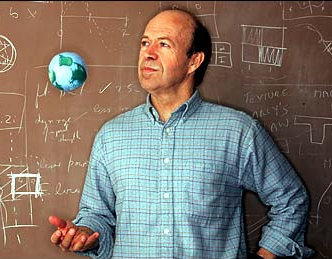
Hypothesis: People make the best decisions they can. When deciding, their short-term interests (the ones that have an immediate impact on them) usually outweigh their long-term interests.
I suspect that one's reasonably uncontroversial.
I wonder if you could say this, though: People make the best decisions they can. Under extreme circumstances people could be persuaded to think about their best interests in terms of things that will happen in their lifetime. They might possibly think about it terms of their children, and maybe maybe in terms of their grandchildren.
People who voluntarily think at the century or millenia level - like Jim Hansen or Professor Vaclav Smil - are extremely rare. What makes them different?

Tuesday, October 21, 2008
[Long Range Thinking] Types of LRT
So, what types of long-range thinking am I talking about? Here's the start of a brainstorm:
- Pressed upon you. You have a big life decision to make, and not much time to make it in. A job opportunity has come up that will require you to move cities. You've been dating for a few months and now you have to assess if it's going anywhere.
- Big picture, little person. There's stuff going on that's so big you can't solve it by yourself. And yet it's caused by the contributions of you and thousands or millions of people like you. What do you do? In fact, do you have any obligations to do anything?
- Known unknowns. You've heard about something (like climate change). You think it might require understanding, but something's stopping you or you're procrastinating.
- Unknown unknowns. Paraphrasing from Adam Kahane's 'Solving Tough Problems' again, the future's tough to predict because it can be influenced.
- Predictable. Known knowns. At the moment, you need money food and shelter to survive. How will you provide those for yourself and your family?
Monday, October 20, 2008
[Long Range Thinking] What inhibits LRT?
Hypothesis: your ability to think long-range gets better or worse depending on the situation.
In some areas of your life, you'll be great at it (finances or writing, for example), and in others you will suck (finances or writing, for example).
Pressure is probably a factor. Situations that have long-range implications but require an immediate response may lead to you not making the best decision. Pressure may inhibit long-range thinking.
... But I'm not entirely sure that this is what I mean when I talk about 'long-range'. Probably time to start unpacking that, and figuring out the different types of 'long-range thinking' there are.
Any suggestions?
In some areas of your life, you'll be great at it (finances or writing, for example), and in others you will suck (finances or writing, for example).
Pressure is probably a factor. Situations that have long-range implications but require an immediate response may lead to you not making the best decision. Pressure may inhibit long-range thinking.
... But I'm not entirely sure that this is what I mean when I talk about 'long-range'. Probably time to start unpacking that, and figuring out the different types of 'long-range thinking' there are.
Any suggestions?
Sunday, October 19, 2008
[Long Range Thinking] Why don't we recognise problems?
To paraphrase a synopsis of Stumbling onto Happiness, we're not very good at recognising what the future will be like.
To mash-up a famous quote, the problems of the future are already here. They're just not evenly distributed yet.
To mash-up a famous quote, the problems of the future are already here. They're just not evenly distributed yet.
Saturday, October 18, 2008
[Long Range Thinking] The simplest way to think about it
Understand there's a problem.
Understand what the problem is.
Understand how to solve the problem.
Understand what the problem is.
Understand how to solve the problem.
Friday, October 17, 2008
[Long Range Thinking] The Goal
The goal is to improve our ability to see problems that aren't problems yet (or that don't seem to be problems yet).
Thursday, October 16, 2008
[Long Range Thinking] Problems where the people involved disagree
From 'Solving Tough Problems', by Adam Kahane:

... problems are tough because they are complex, and there are three types of complexity: dynamic, generative, and social.
A problem has low social complexity if the people who are part of the problem have common assumptions, values, rationales, and objectives.
In a well-functioning team, for example, members look at things similarly, and so a boss or expert can easily propose a solution that everyone agrees with.

A problem has high social complexity if the people involved look at things very differently. South Africa in the early 1990s of had the perspectives of black versus white, left versus right, traditional versus modern - classic conditions for polarisation and stuckness.
Problems of high social complexity cannot be peacefully solved by authorities from on high; the people involved must participate in creating and implementing solutions.
Wednesday, October 15, 2008
[Long Range Thinking] Problems where the future is unfamiliar
From 'Solving Tough Problems', by Adam Kahane:

... problems are tough because they are complex, and there are three types of complexity: dynamic, generative, and social.
A problem has low generative complexity if its future is familiar and predictable.
In a traditional village, for example, the future simply replays the past, and so solutions and rules from the past will work in the future.

A problem has high generative complexity if its future is unfamiliar and unpredictable. South Africa in the early 1990s, for example, was moving away from the peculiar rigidities of apartheid and into a new, post-Cold War, rapidly globalising and digitising world.
Solutions to problems of high generative complexity cannot be calculated in advance, on paper, based on what has worked in the past, but have to be worked out as the situation unfolds.
Tuesday, October 14, 2008
[Long Range Thinking] Superstruct
Obviously I can't start posting about long-range thinking without mentioning Superstruct - a new online game that is going to last for another 5 weeks where you play yourself in the year 2019 dealing with a global threat of your choice. Available threats to choose from include food shortages and ubiquitous surveillance.
http://www.superstructgame.org/
Here's the tutorial:
I have some concerns about the game's presentation - in that it feels a little like unpaid market research - but totally applaud its open-source optimism.
Have a play round with the site. Watch the videos. Think about it.
Update: What I'm trying to imagine at the moment is a world in which people from all over the globe can contribute to forecasting about real-world issues. In my head, it has these qualities:
http://www.superstructgame.org/
Here's the tutorial:
I have some concerns about the game's presentation - in that it feels a little like unpaid market research - but totally applaud its open-source optimism.
Have a play round with the site. Watch the videos. Think about it.
Update: What I'm trying to imagine at the moment is a world in which people from all over the globe can contribute to forecasting about real-world issues. In my head, it has these qualities:
- a short-term commitment
- limited group size (120 or so?)
- produces results or next-actions-to-take or synthesises its findings into a readable / viewable form
[Long Range Thinking] Problems where cause and effect are far apart
From 'Solving Tough Problems', by Adam Kahane:
... problems are tough because they are complex, and there are three types of complexity: dynamic, generative, and social.
A problem has a low dynamic complexity if cause and effect are close together in space and time.
In a car engine, for example, a cause produce effects that are nearby, immediate, and obvious; and so, why an engine doesn't run can usually be understood and solved by testing and fixing one piece at a time.
By contrast, a problem has high dynamic complexity if cause and effect are far apart in space and time. For example, the economic decisions in New York affect the price of gold in Johannesburg, and apartheid-era educational policies affect present-day black employment prospects. Such problems - management theorist Russell Ackoff calls them " messes" - can only be understood systemically, taking account of the interrelationships among the pieces and the functioning of the system as a whole.
Monday, October 13, 2008
[Long Range Thinking] The two concepts, plus a third
You could sum up the two concepts in the previous post as:
a) the 'timeline' - the length of time a person is comfortable making plans for
b) the 'scope' - the limits of how complex a situation a person is comfortable making plans about.
A gambling addict can have a timeline of between 30 seconds and a couple of minutes. "Where's the next $2 coin for the pokies coming from?"
Many people are daunted by the scope of an issue like climate change. There are many variables involved, including a mass of scientific data to assess and reinterpret into terms intelligible to you, decisions to make about likely scenarios, and a global ecosystem to try and visualise.
And that reminds me, we need to add a third concept:
c) the 'responsibility' - how much action do you need to take, or should you take, or do you think everyone else is taking?
I'm not totally happy with the labels for these concepts yet, but they'll do for a start.
a) the 'timeline' - the length of time a person is comfortable making plans for
b) the 'scope' - the limits of how complex a situation a person is comfortable making plans about.
A gambling addict can have a timeline of between 30 seconds and a couple of minutes. "Where's the next $2 coin for the pokies coming from?"
Many people are daunted by the scope of an issue like climate change. There are many variables involved, including a mass of scientific data to assess and reinterpret into terms intelligible to you, decisions to make about likely scenarios, and a global ecosystem to try and visualise.
And that reminds me, we need to add a third concept:
c) the 'responsibility' - how much action do you need to take, or should you take, or do you think everyone else is taking?
I'm not totally happy with the labels for these concepts yet, but they'll do for a start.
[Long Range Thinking] The Basics
When it comes to thinking about and planning for the future, my intuition tells me that most people are better at thinking about short-term consequences than longer-term ones. The graph could look something like this:
 The question is: what tools and techniques can we use or create to make it look more like this:
 Also, my intuition tells me that most people are better at thinking about things in their immediate vincinity than bigger ones.
Other things to consider:
Danyl once told me that we evolved on the savannahs to think about things that move slower than running speed, occur in the space of a day, and involve numbers less than seven.
In The Tipping Point, Malcolm Gladwell cites a study that found our social structures start to break down as soon as they're larger than 120 people.
 The question is: what tools and techniques can we use or create to make it look more like this:
 Also, my intuition tells me that most people are better at thinking about things in their immediate vincinity than bigger ones.
Other things to consider:
Danyl once told me that we evolved on the savannahs to think about things that move slower than running speed, occur in the space of a day, and involve numbers less than seven.
In The Tipping Point, Malcolm Gladwell cites a study that found our social structures start to break down as soon as they're larger than 120 people.
Sunday, October 12, 2008
Useful links
Here's the stuff that made it through my cull of Google Reader this week:
Let's make some animated movies. I haven't played around with either of these sites yet, but the tutorials make it sound like it simply a matter of typing and clicking to create a short film. (h/t Pulp 2.0)
Xtranormal
Goanimate
Also over at Pulp 2.0, Bill Cunningham talks about having a 'pulp notes' file, a nice tool for storing fragments of dialogue and ideas for later use.
Let Michael Caine teach you about film-acting.
I link to Morgue linking to Matt and Jon's applications for the Evil League of Evil. Really good, sharp characteristions from both teams (and I suspect Morgue might also find himself in contention for his 15-second cameo as the Devil's Advocate.)
Vincent Baker has written a new fantasy RPG. At the moment it's free, because he wants to see if it's readable - is it communicating the play experience he wants?
Here's a hack to improve pretty anything in your life. I first read this on Seth Godin's blog, but Trent over at the Simple Dollar generalises it.
The Casual Kitchen compiles a whole bunch of links on low-cost cooking.
An overview of some of the thinking about climate change we'll be doing as a society and as individuals over the next few years. Check it out.
Some Paul Krugman and Americablog linkage to analysis of the financial crisis:
If you want to kick arse at folding t-shirts, then here's how: (a 22-second instructional video)
Have a great week
Let's make some animated movies. I haven't played around with either of these sites yet, but the tutorials make it sound like it simply a matter of typing and clicking to create a short film. (h/t Pulp 2.0)
Xtranormal
Goanimate
Also over at Pulp 2.0, Bill Cunningham talks about having a 'pulp notes' file, a nice tool for storing fragments of dialogue and ideas for later use.
Let Michael Caine teach you about film-acting.
I link to Morgue linking to Matt and Jon's applications for the Evil League of Evil. Really good, sharp characteristions from both teams (and I suspect Morgue might also find himself in contention for his 15-second cameo as the Devil's Advocate.)
Vincent Baker has written a new fantasy RPG. At the moment it's free, because he wants to see if it's readable - is it communicating the play experience he wants?
Here's a hack to improve pretty anything in your life. I first read this on Seth Godin's blog, but Trent over at the Simple Dollar generalises it.
The Casual Kitchen compiles a whole bunch of links on low-cost cooking.
An overview of some of the thinking about climate change we'll be doing as a society and as individuals over the next few years. Check it out.
Some Paul Krugman and Americablog linkage to analysis of the financial crisis:
If you want to kick arse at folding t-shirts, then here's how: (a 22-second instructional video)
Have a great week
Wednesday, October 01, 2008
[The Limit] How to finish - Redefine your identity
I used to think of myself as "the man who is writing The Limit."
Now I'm thinking of myself as "the man who is finishing The Limit" (or "has finished it", on a good day).
I think that redefinition is important. Maybe part of the reason I've kept rewriting this for so long as because that is how I've defined myself.
***
I'm about a third of the way through the script now, and am very pleased with how this final, brutal cull is turning out. I reckon it is approaching being something very special, but the ending is gunna be very tricky.
Now I'm thinking of myself as "the man who is finishing The Limit" (or "has finished it", on a good day).
I think that redefinition is important. Maybe part of the reason I've kept rewriting this for so long as because that is how I've defined myself.
***
I'm about a third of the way through the script now, and am very pleased with how this final, brutal cull is turning out. I reckon it is approaching being something very special, but the ending is gunna be very tricky.
Monday, September 22, 2008
West Wing - When Presidents collide
Because the West Wing and I are dating again after seeing other TV shows for the last five years, I link to this: a conversation between Barack Obama and President Jed Bartlett, as written by Aaron Sorkin.
Here.
What makes it strong, I think, is Bartlett's acknowledgement that he is a fictional character.
Here.
What makes it strong, I think, is Bartlett's acknowledgement that he is a fictional character.
Thursday, September 18, 2008
[The Limit] How to finish - Submit the script
Talking with Mum and Dad last night, it suddenly became clear to me: at some point I need to stop giving my script to readers.
My writing cycle has gone a little like this: finish the script, give it to some trusted readers to see if it makes sense, they comment, I adjust and finish the script, give it to some trusted readers to see if it makes sense, they comment, I adjust and ...
Wait. That is a cycle. I am using the process of 'giving the script to readers and getting insightful feedback from them' as a form of procrastination.
At some point I need to declare that I have confidence in my own writing, and that the work needs to be submitted to the actual audience for them to judge (in the case of the Limit, that actual audience is my list of producers).
The new process: figure out the standard I want to hit, determine if I've hit it, then make sure I have confidence in my own writing.
Submit. The. Script.
My writing cycle has gone a little like this: finish the script, give it to some trusted readers to see if it makes sense, they comment, I adjust and finish the script, give it to some trusted readers to see if it makes sense, they comment, I adjust and ...
Wait. That is a cycle. I am using the process of 'giving the script to readers and getting insightful feedback from them' as a form of procrastination.
At some point I need to declare that I have confidence in my own writing, and that the work needs to be submitted to the actual audience for them to judge (in the case of the Limit, that actual audience is my list of producers).
The new process: figure out the standard I want to hit, determine if I've hit it, then make sure I have confidence in my own writing.
Submit. The. Script.
The next Batman movie
Given where The Dark Knight leaves Batman (and given who managed to make it through to the closing credits), I got my pick for one of the new characters in Film 3:
Huntress.
Huntress.
Wednesday, August 13, 2008
N - an animated Stephen King story
There's a new Stephen King story on the net. This one has been done as a series of two-minutes episodes, drawn by Alex Maleev, and partially animated.
The story is a neat cthulhoid take on obsessive-compulsive disorder, and some of the animation works better on screen than I think it will on the pages of the soon-to-be-published short story.
Watch it here. (And count the stones!)
There are going to be 25 episodes in total: a new one will be published each weekday, and they're about halfway through at the moment. There's some weak-ish voice acting to start with, but that soon gets better. I'm also a fan of its mood.
The story is a neat cthulhoid take on obsessive-compulsive disorder, and some of the animation works better on screen than I think it will on the pages of the soon-to-be-published short story.
Watch it here. (And count the stones!)
There are going to be 25 episodes in total: a new one will be published each weekday, and they're about halfway through at the moment. There's some weak-ish voice acting to start with, but that soon gets better. I'm also a fan of its mood.
Friday, July 18, 2008
Gilmore Girls - the final season
Just finished Season 7 of Gilmore Girls - an occasion that needs to be marked.
When I first started this blog, GG was the fifth show I mentioned. I've posted news about it ever since, including the depressing Sherman-Palladino contract negotiation debacle. As a result of (basically) firing the show's creators, I couldn't work up the enthusiasm to watch the seventh and final season at the time it aired. I heard rumours on the internet - that it had a wavering tone, there'd been a dulling of the dialogue, and that there was an implausible - or at least irritating and obviously time-marking - romantic relationship for one of the leads.
But I tuned in occasionally - mostly in the second half of the show's run. And what I saw impressed me. The episodes had moments that counted as series highlights for me: Lorelai and Luke meeting in the maze, Lorelai singing karaoke.
So I guess I was predisposed to like Season 7 when I finally sat down to watch it on DVD, because I had faith that it would go to the right places and find the right tone.
I'm not going to say much more than that I enjoyed it, and that I loved the final episode, but in the spirit of analysis I do have some observations:
1. We needed the Christopher arc. Chris has been a part of the show since the beginning: he was a strong post-Max Medina romantic possibility for Lorelai, and since then he's orbited her for five seasons. I appreciated that we got a definitive answer to the nature of their relationship - and that the story was based on their character flaws.
2. But lots of Chris means very little Luke and Lorelai. Removing their scenes removes a central dynamic that makes the show what it was. However, I coped with having very little Rory and Lorelai in the first half of Season 6; I found it pretty easy to deal with this.
3. Michel - gay or not? Okay Jenni, you might have a point on this one.
4. Talk, talk, talk. I found a lot of the early episodes had scenes of main characters confiding to secondary characters about how they felt about things that had just happened or were going to happen or which might happen. And lots of secondary characters (like TJ) who were obviously introduced as a means of giving us access to Luke's thoughts on the Lorelai situation. On the other hand, this eased off as the season went on. Characters began to act, decide, and repress and compartmentalise in really interesting ways. Overall, I can forgive the sometimes not so interesting talky-talk as a side-effect of the writing team developing a post-Amy-Sherman-Palladino groove.
5. The show seemed to move faster. This is the first time I've watched a whole season of the show in roughly 24-hours. Each episode dealt with a pretty big chunk of emotional territory, and the whole thing felt more soap-opera-ry than usual.
To synthesise all that - you've got a show that (early on) often lacked scenes that pushed the story along, felt more like a soap opera than its normal shaggy easy-going self, and removed a key relationship (Luke and Lorelai) for a large stretch.
On the other hand, you've got this:
And this:
So, yeah, I'm gunna say: Amy and Daniel, and David Rosenthal, Lauren Graham and Alexis Bledel - thank you very much. You done good.
When I first started this blog, GG was the fifth show I mentioned. I've posted news about it ever since, including the depressing Sherman-Palladino contract negotiation debacle. As a result of (basically) firing the show's creators, I couldn't work up the enthusiasm to watch the seventh and final season at the time it aired. I heard rumours on the internet - that it had a wavering tone, there'd been a dulling of the dialogue, and that there was an implausible - or at least irritating and obviously time-marking - romantic relationship for one of the leads.
But I tuned in occasionally - mostly in the second half of the show's run. And what I saw impressed me. The episodes had moments that counted as series highlights for me: Lorelai and Luke meeting in the maze, Lorelai singing karaoke.
So I guess I was predisposed to like Season 7 when I finally sat down to watch it on DVD, because I had faith that it would go to the right places and find the right tone.
I'm not going to say much more than that I enjoyed it, and that I loved the final episode, but in the spirit of analysis I do have some observations:
1. We needed the Christopher arc. Chris has been a part of the show since the beginning: he was a strong post-Max Medina romantic possibility for Lorelai, and since then he's orbited her for five seasons. I appreciated that we got a definitive answer to the nature of their relationship - and that the story was based on their character flaws.
2. But lots of Chris means very little Luke and Lorelai. Removing their scenes removes a central dynamic that makes the show what it was. However, I coped with having very little Rory and Lorelai in the first half of Season 6; I found it pretty easy to deal with this.
3. Michel - gay or not? Okay Jenni, you might have a point on this one.
4. Talk, talk, talk. I found a lot of the early episodes had scenes of main characters confiding to secondary characters about how they felt about things that had just happened or were going to happen or which might happen. And lots of secondary characters (like TJ) who were obviously introduced as a means of giving us access to Luke's thoughts on the Lorelai situation. On the other hand, this eased off as the season went on. Characters began to act, decide, and repress and compartmentalise in really interesting ways. Overall, I can forgive the sometimes not so interesting talky-talk as a side-effect of the writing team developing a post-Amy-Sherman-Palladino groove.
5. The show seemed to move faster. This is the first time I've watched a whole season of the show in roughly 24-hours. Each episode dealt with a pretty big chunk of emotional territory, and the whole thing felt more soap-opera-ry than usual.
To synthesise all that - you've got a show that (early on) often lacked scenes that pushed the story along, felt more like a soap opera than its normal shaggy easy-going self, and removed a key relationship (Luke and Lorelai) for a large stretch.
On the other hand, you've got this:
And this:
So, yeah, I'm gunna say: Amy and Daniel, and David Rosenthal, Lauren Graham and Alexis Bledel - thank you very much. You done good.
Friday, March 28, 2008
[RPG] Bad Family - Shooting the Sacred Cows
Tuesday night, my friends helped me out with an enlightening playtest of my game-in-development, Bad Family (previously known as the Lucky Joneses). “Enlightening”, because this playtest helped me realise how I can tackle the process of rewriting games, much like I’ve spent the last few years figuring out how to rewrite scripts.
Coming back to it after a break of maybe a year allowed me to see where it was working and where it wasn’t. Now I’ve realised that I can use playtests to isolate areas that aren’t working. Working on just those areas gives me an achievable problem to fix, and encourages me to try out different iterations of the game. Rather than try and make it perfect all at once, I can just hone in on creating the type of fun I want.
Ralph Mazza calls the process of realising that the cherished parts of your game aren’t actually working and that you’ll have to change them, “Shooting the Sacred Cows”. I now know what he means. Bad Family is definitely working in the way it creates an unstable and funny situation - the places where it isn’t working are due to me designing the game so that it doesn’t encourage the behaviours I want.
Thursday, March 27, 2008
[TV] Well done, New Zealand TV
I don’t know if this has hit the news here yet or not, but the creator of Veronica Mars (Rob Thomas) will be showrunning the American remake of Outrageous Fortune.
That’s right, a NZ show being remade for the American market. Which may not have happened since Julie Christie sold the format for ‘The Chair’. And I’m not sure has ever happened for a drama. This is a huge thing, and my congratulations to James Griffin and Rachel Lang – the creators of the original thing.
… And how cool was it to see two Kiwi actors in Lost last night? Especially the actor who plays Wolf in OF as the mother-freaking Captain!
Hopefully, the final test
Just checking the formatting of blog posts when I’m sending it from this new email address. My holiday has ended, so I’m expecting posting frequency to decrease again. I also finished formatting the Limit yesterday, using a free scriptwriting package called CeltX – it was good stuff.
Tuesday, March 25, 2008
Duma Key
by Stephen King
Rather than talk about the plot of King's latest novel (the owner of a construction company loses his arm in a horrific on-site accident, and has both medical and supernatural difficulties adjusting to his new life), I'd like to talk about the way it feels.
The novel's beginning is both brutally efficient at changing the status quo by destroying a man's life, and contemplative - it's interested in and observes the ideas of healing, and of establishing a new routine. It takes about a hundred pages to deal with this setup, and then the focus clearly shifts into the main character's new life, his new routine, meeting new people, and slowly ramping up the supernatural elements. From there, it's the steady accumulation of back story, placing tension on old and new friends, and a rising animosity (from the supernatural threat.
Duma Key is definitely a companion piece to Bag of Bones - almost an echo of it in some ways. The two stories both deal with grief, relocating, and a generational mystery - but Duma Key feels looser, more relaxed, and King is diving right into an exploration of the creative process (this time painting, rather than writing) rather than exploring the idea of writer's block. The threat here is also far more epic than in Bag of Bones. Its reach is (theoretically) global, and the sense of power and evil that King manages to create at times approaches the One Ring.
The writing contains King's standard tricks - end of chapter foreshadowing, italicised inner voices speaking in sinister fragments, wealthy protagonists, and Outsiders versus the White (although not referred to by those names). These things have been done many times before, but they're still effective. What's even more effective is his gift of creating characters you care about - which leads to a great 40 pages towards the end of the story that are so desperate and awful, so unafraid to truly screw with the characters you care about, that is easily matches Bag of Bones' concluding experiment in point-of-view for horror.
Recommended - and it makes me wonder if he's gearing up to write stories that are completely non-supernatural, non-thrillers. A fulfilment of the "modern Dickens" label that some publishers and reviewers have been applying to him ever since the Green Mile.
Rather than talk about the plot of King's latest novel (the owner of a construction company loses his arm in a horrific on-site accident, and has both medical and supernatural difficulties adjusting to his new life), I'd like to talk about the way it feels.
The novel's beginning is both brutally efficient at changing the status quo by destroying a man's life, and contemplative - it's interested in and observes the ideas of healing, and of establishing a new routine. It takes about a hundred pages to deal with this setup, and then the focus clearly shifts into the main character's new life, his new routine, meeting new people, and slowly ramping up the supernatural elements. From there, it's the steady accumulation of back story, placing tension on old and new friends, and a rising animosity (from the supernatural threat.
Duma Key is definitely a companion piece to Bag of Bones - almost an echo of it in some ways. The two stories both deal with grief, relocating, and a generational mystery - but Duma Key feels looser, more relaxed, and King is diving right into an exploration of the creative process (this time painting, rather than writing) rather than exploring the idea of writer's block. The threat here is also far more epic than in Bag of Bones. Its reach is (theoretically) global, and the sense of power and evil that King manages to create at times approaches the One Ring.
The writing contains King's standard tricks - end of chapter foreshadowing, italicised inner voices speaking in sinister fragments, wealthy protagonists, and Outsiders versus the White (although not referred to by those names). These things have been done many times before, but they're still effective. What's even more effective is his gift of creating characters you care about - which leads to a great 40 pages towards the end of the story that are so desperate and awful, so unafraid to truly screw with the characters you care about, that is easily matches Bag of Bones' concluding experiment in point-of-view for horror.
Recommended - and it makes me wonder if he's gearing up to write stories that are completely non-supernatural, non-thrillers. A fulfilment of the "modern Dickens" label that some publishers and reviewers have been applying to him ever since the Green Mile.
Sunday, March 23, 2008
[Script] More on the 20 Sentence Outline
I've taken an initial crack at outlining Possessions, just jotting down all of the ideas that come to me about where the plot could go. There were a bunch of ideas about charcter mixed in with all that, as well ... which led me to my first discovery:
Brainstorm till you're out of inspiration, then process the results. 'Processing' in this case means taking all the ideas about characters, transferring it to their sheets, and scratching them off the
brainstorming list.
I can take all the plot ideas and transfer them into three separate columns - Beginning, Middle, and End (or as I call them, A, B, and C).
For me, it's important to process this list while I'm still in the moment. For some reason, I find it more difficult to read once I've left it for a while. Perhaps it's because it's impossible to capture
the full implications of an idea just by jotting it down on the page in a single sentence - leaving it for a while means those representations of your ideas become less alive to me.
---
A second discovery is that outlining like this makes it possible to overview the whole story, which makes it easy to view the story from each main character's POV in turn - something that can take hours if you're doing it at a fully-written script level.
Saturday, March 22, 2008
Friday, March 21, 2008
Test
[Script] Holidays might be a good thing
Think I'm going to try scheduling these breaks a bit more formally, actually. I reckon something like 2 months of writing at operational intensity, followed by ... two? three? weeks off might be the way to go.
And at the moment, that time off isn't really a break; it's more an opportunity to play around with several ideas (especially a couple of games) that I've been neglecting. Emphasis on the 'play'. It's fun, and kinda productive.
(And scheduling '3 days off' in the middle of those two months of writing could be smart, too.)
... I'm beginning to realise that between the much-more full-time job this year, the full-on writing, and the intense gaming, that there's a pretty reasonable explanation for things being quiet on the blogging front.
And at the moment, that time off isn't really a break; it's more an opportunity to play around with several ideas (especially a couple of games) that I've been neglecting. Emphasis on the 'play'. It's fun, and kinda productive.
(And scheduling '3 days off' in the middle of those two months of writing could be smart, too.)
... I'm beginning to realise that between the much-more full-time job this year, the full-on writing, and the intense gaming, that there's a pretty reasonable explanation for things being quiet on the blogging front.
Thursday, March 20, 2008
[The Limit] On holiday
The last two months of hard slog to rewrite act three have paid off. I typed in ALL of the changes on Tuesday, spent yesterday making the minor edits to acts one and two (and roughing out the scene where those parts meet act three), then knocked off for a beer.
Now there's just an exposition scene to try and simplify, format the whole thing up, and send it out for an embarrassment-check draft (to make sure I haven't written anything too cringe-inducingly stupid).
It's been great rereading it though, after such a long break. I was held rapt by the first half of the film, and could see that my rewrites had made it a very different and (hopefully!) more powerful story.
Now to take some time off.
Now there's just an exposition scene to try and simplify, format the whole thing up, and send it out for an embarrassment-check draft (to make sure I haven't written anything too cringe-inducingly stupid).
It's been great rereading it though, after such a long break. I was held rapt by the first half of the film, and could see that my rewrites had made it a very different and (hopefully!) more powerful story.
Now to take some time off.
[Script] What I've learned
Here's another couple of principles I've managed to extract from this rewrite:
-- If I can think of writing as 'helping' myself - possibly by treating my projects as being by someone else - it activates my desire to help, and makes the writing easier
-- Scripts are all drafts. Nothing is ever finished. Thinking of it like that is a way to beat back perfectionism.
-- If I can think of writing as 'helping' myself - possibly by treating my projects as being by someone else - it activates my desire to help, and makes the writing easier
-- Scripts are all drafts. Nothing is ever finished. Thinking of it like that is a way to beat back perfectionism.
[Script] An experiment - the 20 sentence outline
This weekend I'm going to start trying to outline one of the new movies in 20 sentences. It's an arbitrary constraint, but one that I think focuses the process down into an achievable bit.
The idea is that each sentence describes a sequence in the film.
1. Using my Brainstorming 20 ideas (B20) technique, I'll come up with a whole list of ideas for plot directions. Some of which, I assume, will be incompatible.
2. Arrange those ideas into a rough order, read through them, and figure out where the story goes off the beam.
3. B20 another lot of ideas for that juncture
4. Repeat steps 2 and 3, all the while capturing all of the other plot ideas and character insights that come out of doing this.
I'll let you know how it goes.
The idea is that each sentence describes a sequence in the film.
1. Using my Brainstorming 20 ideas (B20) technique, I'll come up with a whole list of ideas for plot directions. Some of which, I assume, will be incompatible.
2. Arrange those ideas into a rough order, read through them, and figure out where the story goes off the beam.
3. B20 another lot of ideas for that juncture
4. Repeat steps 2 and 3, all the while capturing all of the other plot ideas and character insights that come out of doing this.
I'll let you know how it goes.
Saturday, March 15, 2008
[The Limit] The last scene to rewrite
All of it, the last seven years of writing, it all comes down to this: What's the expression on Tracy's face when she opens the door?
Friday, January 18, 2008
That last entry reminded me that I hadn't linked to our 48 Hour film from 2007. It's called 'Destination Earth'. We got the genres of science fiction and monster movie, and the film had to include three compulsory elements:
-- rope
-- the line of dialogue, "What do you call that?"
-- and the character of Jerry Reid, a hypochondriac.
Here you go:
-- rope
-- the line of dialogue, "What do you call that?"
-- and the character of Jerry Reid, a hypochondriac.
Here you go:
Tuesday, January 15, 2008
Zero budget filmmaking
If we get war movie in this year's 48 Hour film contest, we should do something a little like this:
Subscribe to:
Posts (Atom)