More mini-reviews, this time with the occasional listing of specific act breaks
Lover's Walk
The episode that convinced Joss Whedon that he could mine more dramatic potential from Spike - by protraying him as a drunk, hilariously love-lorn emotional sap/psychopath. It's great comparing the scene of Spike trying to convince Willow to cast a love spell with the scene in Season 4 where he's failing to bite her - Willow as the terrified confident of a confessional Spike is a fun dynamic, and I can see why they revisted that well.
This episode starts building up the question of what going to happen after high school finishes, as Buffy begins to realise the future is wide open to her. A tremendously entertaining episode that finishes on a low point for everyone. It's not key to the overall story of Season 3 though.
Act Break (AB): Spike decides to use Willow.
AB 2: Spike captures Willow and Xander. Wants Willow to cast a spell on Dru.
AB 3: Spike shows up at Buffy's house. He has a heart to heart with Buffy's mum.
AB 4: Spike is under threat, and Buffy and Angel have to protect him. Although I'd argue that the real act-out comes when Cordy gets impaled by a pole.
I enjoyed how the reactions to these act breaks (when we cut back from commercials) are unexpected and reveal character.
The Wish
An episode that ties off quite a few of the romantic subplots from the first third of the season and sets up a new status quo. Cordy's wish doesn't create a subtle alternate reality, but it's a nicely handled one - it feels logical, and it's portrayed in broad strokes that feel appropriate and convey a lot of information.
Amends
Boy, I remember this as a weak episode. And in a way it is - it creates this false jeopardy that Angel was brought back to kill Buffy (*), before swerving into the more believable territory of Angel wanting to destroy himself. The result is pretty damn sappy, but not as bad as I remembered it.
(*) Cos they're totally going to kill off Sarah Michelle Gellar's character halfway through the season, right?
Amends also demonstrates that this show does NOT ignore the emotional reality between the characters. Take a look at the scene where Giles meets Angel for the first time since he's back - Angel killed Giles' girlfriend, and the show tackles that head-on. This emotional continuity is a vital part of the 'watching a novel' effect I'm talking about.
Gingerbread
I remember this as an effective little story, although (like Amends) it's not essential to Season 3. It's a nicely-developed mob-mentality horror story. It also features the transformation of Amy into a rat that becomes so important in Seasons 6 and 8.
I'm beginning to really lock in to the idea that the reason Buffy is so satisfying to rewatch is that the real plots happen in the sub-text of the episode.
Helpless
This felt like a significantly deeper episode to me; a great combination of schlock (suddenly defenceless slayer hunted by vampires) with introspection (what is Buffy without her powers? What is the exact nature of her relationship with Giles?).
I'm impressed by David Fury (the writer of this ep; he later moved to 24). The episode is filled with nice transitions between scenes, and scene endings that are odd, skewed, and quiet. There's also a extended pre-teaser intro that really drew me in to the episode.
This is a Buffy/Giles episode - the presence of other supporting cast has been significantly reduced. Buffy has to deal with Giles' betrayal; the father-daughter vibe between them is more deeply explored (and the conflict between Giles' role as a Watcher and his relationship towards Buffy as a human being is fully brought out into the light). It also ends with a big plot development for Giles - something I'd completely forgotten about.
A good, more serious episode that I think will be pretty important to the rewatching of Season 3.
The Zeppo
I can remember reading that a lot of fans were angry about this episode - presumably because it undermines the reality of the show but undercutting the epic Buffy/Angel love story and the seriousness of preventing the apocalypse. Me, I think that's hilarious.(*)
(*) In particular, check out the music cue when Xander leaves Buffy and Angel alone about 32 minutes into the ep.
This episode is supposedly about Xander's inadequacy, his search for coolness, and generally trying to find his identity in the group. I'd say at a meta-level, it's really about giving us, the audience, a reason to care about Xander by throwing him into an episode that gives him a mega-dose of 'worthiness as a protagonist', making him someone we want to watch.
It doesn't hurt that it uses a whole 'Rosencrantz and Guildenstern are Dead'/what's-happening-backstage structure to tell a series of funny jokes. It also doesn't hurt that Xander and Faith have a couple of scenes together (and check out that impressive 5 seconds of silence as he leaves her motel ... that is some rare stuff in TV, to just watch a character process what's happened to them).
Finally, I'd say check out Xander's costuming. Compare his super-geeky sweater and shirt in the first scene after the title sequence to how he's dressed in the final scene. As with The Wish, it's overt but clearly makes the point about Xander's transformation.
... Now, on to the heart of the season. Episode 14 (Bad Girls), here we come.

Friday, July 31, 2009

Monday, July 27, 2009
Adjusting the blogging schedule again
For the last two months I've been running an experiment on this blog. Posting every couple of days has been fun, but I'm still feeling a bit of pressure. So, I've decided to change my schedule to one post every four days.
That gives me more space, and I expect I'll pop in the occasional blog post between those scheduled posts.(*) I'm also regularly updating the Links of Interest on the top right of the blog, usually every day, with stuff I think is worthy of your attention.
(*) I'm still writing these posts in advance, and auto-scheduling them to publish (this one was written on the 21st of June).
I'm still figuring out what to do with multi-dimensional; I reckon this schedule change will create the environment for me to be able to play around a bit and sort that out.
Synopsis: Elements of Persuasion (The Last 3 Elements)
In The Elements of Persuasion (TEOP), the Antagonist is defined as the thing that is keeping your Hero from achieving their goal(s). This 'thing' could be a person, or a disease (if you're a doctor), or a sinking ship (if you're stuck on the Titanic).
An Antagonist isn't used to create conflict; they're used to "clarify what the conflict is about".
So, here's why TEOP thinks you should use an Antagonist. The authors say that if you're going to persuade people, then they must remember what you've said. Citing studies that indicate that experiencing strong emotions increases the chances of remembering something, the authors then point out that using an Antagonist has two advantages:
You've got to choose the 'right' antagonist, though. One that can be overcome. One that's not a straw villain (either imaginary, or whose threat is overinflated). And one that you don't demonise - because that allows your hero and your audience to learn from them. Choose the right antagonist and you're halfway to succeed (in either the goal you've set for your hero or in persuading your audience).
Awareness and Transformation
TEOP kind of peters out in its final two chapters. Rather than providing 'how to' guides on building moments of awareness and transformation into your stories, it shares a bunch of pretty interesting stories about viral marketing and retail architecture. It's become very obvious by this point that TEOP is a business book, but in these last two chapters it becomes extremely (to be generous) 'indirect' in the way it imparts its lessons; very 'show, don't tell'.
So, drawing on material from the book's introduction, 'Awareness' is the moment that allows us to learn from the story and therefore succeed. When I write it like that, it seems that Awareness applies both to the Hero and to the audience.
You want to create a moment of Awareness in the audience where they see the problem for what it is and the actions they need to take to fix it. Hopefully by this point you'll have also created the Passion to change things and given them a model of how to change (the Hero).
As for Transformation ... well, TEOP says that in commercial storytelling this usually involves you getting paid. But more generally, Transformation involves taking action that changes you and the world around you.
That's all I was able to extract in terms of how to apply the Elements of Persuasion from the last 2 chapters.
Criticisms
I should point out that TEOP contains a bunch of interesting stuff that's not totally on-message. Creating teams, tips for presenting stories effectively, advice about finding meaning in your life. Stuff I found useful, but not for this synopsis.
And it turns out that my criticisms boils down to two points: This is a 225 page book that feels like it should be about 100 pages long, something that's tighter, more on-message. And I'm absolutely not the target audience ... well, sort of absolutely not. I can see how to apply some of this to my day-job. But the book is pitched at business leaders and corporate storytellers/marketeers.
Worthy of having a quick flick-through browse, filled with tangents, and it'll make you work to extract its lessons. That's my take on the Elements of Persuasion; now I'm going to try applying its principles, which I have found useful.
An Antagonist isn't used to create conflict; they're used to "clarify what the conflict is about".
So, here's why TEOP thinks you should use an Antagonist. The authors say that if you're going to persuade people, then they must remember what you've said. Citing studies that indicate that experiencing strong emotions increases the chances of remembering something, the authors then point out that using an Antagonist has two advantages:
- you can easily generate strong negative emotions because of them, and
- audiences will associate those the negative emotions with the Antagonist - keeping your Hero sympathetic.
You've got to choose the 'right' antagonist, though. One that can be overcome. One that's not a straw villain (either imaginary, or whose threat is overinflated). And one that you don't demonise - because that allows your hero and your audience to learn from them. Choose the right antagonist and you're halfway to succeed (in either the goal you've set for your hero or in persuading your audience).
Awareness and Transformation
TEOP kind of peters out in its final two chapters. Rather than providing 'how to' guides on building moments of awareness and transformation into your stories, it shares a bunch of pretty interesting stories about viral marketing and retail architecture. It's become very obvious by this point that TEOP is a business book, but in these last two chapters it becomes extremely (to be generous) 'indirect' in the way it imparts its lessons; very 'show, don't tell'.
So, drawing on material from the book's introduction, 'Awareness' is the moment that allows us to learn from the story and therefore succeed. When I write it like that, it seems that Awareness applies both to the Hero and to the audience.
You want to create a moment of Awareness in the audience where they see the problem for what it is and the actions they need to take to fix it. Hopefully by this point you'll have also created the Passion to change things and given them a model of how to change (the Hero).
As for Transformation ... well, TEOP says that in commercial storytelling this usually involves you getting paid. But more generally, Transformation involves taking action that changes you and the world around you.
That's all I was able to extract in terms of how to apply the Elements of Persuasion from the last 2 chapters.
Criticisms
I should point out that TEOP contains a bunch of interesting stuff that's not totally on-message. Creating teams, tips for presenting stories effectively, advice about finding meaning in your life. Stuff I found useful, but not for this synopsis.
And it turns out that my criticisms boils down to two points: This is a 225 page book that feels like it should be about 100 pages long, something that's tighter, more on-message. And I'm absolutely not the target audience ... well, sort of absolutely not. I can see how to apply some of this to my day-job. But the book is pitched at business leaders and corporate storytellers/marketeers.
Worthy of having a quick flick-through browse, filled with tangents, and it'll make you work to extract its lessons. That's my take on the Elements of Persuasion; now I'm going to try applying its principles, which I have found useful.
Saturday, July 25, 2009
Open Thread
In honour of this weird-ass week: What's the craziest thing that's happened to you recently?
Buffy: The first third of Season 3
Being home with the proto-flu has given me a chance to watch about a third of Buffy Season 3.
Buffy is the show that really started my second phase of thinking about how to write for television. Working on my own show was really like boot camp for TV script-writing. Watching Team Whedon, on the other hand, gave me an opportunity to reflect on a completely different approach. Most notably:
These first seven episodes have played like an overture to the season, gradually moving sub-plots into place - and when I say "gradually", I mean they're not afraid to let crucial characters drop out of entire episodes while they establish other stuff that's going on. That other stuff includes:
It's amazing that by the end of episode 7, the heart of Season 3 has yet to be even hinted at. Sure, Buffy and Faith have had a bit of a well-motivated smackdown in Revelations, but Faith's descent into the dark side? The Mayor's paternal relationship with her?
The characterisations have established that these could be plausible, but even so, they're not even a possibility yet.
Anne
The first episode of Season 3 focuses on Buffy's new life after running away from Sunnydale. The central question is 'What will it take to make Buffy go back home?'. Watching Whedon escalate the pressure on Buffy (to the point of trapping her in a hell dimension, just as Angel was) is fun. And the episode totally delivers on its two obligatory emotional beats: (i) Buffy embracing the fact that she can't run away from being a slayer, and (ii) her reunion with her Mum.
Dead Man's Party
An unusual episode, explicitly dealing with the gang having to reknit itself, and learn to trust each other again, after Buffy's long absence.
This one felt far less solid to me - in fact, I stopped watching it at one point (when Buffy's friends start planning something for her during an emotionally difficult time, without asking her if it's something she'd like). Sure, I could interpret that moment as the friends trying to ignore the fact that the situation is emotionally difficult. Unfortunately, it really felt like "Full House Syndrome" - the inability of characters to learn and grow during the course of a TV series.
Faith, Hope and Trick
A really complicated episode developing several subplots, including Buffy moving on from her relationship with Angel, and ending with the kick of a major character returning to Sunnydale.
Beauty and the Beasts
Man, this episode totally features my favourite shot ever of Oz in werewolf form - I love the way he bounds through the halls of the school; it feels genuinely inhuman.
By this point, the show is firmly re-establishing its style of using the A-plots of each episode to advance the bigger picture plot. This is what I mean when I talk about Joss Whedon's voice - not the phrasings he uses for writing dialogue, but the idea that episodes aren't about beating the monster, or even about facing what the monster represents. Episodes are incidents in the broader 'novel' of the season, and the plot of that novel is moving relentlessly forward, sometimes extremely subtly with each episode.
Homecoming
Weird to describe an episode that features a competition called "Slayerfest 98" and a rocket launcher as more of a character piece, but there you go. Great to see Cordelia get a hero moment.
Band Candy
Way more fun that I remembered - I was actually a bit nervous about rewatching this one (much like the upcoming 'Amends'). Sets up a great little run of character moments in future episodes between Joyce and Giles, and outs the Mayor as a bad guy with supernatural connections - but that's really a minor part of this episode, and I'd say it's not totally clear what his status as a recurring villain is at this point
Revelations
A great episode that deals with bringing the news that Angel is 'alive' to the group: news which puts Faith and Buffy into real conflict for the first time. I like episodes like this - where characters who like each other are strongly opposed, and that opposition comes from well-motivated reasons that have been developing for a while.
Yes, I like drama.
Buffy is the show that really started my second phase of thinking about how to write for television. Working on my own show was really like boot camp for TV script-writing. Watching Team Whedon, on the other hand, gave me an opportunity to reflect on a completely different approach. Most notably:
- a strong focus on using the act breaks to twist or invert the situation
- using the main story to develop and comment on a character's emotions
- telling a coherent season-long story almost totally inside the subtext of the episodes; it's a story that's invisible to a person who watches just one episode, but cumulatively it's quite epic in scale and makes a season of Buffy feel like a novel.
These first seven episodes have played like an overture to the season, gradually moving sub-plots into place - and when I say "gradually", I mean they're not afraid to let crucial characters drop out of entire episodes while they establish other stuff that's going on. That other stuff includes:
- Willow and Xander develop feelings for each other
- Angel returns from several hundred years being tortured in a hell dimension;he's in a bestial state
- Faith, another slayer, arrives in Sunnydale and develops a complicated relationship with Buffy
- The Mayor is slowly (very slowly) introduced as a character (*).
It's amazing that by the end of episode 7, the heart of Season 3 has yet to be even hinted at. Sure, Buffy and Faith have had a bit of a well-motivated smackdown in Revelations, but Faith's descent into the dark side? The Mayor's paternal relationship with her?
The characterisations have established that these could be plausible, but even so, they're not even a possibility yet.
Anne
The first episode of Season 3 focuses on Buffy's new life after running away from Sunnydale. The central question is 'What will it take to make Buffy go back home?'. Watching Whedon escalate the pressure on Buffy (to the point of trapping her in a hell dimension, just as Angel was) is fun. And the episode totally delivers on its two obligatory emotional beats: (i) Buffy embracing the fact that she can't run away from being a slayer, and (ii) her reunion with her Mum.
Dead Man's Party
An unusual episode, explicitly dealing with the gang having to reknit itself, and learn to trust each other again, after Buffy's long absence.
This one felt far less solid to me - in fact, I stopped watching it at one point (when Buffy's friends start planning something for her during an emotionally difficult time, without asking her if it's something she'd like). Sure, I could interpret that moment as the friends trying to ignore the fact that the situation is emotionally difficult. Unfortunately, it really felt like "Full House Syndrome" - the inability of characters to learn and grow during the course of a TV series.
Faith, Hope and Trick
A really complicated episode developing several subplots, including Buffy moving on from her relationship with Angel, and ending with the kick of a major character returning to Sunnydale.
Beauty and the Beasts
Man, this episode totally features my favourite shot ever of Oz in werewolf form - I love the way he bounds through the halls of the school; it feels genuinely inhuman.
By this point, the show is firmly re-establishing its style of using the A-plots of each episode to advance the bigger picture plot. This is what I mean when I talk about Joss Whedon's voice - not the phrasings he uses for writing dialogue, but the idea that episodes aren't about beating the monster, or even about facing what the monster represents. Episodes are incidents in the broader 'novel' of the season, and the plot of that novel is moving relentlessly forward, sometimes extremely subtly with each episode.
Homecoming
Weird to describe an episode that features a competition called "Slayerfest 98" and a rocket launcher as more of a character piece, but there you go. Great to see Cordelia get a hero moment.
Band Candy
Way more fun that I remembered - I was actually a bit nervous about rewatching this one (much like the upcoming 'Amends'). Sets up a great little run of character moments in future episodes between Joyce and Giles, and outs the Mayor as a bad guy with supernatural connections - but that's really a minor part of this episode, and I'd say it's not totally clear what his status as a recurring villain is at this point
Revelations
A great episode that deals with bringing the news that Angel is 'alive' to the group: news which puts Faith and Buffy into real conflict for the first time. I like episodes like this - where characters who like each other are strongly opposed, and that opposition comes from well-motivated reasons that have been developing for a while.
Yes, I like drama.
Thursday, July 23, 2009
Synopsis: Elements of Persuasion (The Hero)
Heroes show us how to change things. That's what I've taken to be the essence of The Elements of Persuasion's (TEOP) discussion about the Hero. They live the story, personify it, and show us how to change our own lives.
Once you've connected with an audience through a shared passion, a hero allows the audience to 'access' the story. (*) Having a hero allows the storyteller to unify the audience, so that they all see the events and meaning of the story through the same point-of-view.
(*) I'm using 'access' to synthesise a whole bunch of concepts in TEOP: the idea of 'connecting the story to the audience's world at a broader level', 'equality', and 'looking at the world through the hero's eyes'.
'What is a hero?' is the obvious question. TEOP describes a few qualities that heroes possess; they are :
The book provides some pretty reasonable examples of corporate and team stories, such as the behind-the-counter routines at Starbucks (story: "This is how you make a really good cup of coffee"), Harley Davidson (story: freedom and fun through getting on a bike ... I guess), and the US Marine Corp (story: Always faithful). (**)
(**) In fact, the book's description of USMC basic training is definitely worth a read, especially its description of the Crucible on pp 99-101 which synopses a 54-hour test of group performance under combat conditions coupled with myth-building. It is both stranger and more interesting than I'd ever imagined basic to be.
TEOP's advice is to reduce your story down to its central concept. Transform that concept into actions. Then choose a hero who demonstrates how to take those actions.
Criticisms
As with the section on passion, I've found that once I've boiled down TEOP's take on the hero, there's a lot of insightful material that I'd never thought of.
However, some negatives are also becoming obvious. The book is primarily directed toward a corporate audience (referring to them as 'corporate storytellers' as some points); in other words, an audience that is not me. That explains a lot about why some of the examples leave me cold.
The idea of associating each element of persuasion with one of the five classical elements seems a bit spurious. Why is the Hero associated with Earth, for instance? You could make an equally good case for Air, Fire, Water, or ... I think 'Spirit' is the fifth element the authors use.
It's a little unclear how to operationalise some of the stuff TEOP talks about. "Heroes stand their ground," says the book. "They control some territory (whether it be physical, emotional, intellectual, or spiritual) of value." Interesting stuff, but more something you the author recognise than something you implement.
There are sections (like the one on active listening) that feel like tangents or padding. I can sort of see how they connect with the aim of the book, but I'm not quite sure when to utilise them in the process of creating and telling your story.
Next up, 'The Antagonist', via a chapter of sticky stories (a chapter that I'm not quite fits in to TEOP's five elements schema).
Once you've connected with an audience through a shared passion, a hero allows the audience to 'access' the story. (*) Having a hero allows the storyteller to unify the audience, so that they all see the events and meaning of the story through the same point-of-view.
(*) I'm using 'access' to synthesise a whole bunch of concepts in TEOP: the idea of 'connecting the story to the audience's world at a broader level', 'equality', and 'looking at the world through the hero's eyes'.
'What is a hero?' is the obvious question. TEOP describes a few qualities that heroes possess; they are :
- the highest common denominator; they bring out the best in themselves, the listener and the story
- complexity; heroes surprise us
- authenticity; heroes are real and charismatic
The book provides some pretty reasonable examples of corporate and team stories, such as the behind-the-counter routines at Starbucks (story: "This is how you make a really good cup of coffee"), Harley Davidson (story: freedom and fun through getting on a bike ... I guess), and the US Marine Corp (story: Always faithful). (**)
(**) In fact, the book's description of USMC basic training is definitely worth a read, especially its description of the Crucible on pp 99-101 which synopses a 54-hour test of group performance under combat conditions coupled with myth-building. It is both stranger and more interesting than I'd ever imagined basic to be.
TEOP's advice is to reduce your story down to its central concept. Transform that concept into actions. Then choose a hero who demonstrates how to take those actions.
Criticisms
As with the section on passion, I've found that once I've boiled down TEOP's take on the hero, there's a lot of insightful material that I'd never thought of.
However, some negatives are also becoming obvious. The book is primarily directed toward a corporate audience (referring to them as 'corporate storytellers' as some points); in other words, an audience that is not me. That explains a lot about why some of the examples leave me cold.
The idea of associating each element of persuasion with one of the five classical elements seems a bit spurious. Why is the Hero associated with Earth, for instance? You could make an equally good case for Air, Fire, Water, or ... I think 'Spirit' is the fifth element the authors use.
It's a little unclear how to operationalise some of the stuff TEOP talks about. "Heroes stand their ground," says the book. "They control some territory (whether it be physical, emotional, intellectual, or spiritual) of value." Interesting stuff, but more something you the author recognise than something you implement.
There are sections (like the one on active listening) that feel like tangents or padding. I can sort of see how they connect with the aim of the book, but I'm not quite sure when to utilise them in the process of creating and telling your story.
Next up, 'The Antagonist', via a chapter of sticky stories (a chapter that I'm not quite fits in to TEOP's five elements schema).
Tuesday, July 21, 2009
Synopsis: Elements of Persuasion (Passion)
The first 'element' of persuasion is the PASSION with which a story is told. 'Passion' is defined as the energy that makes you need to tell a story. The two big advantages of passion are that:
(i) passion can cut through all the competing demands for an audience's attention and make them listen to you
(ii) if your story connects with people emotionally, they will spread it for you because it's fun to tell (*).
(*) I'm not entirely sure the authors justify how that second point follows from a story being told with passion, though. Unless 'passion' is simultaneously "the energy that makes you need to tell a story", and "the emotion you want the story to create."
According to the authors, speaking with passion has another couple of benefits. It warms the audience up (getting them ready to want to listen to you). Passion then makes the story come alive for them; the story seems more vivid and more real.
Apparently, the more passionate and personal your story is, the easier it is to overcome the natural stage fright of telling your story to people. In particular, stories that are personal are easier to remember, and able to be told in a way that makes you appear natural and relaxed. They also increase your likeability and show that you're authentic (talking about something that means something to you).
Which brings me back to the first point: passion is your need to tell a story. The Elements of Persuasion (TEOP)describes itself as being about how to get other people to care about what you care about. The key to this, according to TEOP is that you need to be personally committed and passionately involved (in order to be able to make anyone else care). Before you tell your story, you need to ask:
Criticisms
As I mentioned earlier, I'm also trying to figure out why I've found this book so difficult to read. At this point, I don't really have firm conclusions, but some of the stuff I've noticed while working through these two chapters on Passion are:
(i) passion can cut through all the competing demands for an audience's attention and make them listen to you
(ii) if your story connects with people emotionally, they will spread it for you because it's fun to tell (*).
(*) I'm not entirely sure the authors justify how that second point follows from a story being told with passion, though. Unless 'passion' is simultaneously "the energy that makes you need to tell a story", and "the emotion you want the story to create."
According to the authors, speaking with passion has another couple of benefits. It warms the audience up (getting them ready to want to listen to you). Passion then makes the story come alive for them; the story seems more vivid and more real.
Apparently, the more passionate and personal your story is, the easier it is to overcome the natural stage fright of telling your story to people. In particular, stories that are personal are easier to remember, and able to be told in a way that makes you appear natural and relaxed. They also increase your likeability and show that you're authentic (talking about something that means something to you).
Which brings me back to the first point: passion is your need to tell a story. The Elements of Persuasion (TEOP)describes itself as being about how to get other people to care about what you care about. The key to this, according to TEOP is that you need to be personally committed and passionately involved (in order to be able to make anyone else care). Before you tell your story, you need to ask:
- Do I really care about what I'm about to say?
- It is true?
Criticisms
As I mentioned earlier, I'm also trying to figure out why I've found this book so difficult to read. At this point, I don't really have firm conclusions, but some of the stuff I've noticed while working through these two chapters on Passion are:
- the book occasionally makes some spurious connections between different facts
- some of the books used as examples have quite tenuous connections to the points being made (going from the idea of 'victory through a single strike' as portrayed in the Book of Five Rings to William Safire's (and Presentation Zen's) idea of summing up a story with a single memorable phrase ... well, that's quite a stretch for an analogy
- it's not focusing on the 'How' of how to tell or construct stories; so far, it's more about providing examples of stories. I assume it's hoping we'll learn through reflecting on those stories.
Sunday, July 19, 2009
The Strain: ... and now I have a sore throat
Weird how reading a book where the primary symptom of vampirism is 'having a sore throat' can make me more aware of my own developing ill health.
The mid-section of The Strain starts developing some of the infected characters and their family members (aka future victims). This part of the novel felt very early James Herbert - it was good at rapidly building up mildly sympathetic characters and then killing them just as I was getting interested in them.
It also hinted at a bigger political situation involving ancient vampires that feels just slightly a little bit totally like antediluvians in Vampire the Masquerade.
cf. Penny Arcade.
The Strain finishes off with a lot of pulpy action that will undoubtably make a reasonable movie finale; it also draws on some stuff about rats that reminds me a lot of Scott Westerfeld's Peeps and The Last Days (*). The Strain is the first part in a trilogy, which means it feels like it stops at a reasonable point, rather than feeling like it's finished telling a story. That's irritating - it makes me want to read the next book, but by the time Book 2 comes out, it will totally have to rebuild my slowly emerging sympathy and enthusiasm for the characters - which, for me, may make the whole enterprise worth skipping until they've finished writing all three and I can read them from start to finish.
(*) Hmm, I've been reading a lot of vampire stuff recently ... not sure why ... and I'm seriously considering rewatching Season 3 of Buffy.
Conclusion: Moody, trashy, quite fun ... and probably worth waiting until they've finished the series - by which point I'm sure the first movie will have come out.
Saturday, July 18, 2009
Friday, July 17, 2009
The Strain
I've just started reading 'The Strain', a vampire novel co-written by Guillermo del Toro and Chuck Hagen.
In some ways, it's reminding me of the Garden of Last Days in the way it's spending so much time focusing on the arrival of a plane filled with dead passengers (*), and the ensuing examination by the CDC. Like Garden, The Strain is also creating a sense of approaching doom.
(*) A nice riff on Dracula's arrival in England on the Demeter.
In other ways, it's reminding me of novels like the Keep and Nightworld by F. Paul Wilson with a little bit of Tom Clancy thrown in - pulpy, Euro-mystical (although not as bug-nuts insane as Wilson's 'Nightworld'), with a bit of 'super-competent protagonist' syndrome we usually find in modern blockbuster fiction. Oh, and a tendency to show off the authors' ability to google every single detail in the book to add an air of authority to what they're saying. (**)
(**) Something I'm guilty of, too!
I'm enjoying it so far (A biological horror novel? That sounds tailor-made for me), and I'm wondering how nasty and apocalyptic it's going to get. From the foreshadowing that's been going on, I can certainly see an I Am Legend level of civilisation destruction approaching -- and it'll be interesting to see how that plays out compared to the book's current sedate, precise tone.
... oh, and it has gotten under my skin. Last night, just after I started reading it, I had three separate vampirey/cannibally dreams ... which is a slightly higher rate than usual.
A couple of other things of note:
- I'm not really interested in any of the characters yet - they seem more like chess pieces with arbitrary flaws and likeable traits - but because they're in an interesting situation, I'm willing to follow them
- However, one character (Gus) has just been involved in a vividly written, short action sequence that's gotten him into a lot of trouble. He may be a Hispanic gang-member but what's happened to him is unfair, and I'm interested in finding out what happens to him next
- ... and if people are interested, I can talk a little about the thing the novel is doing that I once considered doing myself and decided that it would be in bad taste (there would be spoilers, though)
Wednesday, July 15, 2009
Synopsis: The Elements of Persuasion (Introduction)
As a follow-on from Presentation Zen, I'm going to synopsise my notes from re-reading (*) 'The Elements of Persuasion'. This is a book that aims to teach you how to tell more effective stories, or (as the sub-title says) how to 'use stories to pitch better, sell faster, and win more business'.
(*) Actually, I've tried reading it twice before, quitting both times. Hopefully this time through, I'll be able to figure out why.
The Elements of Persuasion (TEOP, from here on in) defines a story as a 'fact, wrapped in an emotion, that compels us to take an action that transforms our world'. The authors, a scriptwriter and a former monk/communications coach, describe stories as having five elements:

Back in a few days for details on the first ... I guess ... element of persuasion: Passion.
EDITED TO ADD:
Here are the links to all my Elements of Persuasion posts.
The First Element: Passion.
The Second Element: The Hero.
The final three Elements.
Summary.
(*) Actually, I've tried reading it twice before, quitting both times. Hopefully this time through, I'll be able to figure out why.
The Elements of Persuasion (TEOP, from here on in) defines a story as a 'fact, wrapped in an emotion, that compels us to take an action that transforms our world'. The authors, a scriptwriter and a former monk/communications coach, describe stories as having five elements:
- The PASSION with which the story is told
- A HERO who leads us through the story and allows us to see it through their eyes
- An ANTAGONIST (or obstacle) that the hero must overcome
- A moment of AWARENESS that allows the Hero to prevail
- The TRANSFORMATION in the hero and the world that results from successfully acting on that Awareness.
Back in a few days for details on the first ... I guess ... element of persuasion: Passion.
EDITED TO ADD:
Here are the links to all my Elements of Persuasion posts.
The First Element: Passion.
The Second Element: The Hero.
The final three Elements.
Summary.
Monday, July 13, 2009
Second Sight
I am back into the world of long-form video games. Second Sight uses the classic technique of giving the protagonist amnesia - it totally saves on frontloading exposition when the player discovers the world at the same as the character.
While the premise is a little ridiculous - you're an amnesiac ... with psychic powers ... who's a reknowned paranormal debunker ... who (as I play him at least) is the greatest natural sniper in history - yeah, like I said: while the premise is a little ridiculous, the structure of the game is compelling.
It's told in two timeframes: what happens once you wake up in hospital without any memories, and flashbacks to the events that put you in hospital. The two timelines change in subtle, slightly disturbing ways every once in a while, as characters you thought were dead turn out to be alive. I'm looking forward to the game's explanation for that.
About halfway through the game, I discovered a fascinating third strand to the game happens when you fail a level (either by dying or by letting a team-member die). You'll enter the interrogation room where the central villain of the piece messes with your head for a minute before letting you restart the game
Second Sight also plays in extremely digestable chapters. I can play a chapter without triggering my OOS, which makes it a pretty perfect diversion ... as long as I don't get addicted and play three chapters in a row like I did last night.
I'm also playing using a walkthrough - yes, it's cheating (in the sense that I'm not figuring out each level or activating the puzzle-solving part of my brain), but it's also saving me heaps of time, protecting my health, and delivering a more cinematic experience.
***
Just finished it: It's a good game, does interesting things with time, and while it's pretty damn linear there are some great gimmicks that give you a variety of options to complete each level. The power to astrally project and then possess someone else may well be the scariest thing ever.
Saturday, July 11, 2009
This is not a title
Language is a virus.
Words are the capsid that protects the virus and allows it to be delivered.
Speech and writing are the vectors of transmission. Books are hot zones.
Our minds are the hosts.
The symptom is a fundamental alteration of how we perceive and interact with the universe - expanding our abilities, constraining them ... or both.
Most people are carriers, sneezing emails or phatic communion.
Writers and orators spread the infection best. By making us think (or inspiring us) they cause the virus to replicate. Essays, short stories, novels and scripts may result as the infection changes us and uses us to spread itself.
It might even turn us into writers, shedding filthy infectious language.
Aphasiacs are immune.
I have no idea what a vaccination consists of. Meditation? Judging a poetry competition for teenagers?
Thursday, July 09, 2009
Presentation: Wake up, Freak out, and then get a grip
Wake Up, Freak Out - then Get a Grip from Leo Murray on Vimeo.
A great example of a compelling metaphor - this one explains the 'tipping point' - and a pretty good visual representation of feedback cycles.
Wednesday, July 08, 2009
RPG: Danger Patrol
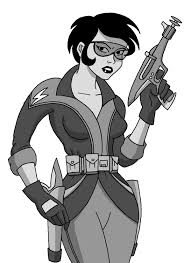
Played Danger Patrol last night - a new game of pulpy cliffhangers in an alternate 1950s universe filled with rocketships and rayguns. Think Flash Gordon and Buck Rogers.

It didn't go very well, but I think it has lots of potential for delivering a style of gaming I really enjoy.
I'll be running it again, probably at Confusion in August.
My comments on the game are here.

It didn't go very well, but I think it has lots of potential for delivering a style of gaming I really enjoy.
I'll be running it again, probably at Confusion in August.
My comments on the game are here.

Tuesday, July 07, 2009
Graphic Design Practice #8

I'm pleased I managed to figure out how to create an opaque background for text, right-clicking and using Fill with some opacity.
Sunday, July 05, 2009
Bad Family: 100 words a day
The re-writing of Bad Family (*) has been warming up over the last week or so (although it'll have been just over a month, by the time this entry is auto-published).
(*) My game about dysfunctional relationships, family sit-coms, and the struggle to get what you want by the end of the episode before your big sister screws you over.
Really, it feels like the writing is happening at the intersection of seven personal productivity hacks that I've been using for a while:
EDITED TO ADD: I've also been 'gameifying' my writing - finding easy levels (sections) to complete and working on them; gradually I'm working my way up to the harder levels.
(*) My game about dysfunctional relationships, family sit-coms, and the struggle to get what you want by the end of the episode before your big sister screws you over.
Really, it feels like the writing is happening at the intersection of seven personal productivity hacks that I've been using for a while:
- I've set up the home page of my browser so that the Google Docs page where I'm writing Bad Family is right in my face whenever I go online. Using Google Docs also has the advantage of making it easy to work on it anywhere.
- I have started a Seinfeld chain - basically, the idea that if you can see you're making progress every day, you don't want to take a day off (and break the chain). You can see my chain for Bad Family here.
- I'm using an idea from Mark Forster called the Current Initiative, which is that you choose one project that you want to make progress on, and make it the very first thing you do each day. So, when I wake up I write on Bad Family for 10 minutes. I also make it the first thing I do when I get home.
- After reading 'In Praise of Slow', I'm putting less pressure on myself to complete this game RIGHTNOWASSOONASPOSSIBLE. By taking the pressure off, I'm trying to make it more fun.
- I'm writing it with a specific audience in mind. This is a hack suggested by Jonathon Walton - writing it to a particular person gives it a more personal voice. Hopefully it also makes it a more enjoyable read.
- I'm making this my main writing project for the next two months (till the end of July). I'm now alternating a period of serious, focused writing with two weeks of playing around with various projects, finding out what's fun.
- I'm writing 100 words a day. Again it's a suggestion by Jonathon Walton, in this thread on Story Games.
EDITED TO ADD: I've also been 'gameifying' my writing - finding easy levels (sections) to complete and working on them; gradually I'm working my way up to the harder levels.
Saturday, July 04, 2009
Friday, July 03, 2009
Synopsis: Presentation Zen (Be with your audience)
Presentation Zen (PZ) finishes up with some simple advice for actually delivering your presentation.
First: practice. The aim is to know your material so well that you can present it without referring to any notes. As PZ mentions earlier, the act of developing your story is going to help you develop this mastery of the material.
Second: be fully present when you give your presentation. Focus just on this moment; don't allow yourself to be distracted by thoughts of what happened before you arrived, or what you need to do afterwards.
This advice goes even further - it suggests focusing entirely on the act of presenting, and not on how your presentation is being perceived.
Garr Reynolds, the author of PZ, suggests a few things here:
This quality of 'mindfulness' is, I think, a way of delivering the best possible presentation. You're focusing on conveying the material, which (hopefully) leads to a stronger connection with the audience as they see that it's not about you, it's about what they're learning.
Third: Aim to be as interested in your material as you hope your audience will be. Again, mindfulness helps you share your passion for the material in your presentation with your audience.
How to connect with an audience
Reynolds points out that people's concentration tends to flag after about 15 to 20 minutes. Keeping your presentation as short as it can be is an excellent goal, as is trying to finish before your time runs out.
He also suggests reducing the number of barriers between you and the audience:
First: practice. The aim is to know your material so well that you can present it without referring to any notes. As PZ mentions earlier, the act of developing your story is going to help you develop this mastery of the material.
Second: be fully present when you give your presentation. Focus just on this moment; don't allow yourself to be distracted by thoughts of what happened before you arrived, or what you need to do afterwards.
This advice goes even further - it suggests focusing entirely on the act of presenting, and not on how your presentation is being perceived.
Garr Reynolds, the author of PZ, suggests a few things here:
- "Don't ask 'Will I be appreciated?' or 'Will I win them over?' Ask 'How can I contribute?'
- Think of mistakes as fascinating. Think of mistakes as opportunities to learn (to grow). Let the mistakes go and move on; dwelling on the mistakes will disconnect you from your audience.
This quality of 'mindfulness' is, I think, a way of delivering the best possible presentation. You're focusing on conveying the material, which (hopefully) leads to a stronger connection with the audience as they see that it's not about you, it's about what they're learning.
Third: Aim to be as interested in your material as you hope your audience will be. Again, mindfulness helps you share your passion for the material in your presentation with your audience.
How to connect with an audience
Reynolds points out that people's concentration tends to flag after about 15 to 20 minutes. Keeping your presentation as short as it can be is an excellent goal, as is trying to finish before your time runs out.
He also suggests reducing the number of barriers between you and the audience:
- Don't use a lectern
- Don't sit at the back of the room by the projector
- Don't sit behind a desk
- Keep lights on, so people can see you.
Wednesday, July 01, 2009
Gerald's Game
by Stephen King
I like to re-read books. After my difficulties reading Garden of Last Days, I went back and re-read one of the lesser-known Stephen Kings. It's also one of the books I've been consistently tempted to adapt, probably due to its simple premise: Gerald's Game is about a woman handcuffed to a bed in the middle of nowhere. No-one is coming to rescue her, and if she's going to survive she's going to have to think her way out.
The handcuffs are the most obvious of the two antagonists in this book. The second antagonist is the lead character's own mind; Jessie Burlingame experienced something genuinely horrible 25 years ago, and has spent most of the intervening time repressing it. That's led to her mind not only creating a bunch of different voices to represent different aspects of her personality, but also a deeply self-destructive desire to undercut her own achievements, make her screw up, and ultimately kill her (because she 'deserves it').
These voices rise to the fore once Jessie is handcuffed: without any way of escaping, she finally has quiet time to listen to her thoughts without distraction. The truth of this really hit me; it's a phenomena that's been experienced by me and a few people I know recently as we've been dealing with some unpleasant mental crap.
For me, this idea of the antagonist being your own thoughts is the strongest idea of the book and oddly under-developed.(*)
(*) I've now realised it also has a lot in common with one of the new things I'm playing around with.
Instead, the psychological complexity that I admire in Gerald's Game threatens to go completely out the window once King introduces a psycho-killer with pallid skin, sharpened canines, and a suitcase filled with human bones. It becomes a little difficult to focus on the idea of an enemy inside your own mind when you're afraid that Leatherface is going to come back and kill you the next night.
At least, that's been my memory of this book over the last 15 years. However, I realised during this time through that, to his credit, King does play with the idea that the killer is imaginary. In fact, he does more than play with it -- by the end, the killer is not only real, but it's also how the self-destructive elements of Jessie's own mind have chosen to manifest themselves.
Still, my scriptwriter voice kept yelling out while reading it that the idea of the killer was a bit lame. That he's there to motivate Jessie to escape, putting a time-limit on her actions. To 'Scriptwriter Me' there's already a character in this book that serves this purpose: a scared and hungry stray dog. In my hypothetical adaptation, I'd up the threat from this corner, and bring out Jessie's 'Inner Antagonist' voice more strongly.
I'm not even sure it needs the killer in the book. The reliving of Jessie's repressed memory is horrible enough - visceral, repulsive, banally evil - and King takes his time detailing the aftermath of it, as much as he would with any other thriller setpiece. Reading these sections reminded of conversations with some of my exes, in which we've watched a movie (like, True Romance, for instance) and they've been baffled at what I could have seen in it. Questions have been asked like "Why would you want to watch something like that?" "How does it make the world a better place?"
After reading the icky repressed memory sequence, I'm beginning to see their point.
Re-reading it, I was suprised to find that the repressed memory at the heart of the book is pretty much openly acknowledged about 1/4 of the way through, and vividly [shudder] dramatised at about the halfway point. And just when I figured that it was all done with, King does something really exciting: he ties Jessie's chances of escape to her ability to remember by hinting that there's something else that she's repressing, something that we haven't been made aware of. This inverts the value of her memory - making it something she has to use rather than push away from her.
Later, King pushes the timeframe of the story forward, much further than I expected him to. It had the effect of pulling me out of the book, but after taking a break and pushing on, it actually seemed quite natural. King used the flash-forward to demonstrate massive character change in Jessie, dump a whole bunch of exposition on us, and dramatise her final triumph over her mind (through the act of finishing a letter).
After finishing it, I realised that Gerald's Game might be another one of those books that I've long wanted to adapt but subsequently realise that I don't (Phantoms by Dean Koontz also falls into that category). If I were to push myself to articulate why this is, it'd be something like: there are things about this book that I find compelling, things I find easy to visualise cinematically, and especially there are things that I would like to do differently. The question is: would I like to spend two years doing them?
And maybe the answer is that, for me, Jessie's transformation is satisfying but not quite meaningful enough. She goes through hell, she triumphs over some really nasty adversity, but the emotional bang isn't quite there for me. And I'm not sure why, and I'm not sure how to make it happen - and THAT is what any adaptation of this story really needs.
Random thoughts:
- Gerald's Game is a companion piece to Dolores Claiborne. I seem to remember it was written at a time when he had come under a small amount of criticism for not being able to write women as psychologically deeply as he did men.
- Actually, re-reading it made me realise how influential this novel was on me: the precision with which King deals with describing how Jessie tries to get out of her predicament. It's something I drew on when writing The Limit (in fact, that script contains a woman in a very similar situation).
Tuesday, June 30, 2009
New Media: State of Play 2009
It's been a while since I posted about the state of media - how we create, receive and make money from making stories.
In that time:
(*) I no longer watch TV. I now have to have careful conversations with people when discussing shows like Lost and Supernatural to make sure we're not revealing spoilers to each other, because we're out of sync with our viewing.
And check out this comment from an anonymous commenter on Kung Fu Monkey, describing their set-up for downloading shows. Key quote:
Obviously, distributing and replicating shows is basically free.
Creators are now producing their own high-quality material, independent of major studios. Leverage, a heist show was shot and post-produced using domestic equipment. It has no major studio financing. It was successful enough to get renewed for a second season on TNT, a legitimate, well-thought of network.
Revenue? Well, that's still the issue - Leverage (I assume) is earning money through screening on TNT - and the basic rule still applies: the moment you release something, it will be available for free on the internet. If you're in this to make money, you need to confident of making it before that happens.
We have entered the era of DIY stories, pulled by readily available tech, and pushed by market forces and outmoded business models.
Bill Cunningham, over at Pulp 2.0 lays out a bunch of relevant links, which I summarise here.
Ted Hope over at Truly Free Film provides a list of 38 problems with the American independent film scene. Here are the ones that stuck out for me:
For me, the key quote from Byrne's article comes here:
In that time:
- the mainstream has disintegrated (at least for me) (*)
- the noun I use to describe watching a movie or a DVD is changing; I've started to saying
I'm watching a 'show' or an 'episode'. I suspect someday I be saying I'm watching a file; the activity is being detaching from something physical like a tape or a disc. - the US writers' strike led to the creation of internet shows like Dr Horrible's Singalong Blog
- someone I know has filmed a web-series
- editing software and vid-cams are so widely available now that I have one.
(*) I no longer watch TV. I now have to have careful conversations with people when discussing shows like Lost and Supernatural to make sure we're not revealing spoilers to each other, because we're out of sync with our viewing.
And check out this comment from an anonymous commenter on Kung Fu Monkey, describing their set-up for downloading shows. Key quote:
If I'm out with friends and they recommend a show or movie to me, I can go to a public search engine with my smart phone, enter in the name of the film, and when I get home, that movie will be waiting for me to watch in blu-ray perfect HD.So, yeah, the situation has shifted.
... I'm a reasonably well-seasoned techie in my early 30's, and I set this system up in a weekend with a terabyte of storage for under $600. That means in 1 year, 18 months tops, the price will have halved, the installers will be polished, the software will STILL be free, and this sort of thing will be taking off in homes all over the country.
Obviously, distributing and replicating shows is basically free.
Creators are now producing their own high-quality material, independent of major studios. Leverage, a heist show was shot and post-produced using domestic equipment. It has no major studio financing. It was successful enough to get renewed for a second season on TNT, a legitimate, well-thought of network.
Revenue? Well, that's still the issue - Leverage (I assume) is earning money through screening on TNT - and the basic rule still applies: the moment you release something, it will be available for free on the internet. If you're in this to make money, you need to confident of making it before that happens.
We have entered the era of DIY stories, pulled by readily available tech, and pushed by market forces and outmoded business models.
Bill Cunningham, over at Pulp 2.0 lays out a bunch of relevant links, which I summarise here.
Ted Hope over at Truly Free Film provides a list of 38 problems with the American independent film scene. Here are the ones that stuck out for me:
- Too many leisure options for film to compete without further enhancing the theatrical and cinematic experience.
- Too many "specialized" films opening to allow such films to gain word of mouth and audience's attention.
- Too many films available and being distributed to allow films to stay in one theater for very long, making it more difficult to develop a word of mouth audience.
- Distrib's abandonment (and lack of development) of community-building marketing approaches for specialized releases (which reduces appeal for a group activity i.e. the theatrical experience).
- Distrib's failure to embrace limited streaming of features for audience building.
- Reliance on large marketing spend release model restricts content to broad subjects (which decreases films' distinction in marketplace) and reduces ability to focus on pre-aggregated niche audiences.
- Recession has reduced private equity available for film investment.
- No new business model for internet exploitation at a level that can justify reasonable film budgets.
The 360, or equity, deal, where every aspect of the artist's career is handled by producers, promoters, marketing people, and managers. You achieve wide saturation and sales, while becoming a brand, owned and operated by the label.
The standard distribution deal. The record company bankrolls the recording and owns the copyright to the recording; the artist gets a royalty percentage.
The license deal. Similar to the standard deal, except the artist retains the copyrights and ownership of the master recording.
The profit-sharing deal. The artist gets a minimal advance from the label, and they share the profits from day one. The artist retains ownership of the master.
The manufacturing and distribution deal. The artist does everything except manufacture and distribute the product. The artist gets absolute creative control.
The self-distribution model, where the music is self-produced, self-written, self-played, and self-marketed. CDs are sold at gigs and through a Web site. Promotion is a MySpace page. Within the limits of what they can afford, the artists have complete creative control.
For me, the key quote from Byrne's article comes here:
Radiohead adopted this DIY model to sell In Rainbows online — and then went a step further by letting fans name their own price for the download. <snip> ... As one of Radiohead's managers, Bryce Edge, told me, "The industry reacted like the end was nigh. They've devalued music, giving it away for nothing.' Which wasn't true: We asked people to value it, which is very different semantics to me."Stories, created in a bunch of different ways, released into the wild, and then valued by the audience according to a business model that you decide on.
More on exquisite corpses
Just wanted to draw your attention again to the previous entry. It's an on-line story (told in 250 word installments). If you're interested in writing the next chapter, check it out.
According to Wikipedia, this sort of exquisite corpse (aka "exquisite cadaver" or "rotating corpse") was invented by Surrealists in France, just after World War 1 (and holy crap, was surrealism a reaction to World War 1? That seems completely reasonable now I understand the time frame). When Surrealists first played the game, their story contained the phrase "Le cadavre exquis boira le vin nouveau." ("The exquisite corpse will drink the new wine.")
Anyway, calling all bloggers. Here's a chance to have some fun.
Saturday, June 27, 2009
The Sleep Dep On-Line Exquisite Corpse
This entry is part of an on-line exquisite corpse - a short story told in 10 installments by 10 different authors. My 250 word installment is below; if you're interested in writing the next part, scroll down to the bottom of this post for details on how this all works...
--- --- ---
2.
whistle three times if you find anything.”
“Anything, like what?” said a man Dianne didn’t recognize.
The officer explained, and by about halfway through her explanation Dianne had begun to recognize the dread of the situation, of what could’ve happened and what it could mean for who they were looking for. None of this stopped her from maneuvering her way into a group with Peter, but it did make her feel self-conscious and vaguely shitty about herself as they set off.
At first there were no words - just a focus on the task, taking seriously the idea that you had to search behind every tree, peer into every bit of the dense foliage. Added to that, the path up through the bush was slick from last night’s rain, and people’s attentions were divided between the search and just managing to stay on their feet.
So Dianne’s first words – “How did you find out about this?” - felt like they were violating the culture of diligence that had started to emerge in their group. But it was obvious that despite the awkwardness, no-one felt in a position to chastise her, and after a moment Peter realised that she was speaking to him.
“My mum called me last night. I had to get up at four to drive down here, but … yeah.”
“You had to come.” She finished his sentence and saw on his face that he wished she hadn’t. She started to apologise and then realised it would only
--- --- ---
This is part 2 of 10. You can find the other installments here (but DON'T DO THIS YET if you want to join in):
1. www.sleep-dep.blogspot.com (26 June 2009)
2. www.multi-dimensional.blogspot.com (27 June 2009)
3.
4.
5.
6.
7.
8.
9.
10.
WANT TO READ IT? Jump back to the previous entries using the links above.
WANT TO JOIN IN? This exquisite corpse operates on a first-come, first-served basis. If you want to write the next installment, FOLLOW THESE INSTRUCTIONS:
1.IMPORTANT - Don't read any of the previous entries! Read only the one you see here.
2.ALSO IMPORTANT - Post a comment here, saying “I claim the next entry”, followed by the URL/web address of your blog. If you don't do this, we'll never know where to find you.
3.Copy the text of this blog entry into a new post on your blog, but DELETE THE CHAPTER and write your own as the next installment. Start with the chapter number as I've done here, and start exactly where the last chapter left off (in mid-sentence if necessary).
4.Your entry should be EXACTLY 250 words long, unless you are writing chapter 10, in which case you must bring the story to a conclusion in 250 words or less.
5.At the end of the chapter, where the text reads: “This is part X of 10”, change this to the number of your chapter.
6.Add the URL/web address of your blog and today's date onto the list below that, so people reading later entries can jump back to your chapter.
7.Finish your chapter and post it within 24 hours of claiming your place. There – it's freaking easy! You can go back and read the rest of the story now.
8.IF YOU'VE JUST FINISHED ENTRY #10 and finished the story, DELETE THESE INSTRUCTIONS from the bottom of your post – they'll just confuse people. ALSO, let CG know by posting a comment on the first entry (on www.sleep-dep.blogspot.com), or sending him an email on squid.mohawk@gmail.com. CG will assemble a full version and send it round to all of the contributors.
--- --- ---
2.
whistle three times if you find anything.”
“Anything, like what?” said a man Dianne didn’t recognize.
The officer explained, and by about halfway through her explanation Dianne had begun to recognize the dread of the situation, of what could’ve happened and what it could mean for who they were looking for. None of this stopped her from maneuvering her way into a group with Peter, but it did make her feel self-conscious and vaguely shitty about herself as they set off.
At first there were no words - just a focus on the task, taking seriously the idea that you had to search behind every tree, peer into every bit of the dense foliage. Added to that, the path up through the bush was slick from last night’s rain, and people’s attentions were divided between the search and just managing to stay on their feet.
So Dianne’s first words – “How did you find out about this?” - felt like they were violating the culture of diligence that had started to emerge in their group. But it was obvious that despite the awkwardness, no-one felt in a position to chastise her, and after a moment Peter realised that she was speaking to him.
“My mum called me last night. I had to get up at four to drive down here, but … yeah.”
“You had to come.” She finished his sentence and saw on his face that he wished she hadn’t. She started to apologise and then realised it would only
--- --- ---
This is part 2 of 10. You can find the other installments here (but DON'T DO THIS YET if you want to join in):
1. www.sleep-dep.blogspot.com (26 June 2009)
2. www.multi-dimensional.blogspot.com (27 June 2009)
3.
4.
5.
6.
7.
8.
9.
10.
WANT TO READ IT? Jump back to the previous entries using the links above.
WANT TO JOIN IN? This exquisite corpse operates on a first-come, first-served basis. If you want to write the next installment, FOLLOW THESE INSTRUCTIONS:
1.IMPORTANT - Don't read any of the previous entries! Read only the one you see here.
2.ALSO IMPORTANT - Post a comment here, saying “I claim the next entry”, followed by the URL/web address of your blog. If you don't do this, we'll never know where to find you.
3.Copy the text of this blog entry into a new post on your blog, but DELETE THE CHAPTER and write your own as the next installment. Start with the chapter number as I've done here, and start exactly where the last chapter left off (in mid-sentence if necessary).
4.Your entry should be EXACTLY 250 words long, unless you are writing chapter 10, in which case you must bring the story to a conclusion in 250 words or less.
5.At the end of the chapter, where the text reads: “This is part X of 10”, change this to the number of your chapter.
6.Add the URL/web address of your blog and today's date onto the list below that, so people reading later entries can jump back to your chapter.
7.Finish your chapter and post it within 24 hours of claiming your place. There – it's freaking easy! You can go back and read the rest of the story now.
8.IF YOU'VE JUST FINISHED ENTRY #10 and finished the story, DELETE THESE INSTRUCTIONS from the bottom of your post – they'll just confuse people. ALSO, let CG know by posting a comment on the first entry (on www.sleep-dep.blogspot.com), or sending him an email on squid.mohawk@gmail.com. CG will assemble a full version and send it round to all of the contributors.
Why I'm not writing - Damn you Chris! edition
Chris linked to this:
I spent 10 minutes after watching this (in broad daylight!) freaking out that one of my flatmates was sneaking up behind me with a big smile on their face.
To mellow out, I re-played You Have to Burn the Rope. Seriously, you should. And stick around for the end credits song. Portal's is better, but this is fun.
And if you liked YHtBtR, you could check out Fathom. Pay close attention to the fish.
I thoroughly recommend the Google Wave presentation by the way. Yes, it's 80 minutes long, but I especially the last 5 minutes, where the development team demo the app that's going to bring about world peace.
Here's a link to the highlights reel.
Thursday, June 25, 2009
Presentation Zen: An Example (The Moons of Saturn)
Another presentation - this one comes from TED.com and shows us what it's like on two of Saturn's moons.
There's less reliance on slides in this presentation, more a focus on the passion of the presenter (Carolyn Porco).
There's less reliance on slides in this presentation, more a focus on the passion of the presenter (Carolyn Porco).
Tuesday, June 23, 2009
Presentation Zen: An example (Inbox Zero)
Inbox Zero is a presentation about designing a system to deal with email overload. This youtube video is about an hour long. The presentation starts at about 2.30 minutes and goes for about 30 minutes (followed by a Q&A). The talk is good, the Q&A is so-so.
I have no assessment about the talk itself, although I did note a number of clean slides, and usage of the grid. I also noticed when bullet-point lists were used how my attention became divided between listening to what the presenter was saying and trying to read ahead on the list.
I have no assessment about the talk itself, although I did note a number of clean slides, and usage of the grid. I also noticed when bullet-point lists were used how my attention became divided between listening to what the presenter was saying and trying to read ahead on the list.
Monday, June 22, 2009
Test post: auto-publishing problem
This is just a test post - my last couple of posts haven't automatically published when I've scheduled them to.
Sunday, June 21, 2009
Synopsis: Presentation Zen (Emptiness, Grids and CRAP)
A slide is composed of positive elements (such as text or logos) and empty (a.k.a. 'negative') space. The idea seems to be that you can use negative space to draw attention to the positive elements.
Having empty space in your slide seems like a simple concept, but it's hard to implement; it's very tempting to fill that empty space with lots of other stuff. From what I can tell, the principle to apply is this:
To begin with, look for the empty space in your slides. Once you can see it, use it. Reynolds demonstrates the difference between asymmetrical and symmetrical designs here. Asymmetrical designs activate the empty space and make your design more interesting. Symmetrical designs tend to crush the empty space out to the sides.(*)
* That's because symmetrical designs are centred along a strong vertical axis and are mirrored on both sides.
Guiding the Eye
"A well-designed slide has a clear starting point and guides the viewer through the design."
Presentation Zen provides a couple of tips here:

The red dots at the intersections of these lines are called 'power points'. These are areas where you might consider placing the main subject of the slide.
Using grids to divide your page or slide into thirds will also help you align the various elements on them.
CRAP
Contrast, Repetition, Alignment, Proximity.
This was another moment where I was reading Presentation Zen and realised that it was referring to a book I already own. In this case The Non Designers Design Book, the first book on layout and typography I ever bought. It's a great read, and it made reading about the principles in this section more like revision for me. To quote directly from PZ:
"Use the principle of contrast to create strong dynamic differences among elements that are different. If it is different, make it very different." Contrasts can create a focal point for your slide, clearly pointing out the one element that is dominant. This gives the viewer a starting point to process information.
"Use the principle of repetition to repeat selected elements throughout your slides. This can help give your slides unity and organisation."
"Use of the principle of alignment to connect elements visually (through invisible lines) on a slide. Grids are very useful for achieving good alignment. This will give your slide a clean and well organised look."
"Use the principle of proximity to ensure that related items are grouped together. People will tend to interpret items together or near each other as belonging to the same group." This reminds me of a basic rule of writing: help a reader understand a sentence by grouping related words and concepts together. As an example, compare the previous sentence to this one:
That's it for Section 2 of PZ. Time to take another break -- but over the next week I'll link to a few of the presentations mentioned in chapter 7.
Having empty space in your slide seems like a simple concept, but it's hard to implement; it's very tempting to fill that empty space with lots of other stuff. From what I can tell, the principle to apply is this:
- Start with nothing, and then add.
To begin with, look for the empty space in your slides. Once you can see it, use it. Reynolds demonstrates the difference between asymmetrical and symmetrical designs here. Asymmetrical designs activate the empty space and make your design more interesting. Symmetrical designs tend to crush the empty space out to the sides.(*)
* That's because symmetrical designs are centred along a strong vertical axis and are mirrored on both sides.
Guiding the Eye
"A well-designed slide has a clear starting point and guides the viewer through the design."
Presentation Zen provides a couple of tips here:
- Make sure images (especially of people's eyes) guide the viewer's eyes towards the elements you want them to look at
- Have a clear hierarchy that shows which elements on your slide are the most important, which are less important, and which are least important.

The red dots at the intersections of these lines are called 'power points'. These are areas where you might consider placing the main subject of the slide.
Using grids to divide your page or slide into thirds will also help you align the various elements on them.
CRAP
Contrast, Repetition, Alignment, Proximity.
This was another moment where I was reading Presentation Zen and realised that it was referring to a book I already own. In this case The Non Designers Design Book, the first book on layout and typography I ever bought. It's a great read, and it made reading about the principles in this section more like revision for me. To quote directly from PZ:
"Use the principle of contrast to create strong dynamic differences among elements that are different. If it is different, make it very different." Contrasts can create a focal point for your slide, clearly pointing out the one element that is dominant. This gives the viewer a starting point to process information.
"Use the principle of repetition to repeat selected elements throughout your slides. This can help give your slides unity and organisation."
"Use of the principle of alignment to connect elements visually (through invisible lines) on a slide. Grids are very useful for achieving good alignment. This will give your slide a clean and well organised look."
"Use the principle of proximity to ensure that related items are grouped together. People will tend to interpret items together or near each other as belonging to the same group." This reminds me of a basic rule of writing: help a reader understand a sentence by grouping related words and concepts together. As an example, compare the previous sentence to this one:
- Related words and concepts can be used to help a reader if you group them together as this will make them understand a sentence more easily.
That's it for Section 2 of PZ. Time to take another break -- but over the next week I'll link to a few of the presentations mentioned in chapter 7.
Friday, June 19, 2009
Synopsis: Presentation Zen (Remove clutter, use pictures)
Now we're getting into the principles that Garr Reynolds identifies as being useful for the good graphic design of slides.
First up is Signal to Noise ratio -- the ratio of relevant information on a slide compared to its irrelevant information. The goal is to get rid of clutter. If you remove as much irrelevant information as possible, people can understand what the slide is saying as efficiently and effectively as possible.
Some sources of irrelevant information that make it harder to understand a slide include:
Picture Superiority Effect
Pictures are remembered better than words, if you or exposed to the picture for longer than 30 seconds.(*) The picture and your words must reinforce (not repeat) each other for this to happen.
* This Picture Superiority Effect is strongest when the picture represents common, concrete things.
Historically, words have dominated presentations because we lack the technology to easily take or acquire pictures. Now we have readily available digital cameras, editing software and Internet resources. Some sources of rights-free images on the Internet include:
Morgue File
Flickr Creative Commons Pool
Image After
Stock.xchng
The everystockphoto search engine
As Reynolds established earlier, bullet-pointed lists of words usually aren't effective in a live talk. They should be used rarely and as a last resort. The three main techniques that come out of this section are:
First up is Signal to Noise ratio -- the ratio of relevant information on a slide compared to its irrelevant information. The goal is to get rid of clutter. If you remove as much irrelevant information as possible, people can understand what the slide is saying as efficiently and effectively as possible.
Some sources of irrelevant information that make it harder to understand a slide include:
- inappropriate charts
- 3-D charts (which often make it more difficult to interpret data)
- ambiguous labels
- distracting grids
- footers
- logos (remove these from all but the first and last slides)
Picture Superiority Effect
Pictures are remembered better than words, if you or exposed to the picture for longer than 30 seconds.(*) The picture and your words must reinforce (not repeat) each other for this to happen.
* This Picture Superiority Effect is strongest when the picture represents common, concrete things.
Historically, words have dominated presentations because we lack the technology to easily take or acquire pictures. Now we have readily available digital cameras, editing software and Internet resources. Some sources of rights-free images on the Internet include:
Morgue File
Flickr Creative Commons Pool
Image After
Stock.xchng
The everystockphoto search engine
As Reynolds established earlier, bullet-pointed lists of words usually aren't effective in a live talk. They should be used rarely and as a last resort. The three main techniques that come out of this section are:
- Ask yourself what information are you representing with written words that you could replace with a photo or other graphic?
- Find images with plenty of empty space around them (images that are scaled to at least 800x600) and place text inside those images
- Quotes or phrases can illustrate your points. Use them sparingly; keep them short and legible. You don't want to bore the audience by reciting what they can (or have) already read.
Wednesday, June 17, 2009
Synopsis: Presentation Zen (Designing for simplicity)
I'm going back to my summary of Presentation Zen by Garr Reynolds. Presentation Zen (PZ) is about designing presentations that effectively communicate with the audience. Previously I have summarised Reynolds' ideas on creating the story of your presentation; now it's time to look at his ideas on visually designing the presentation.
He begins with the idea of simplicity - which he defines as a clarity that gets to the heart of the matter.
Achieving simplicity takes time, but it also makes the time that the audience spends paying attention to you far more worthwhile, as they will learn more from your presentation. Comparing the idea of 'simplicity' with ' giving the audience every bit of information', Reynolds makes the point that if you overload people with information, what (if anything) will they remember? He advises focusing only on information that illustrates your core point.
Similarly, if you overload a slide with information, pictures, charts, sidebars and borders, you force the audience to search for relevant information.
Simplicity makes it easy for the audience to understand the heart of what you're saying.
How do you achieve simplicity?
Each presentation's design will have its own logic, layout and rules (*). PZ recommends you: (a) design from the start, and (b) use design to organise information in a way that makes things clearer.
* I believe this - based on my experiences with writing scripts, songs and short stories, everything I've created has had its own internal logic. Once I've figured out what that logic is, it's made writing and redrafting far more effective. In fact, I do consider something to be finished until I figured out its logic and helped it live up to that as much as I can.
Clarity in design is achieved by elimination and omission. In other words, good designs have plenty of empty space.
Reynolds then lays out his essential principles of design:
I'll go into more detail about each of these in the next couple of posts.
He begins with the idea of simplicity - which he defines as a clarity that gets to the heart of the matter.
Achieving simplicity takes time, but it also makes the time that the audience spends paying attention to you far more worthwhile, as they will learn more from your presentation. Comparing the idea of 'simplicity' with ' giving the audience every bit of information', Reynolds makes the point that if you overload people with information, what (if anything) will they remember? He advises focusing only on information that illustrates your core point.
Similarly, if you overload a slide with information, pictures, charts, sidebars and borders, you force the audience to search for relevant information.
Simplicity makes it easy for the audience to understand the heart of what you're saying.
How do you achieve simplicity?
Each presentation's design will have its own logic, layout and rules (*). PZ recommends you: (a) design from the start, and (b) use design to organise information in a way that makes things clearer.
* I believe this - based on my experiences with writing scripts, songs and short stories, everything I've created has had its own internal logic. Once I've figured out what that logic is, it's made writing and redrafting far more effective. In fact, I do consider something to be finished until I figured out its logic and helped it live up to that as much as I can.
Clarity in design is achieved by elimination and omission. In other words, good designs have plenty of empty space.
- Aim to get the maximum effect with a minimum of graphic elements
- Use negative space
- Suggest rather than state
- Subtract rather than add
Reynolds then lays out his essential principles of design:
- Signal vs Noise Ratio
- Picture Superiority Effect
- Empty Space
- Contrast
- Repetition
- Alignment
- Proximity
I'll go into more detail about each of these in the next couple of posts.
Monday, June 15, 2009
Why I'm Not Writing today - Atmospheric B&W Afterlife edition
Closure (flash game) has kept me interested far longer than platformers usually do. It is slow where most platformers are fast; stark rather than gaudy; and creepy, not funny.
It also has a great central conceit: you can only see the sections of the level that are illuminated by the lamp you're holding. If you can't see it in your light anymore, then that section of the level literally disappears, and you can fall through it to your doom (or in this, to your level restart).
It also has a great central conceit: you can only see the sections of the level that are illuminated by the lamp you're holding. If you can't see it in your light anymore, then that section of the level literally disappears, and you can fall through it to your doom (or in this, to your level restart).
Saturday, June 13, 2009
The Fountain
scr. by Darren Aronofsky
A beautiful and (I felt) moving film, this is the first Aronofsky film that I can imagine myself rewatching.
Brief summary: It's a love story told in three time frames (15th century, modern day, and far future) about the search for immortality.
Something strange happened to me while watching this film.
*** SPOILERS ***
The movie begins with a sequence of a Spanish conquistador fighting and struggling to the top of a ziggurat, where he is attacked and apparently killed by a Mayan angel wielding a flaming sword.
Later, after establishing the other two time frames (far future and modern day), it's revealed that this 15th century South American sub-plot is actually a novel written by one of the modern day characters. At which point, we cut back to that sub-plot. And immediately I started wondering "Well, given that I know these people are just fictional characters, do I actually care about them less now?"
... which, after a few seconds, made me go "What the hell am I saying?" Every character in the film is fictional. Every character in every film I've ever watched is fictional. Should I care less about 15th century Hugh Jackman (15cHJ) just because I've had my face rubbed in his ... ah ... 'intra-fictional' nature?
And the answer I had to come to was 'Of course not'. As long as the script is making me care about them, then it doesn't matter what particular degree of unreality a character exhibits. In the case of The Fountain, not only did I enjoy the parallels between all three stories but I forgot that 15cHJ was a character in a story written by a character in a story to such a degree that I was shocked when he met his eventual fate.
It all reminded me of an argument (friendly but intense) that I got into with Sean and Andrew during the post-production stage of hopeless. I'd watched so much of the film's raw footage - actors pissing around on set before the 1st AD yelled action - that sometimes, when I looked at the film just so, the illusion of that it was a story would disappear. All I'd see was the moments we'd specifically selected, the moments where we liked the actor saying this particular line in this particular way.
What this meant, I argued, was that we were actually watching a documentary about things that had happened on set. And our brains were choosing (quite reasonably) to interpret that as a story filled with characters and plot, rather than the inter-spliced moments of reality that they actually were.
In the case of my 'films are actually documentaries' opinion, our brains don't really need to exercise much choice at all to create a story. In the case of The Fountain, I found I needed to make a real initial effort to buy into 15cHJ as a character I could care about (after all, if he's just a story, who cares if he lives or dies, right?).
There's something connecting those two points, but I can't quite see it at the moment.
Thursday, June 11, 2009
The Garden of Last Days
by Andre Dubus III
I'm about 40% of the way through this novel at the moment. Do you remember that sequence in Boogie Nights where everybody's lives have turned toxic and now things are going horribly wrong for them? It's a sequence that goes on for about 15 minutes, intercutting (if I remember correctly) between Mark Wahlberg, Heather Graham, and Don Cheadle - all of it scored with this slowly tolling bell, ringing over and over again.
The sense of doom is near unbearable. (*)
* In a film filled with great cinematic moments, this sequence is the one I find the strongest due to its ability to create and sustain that single emotion.
The Garden of Last Days has created and now sustained that sense of doom for 191 pages. I've had to stop reading halfway through a chapter because a character I at first thought was despicable (and have now come to feel sympathy for) is just about to accidentally do something that will get him into so much trouble with so many characters ...
In fact, that's the reason I've stopped reading. I feel that the book is just about to change up: from a sense of doom, to the situation exploding. Not only am I nervous about finding out what happens, I'm also nervous about the dynamics of the book (which I've been enjoying immensely) changing so dramatically.
Brief summary: The Garden of Last Days, so far, has taken place entirely over one night at a strip club in Miami. It rhythmically switches between characters at the club - including an elderly widow prone to panic attacks, and a three year old girl - slowly building up a sense of character identification and momentum. The overall impression is of a book about people whose lives are in the process of not turning out well, and the story seems to be in the process of turning from a drama into a thriller. (**)
** Ian McEwan meets Carl Hiassen, I guess.
Wednesday, June 10, 2009
Terminator Salvation: more constructive
OK, so I found the film deeply annoying. Annoying enough that before I went to sleep last night, I had to figure out what I would do with it. Rather than exercise any original thought, I took the premise of the film as my starting point and here's what I came up with.
*** SPOILERS ***
It's a trilogy.
Rather than focusing on the plot of each film, what I'm most interested in is setting up interesting arenas for each film to explore. The first film is about friendship, the second film is about loyalty, and the third film is about achieving victory when you're not protected by destiny anymore.
Movie 1: Is all about establishing the relationship between Marcus Wright and Kyle Reese. Maybe the movie starts the same way, or maybe it starts with Marcus walking out of the desert. Either way, Movie 1's mission statement is make Marcus/Kyle the coolest post-apocalyptic duo ever. Make their friendship legendary. Kyle is the boy with the plans; Marcus is the guy who can pull them off.
John Connor is an off-screen figure, a legendary inspiration who is essential to the Resistance.
During Movie 1, much of the same stuff happens to Kyle, giving Marcus an against-impossible-odds rescue mission. During it, he discovers pivotal information about himself (and what he's supposed to do to Connor). Movie 1 ends with Kyle rescued, Marcus reeling, and both of them forced by circumstance to team up with Connor on a mission of pivotal importance to the war.
Movie 2: Is all about playing with tensions and loyalties. Kyle grows to know John Connor, but still thinks of Marcus as his best friend. Connor grows to know Kyle and Marcus, trusting the two of them. The question of what happens when the switch in Marcus' head flips on is present throughout the film - which is mostly a kick-arse action setpiece that incorporates many of the moments we saw in 'The Terminator '. A central question that's often asked in this film would be "We don't understand the enemy, so how can we destroy them?"
This second movie ends with Marcus turning on them, and Kyle and John teaming up to try and execute him. The film finishes with the cliffhanger of Connor's team beginning the assault of Skynet's time base.
Movie 3: Starts with the assault on Skynet and getting Kyle into the time machine. After that, everything is in play - Connor can die, the war can still be won or lost. Let the action ensue; hell, bring back Marcus from the dead if you can think of something interesting to do with him.
... or you could send giant robots back to London 2011 to beat the sh!t out of everything.
Tuesday, June 09, 2009
Terminator Salvation: if you haven't seen it yet
The answer is no.
But before I start talking about Terminator Salvation (no colon), let's review John Rogers' three principles of writing a good scene:
1.) Who wants what?
2.) Why can't they have it?
3.) Why do I give a shit?
OK, no spoilers.
This isn't John Connor's movie. Connor is a sidekick in this film. That's right: a sidekick. Actually, he's less than that. The film not only doesn't establish why John Connor is special, it doesn't even provide a compelling reason to keep him alive. This is a Terminator film in which John Connor lacks a destiny. ... And actually, it's even less than that: Connor is a LIABILITY to the Resistance - he gives away their position and their plans, and doesn't seem to have learned anything about Terminators, ever (*).
(*) There may be a little bit of hyperbole in that last sub-clause.
OK, Connor is a sidekick. Fine. Now I've got that out of my system, I think my rage is spent. This was going to be a long rant but I think I can summarise it now.
The movie's not all bad. While the first act rushes through a whole bunch of stuff and doesn't give us any reason to care about anyone, it does do a great job of establishing that terminators are badasses. Well done.
There's some nice future robot shooting action, and a 30 or 40 minute sequence in the middle (from the gas station through to the swimming lesson) where the film has: (a) momentum, (b) characters with understandable motivations, and (c) an interesting central dilemma. Well done.
From that point on, I was sniggering at the film until it ended. That's about 30 minutes of mocking something I once loved.
Not. Cool.
And the film has two other big problems:
First, John Connor wasn't even supposed to be in this movie! This link has much spoilerage in it, but is pretty essential to figuring out why the Connor scenes don't work, don't advance the plot, and don't make you care about anyone.
Second, the whole way the Resistance works is completely implausible (and I say this acknowledging that they are fighting a war against AIs and cyborgs). They have jets, and airbases, and helicopters, and a base that's two days walk from Skynet that's surrounded by ... well, you'll find out if you see the movie, but the fact that these characters survived more than two or three minutes ASTOUNDS me.
Here are two other spoiler-filled reviews to read before I ask the question: Poland. Quint.
So the question you need to ask yourself after reading all this is, "Should I see Terminator Salvation"?
Synopsis: Presentation Zen (How to Build a Story)
The act of preparing your presentation and finding your core message is the first step in finding your story.
Now begin to create a storyboard that will give your presentation a 'shape'.
Don't go to PC; stay analog - use post-its or a whiteboard.
However, I'm not sure that this has really gotten to grips with how to create a story; the book hasn't lived up to its promise in that regard. As I mentioned in a previous post, I'll be taking a closer look at Elements of Persuasion, writing by a experience scriptwriter / pitcher of movies to Hollywood studio execs.
That's it for the story side of things, though. Time for a break from Presentation Zen. I'll come back to it in a week and break down the Design section of the book.
Step 1: Brainstorming
· Write down everything - be messy, explore every possibility that occurs to you, examine every aspect of your core point
· Mind map, word associate
· Don't settle for the just the obvious or starting ideas you come up with; push
· Approach the presentation with a beginner's mind; don't worry about making mistakes or failing. Instead, adopt an attitude of experimentation and exploration. Try to rid yourself of preconceived ideas.
Step 2: Group and identify.
· Transfer ideas to post-it notes and chunk the post-its into themes.
· Look for the one key idea that is central and memorable to the audience.
Sections of your presentation can start to emerge here (3 can be a good number). Remember: each section needs to serve the core point.
Now begin to create a storyboard that will give your presentation a 'shape'.
Don't go to PC; stay analog - use post-its or a whiteboard.
Step 3: storyboard your presentation (away from the computer)
· One idea per post-it note
· Lay out the post-it notes - rearrange and then rearrange the post-its again, until the flow feels right
· Sketch pictures from the ideas
Step 4: Storyboard on the computer
· Create distinctively formatted slides to demarcate each new section.
· Add visuals to each of these section slides to support your narrative.
Step 5: After creating your presentation, edit
· Eliminate elements that aren't crucial to demonstrating the core point of the talk.
Huh. I've become aware that despite PZ saying that it's not offering a methodology to rigidly follow, what I'm synopsising here is starting to look like just that.
However, I'm not sure that this has really gotten to grips with how to create a story; the book hasn't lived up to its promise in that regard. As I mentioned in a previous post, I'll be taking a closer look at Elements of Persuasion, writing by a experience scriptwriter / pitcher of movies to Hollywood studio execs.
That's it for the story side of things, though. Time for a break from Presentation Zen. I'll come back to it in a week and break down the Design section of the book.
Monday, June 08, 2009
Presentation: Brought to you by Debbie
As Debbie suggested in the comments, this clip will show you the true power of Powerpoint:
Sunday, June 07, 2009
Synopsis: Presentation Zen (Stories and Stickiness)
Bad Powerpoint presentations consist of bullet-pointed recitations of facts. But audiences don't just want answers, they want meaning. So Presentation Zen (PZ) encourages you to tell the audience the story of your facts. (*)
* This reminds me, I need to re-read Elements of Persuasion, a book co-written by a Hollywood screenwriter about how to pitch movies.
The advantages of stories include:
PZ uses ideas from 'Made to Stick' - a book which describes qualities that can make an idea or speech more memorable(**) - and applies them to presentations.
** One thing I've noticed is that PZ draws off many recently published books. It makes me wonder if this methodology has really been tested.
These principles are:
So next up I'm going to summarise PZ's process for giving your facts a logical structure and then finding their story.
* This reminds me, I need to re-read Elements of Persuasion, a book co-written by a Hollywood screenwriter about how to pitch movies.
The advantages of stories include:
- they're more attention-grabbing and memorable than lists
- they explain complicated ideas through examples and metaphors
- they connect with audiences, especially when they are personal and authentic.
PZ uses ideas from 'Made to Stick' - a book which describes qualities that can make an idea or speech more memorable(**) - and applies them to presentations.
** One thing I've noticed is that PZ draws off many recently published books. It makes me wonder if this methodology has really been tested.
These principles are:
- Simplicity: be ruthless in your efforts to reduce your message to its core
- Unexpectedness: Suprise people. Ask questions. Open up gaps in their knowledge (and then fill those gaps)
- Concreteness: use natural speech and real examples, instead of vague abstractions
- Credibility: put statistics into terms people can visualise
- Emotions: you need to make an audience feel. Images help.
So next up I'm going to summarise PZ's process for giving your facts a logical structure and then finding their story.
Friday, June 05, 2009
Why I'm Not Writing today - Bad Voodoo edition
I've been playing Pandemic and Pandemic 2, two flash games where you take the part of a disease, and your objective is to kill as much of humanity as possible. I've tried to tell myself it's educational, that I'm learning about vectors of transmission and the components that make a virus more lethal ... but increasingly a superstitious part of my lizard brain is getting activated, telling me not to mess around with this sort of stuff lest I bring on the germ-pocalypse.
I link in the belief that you're more enlightened than I am.
I link in the belief that you're more enlightened than I am.
Wednesday, June 03, 2009
Synopsis: Presentation Zen (Finding the core)
If designing a presentation is a creative act, what will help you be more creative? That's the thrust of the next section of Presentation Zen (PZ). The book spends quite a few pages convincing the reader about the value of creativity, and then provides some strategies to enhance it. The ones I particularly liked were:
1. Approach the presentation with a beginner's mind; don't worry about making mistakes or failing. Instead, adopt an attitude of experimentation and exploration. Try to rid yourself of preconceived ideas.
2. Take things slowly. Spend some time alone, stilling your mind, contemplating the problem. Hopefully you'll then start to see the big picture of your presentation, and figure out what its core message(s) are.
I don't think PZ argues its case quite as strongly when it comes to the value of having restrictions. The author believes that if you're not given restrictions, you should impose them on yourself. While I'm not totally convinced, I am a fan of pecha kucha, so I'm prepared to buy into it for the rest of the book.
However, there is one restraint that feels right to me: reducing your presentation down to its absolute essentials.
What's the point?
... of your presentation? If you were to condense your talk down to 5 minutes, to 2 minutes, ... if you were to shorten it to 30 seconds, what would be left? What is the core message(s) you're trying to get across? (*)
* Apparently, you'll be lucky if you can get your audience to remember even one point from your presentation.
That's one question that PZ hammers on again and again. The other is "Why does it matter?" To make people care about your presentation and the point(s) you're trying to make will require persuasion, emotion and empathy, as well as a logically constructed argument.
Subscribe to:
Posts (Atom)