Earlier this year, I spent about a week obsessed with this game:
Climate Challenge
It's a flash game where you play the president of the European Nations. Over 100 years, you must tackle climate change and stay popular enough with the voters to remain in office. It's really about the trade-offs between effective policy, electoral popularity, and earning enough money to keep the EU afloat.
For the first six days I played it, I was an ecological saviour at the cost of my policies crashing Europe into a new barbarism due to hyper-inflation.
Climate Challenge gives an entertaining intro to the feel of long-range thinking.

Saturday, October 25, 2008

Friday, October 24, 2008
[Long Range Thinking] The Wiki is up
I've created the Long Range wiki, to organise all of these thoughts. You can find it here:
Long Range
The wiki is a work-in-progress, so it may look a bit messy. My hope is that it helps me in creating some regular 'summary' posts, that'll keep the writing on track.
*
'Long Range' is my attempt to apply the lessons from my script blogging: I started to put everything onto a wiki way too late in the script blogging process, and the whole thing became quite unwieldy.
Thursday, October 23, 2008
Useful links
I've been cleaning out the backlog from my Google Reader. Here's some stuff that survived the cull from last week and the last year:
Mint.com provides us with 30 free ebooks to learn about personal finance.
Trent at the Simple Dollar discusses how to build a master information document. This is:
Dane lists 20 things you shouldn't do when starting a business.
Jenni links to Instructables and Wikihow - two sites that tell you how to do most of the things you need to know how to do. (And happy 5th blogday, Jenni!)
David Milch (Deadwood) discusses writing.
David Simon (The Wire) gives a talk at Harvard University.
Mint.com provides us with 30 free ebooks to learn about personal finance.
Trent at the Simple Dollar discusses how to build a master information document. This is:
a guide to the executor of your estate, containing all important information not contained in the other documents and also explaining online account access and other such information, like where a safety deposit box key should be and such. This may also include personal letters to people for them to read in the event of your passing and so forth.Trent also talks about creating a silent room to enhance productivity.
Dane lists 20 things you shouldn't do when starting a business.
Jenni links to Instructables and Wikihow - two sites that tell you how to do most of the things you need to know how to do. (And happy 5th blogday, Jenni!)
David Milch (Deadwood) discusses writing.
David Simon (The Wire) gives a talk at Harvard University.
Wednesday, October 22, 2008
[Long Range Thinking] The dilemma
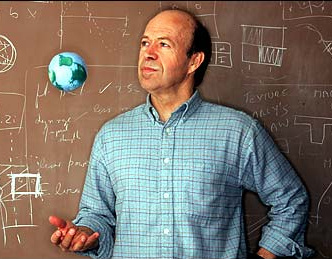
Hypothesis: People make the best decisions they can. When deciding, their short-term interests (the ones that have an immediate impact on them) usually outweigh their long-term interests.
I suspect that one's reasonably uncontroversial.
I wonder if you could say this, though: People make the best decisions they can. Under extreme circumstances people could be persuaded to think about their best interests in terms of things that will happen in their lifetime. They might possibly think about it terms of their children, and maybe maybe in terms of their grandchildren.
People who voluntarily think at the century or millenia level - like Jim Hansen or Professor Vaclav Smil - are extremely rare. What makes them different?

Tuesday, October 21, 2008
[Long Range Thinking] Types of LRT
So, what types of long-range thinking am I talking about? Here's the start of a brainstorm:
- Pressed upon you. You have a big life decision to make, and not much time to make it in. A job opportunity has come up that will require you to move cities. You've been dating for a few months and now you have to assess if it's going anywhere.
- Big picture, little person. There's stuff going on that's so big you can't solve it by yourself. And yet it's caused by the contributions of you and thousands or millions of people like you. What do you do? In fact, do you have any obligations to do anything?
- Known unknowns. You've heard about something (like climate change). You think it might require understanding, but something's stopping you or you're procrastinating.
- Unknown unknowns. Paraphrasing from Adam Kahane's 'Solving Tough Problems' again, the future's tough to predict because it can be influenced.
- Predictable. Known knowns. At the moment, you need money food and shelter to survive. How will you provide those for yourself and your family?
Monday, October 20, 2008
[Long Range Thinking] What inhibits LRT?
Hypothesis: your ability to think long-range gets better or worse depending on the situation.
In some areas of your life, you'll be great at it (finances or writing, for example), and in others you will suck (finances or writing, for example).
Pressure is probably a factor. Situations that have long-range implications but require an immediate response may lead to you not making the best decision. Pressure may inhibit long-range thinking.
... But I'm not entirely sure that this is what I mean when I talk about 'long-range'. Probably time to start unpacking that, and figuring out the different types of 'long-range thinking' there are.
Any suggestions?
Sunday, October 19, 2008
[Long Range Thinking] Why don't we recognise problems?
To paraphrase a synopsis of Stumbling onto Happiness, we're not very good at recognising what the future will be like.
To mash-up a famous quote, the problems of the future are already here. They're just not evenly distributed yet.
To mash-up a famous quote, the problems of the future are already here. They're just not evenly distributed yet.
Saturday, October 18, 2008
[Long Range Thinking] The simplest way to think about it
Understand there's a problem.
Understand what the problem is.
Understand how to solve the problem.
Understand what the problem is.
Understand how to solve the problem.
Friday, October 17, 2008
[Long Range Thinking] The Goal
The goal is to improve our ability to see problems that aren't problems yet (or that don't seem to be problems yet).
Thursday, October 16, 2008
[Long Range Thinking] Problems where the people involved disagree
From 'Solving Tough Problems', by Adam Kahane:

... problems are tough because they are complex, and there are three types of complexity: dynamic, generative, and social.
A problem has low social complexity if the people who are part of the problem have common assumptions, values, rationales, and objectives.
In a well-functioning team, for example, members look at things similarly, and so a boss or expert can easily propose a solution that everyone agrees with.

A problem has high social complexity if the people involved look at things very differently. South Africa in the early 1990s of had the perspectives of black versus white, left versus right, traditional versus modern - classic conditions for polarisation and stuckness.
Problems of high social complexity cannot be peacefully solved by authorities from on high; the people involved must participate in creating and implementing solutions.
Wednesday, October 15, 2008
[Long Range Thinking] Problems where the future is unfamiliar
From 'Solving Tough Problems', by Adam Kahane:

... problems are tough because they are complex, and there are three types of complexity: dynamic, generative, and social.
A problem has low generative complexity if its future is familiar and predictable.
In a traditional village, for example, the future simply replays the past, and so solutions and rules from the past will work in the future.

A problem has high generative complexity if its future is unfamiliar and unpredictable. South Africa in the early 1990s, for example, was moving away from the peculiar rigidities of apartheid and into a new, post-Cold War, rapidly globalising and digitising world.
Solutions to problems of high generative complexity cannot be calculated in advance, on paper, based on what has worked in the past, but have to be worked out as the situation unfolds.
Tuesday, October 14, 2008
[Long Range Thinking] Superstruct
Obviously I can't start posting about long-range thinking without mentioning Superstruct - a new online game that is going to last for another 5 weeks where you play yourself in the year 2019 dealing with a global threat of your choice. Available threats to choose from include food shortages and ubiquitous surveillance.
http://www.superstructgame.org/
Here's the tutorial:
I have some concerns about the game's presentation - in that it feels a little like unpaid market research - but totally applaud its open-source optimism.
Have a play round with the site. Watch the videos. Think about it.
Update: What I'm trying to imagine at the moment is a world in which people from all over the globe can contribute to forecasting about real-world issues. In my head, it has these qualities:
- a short-term commitment
- limited group size (120 or so?)
- produces results or next-actions-to-take or synthesises its findings into a readable / viewable form
[Long Range Thinking] Problems where cause and effect are far apart
From 'Solving Tough Problems', by Adam Kahane:
... problems are tough because they are complex, and there are three types of complexity: dynamic, generative, and social.
A problem has a low dynamic complexity if cause and effect are close together in space and time.
In a car engine, for example, a cause produce effects that are nearby, immediate, and obvious; and so, why an engine doesn't run can usually be understood and solved by testing and fixing one piece at a time.
By contrast, a problem has high dynamic complexity if cause and effect are far apart in space and time. For example, the economic decisions in New York affect the price of gold in Johannesburg, and apartheid-era educational policies affect present-day black employment prospects. Such problems - management theorist Russell Ackoff calls them " messes" - can only be understood systemically, taking account of the interrelationships among the pieces and the functioning of the system as a whole.
Monday, October 13, 2008
[Long Range Thinking] The two concepts, plus a third
You could sum up the two concepts in the previous post as:
a) the 'timeline' - the length of time a person is comfortable making plans for
b) the 'scope' - the limits of how complex a situation a person is comfortable making plans about.
A gambling addict can have a timeline of between 30 seconds and a couple of minutes. "Where's the next $2 coin for the pokies coming from?"
Many people are daunted by the scope of an issue like climate change. There are many variables involved, including a mass of scientific data to assess and reinterpret into terms intelligible to you, decisions to make about likely scenarios, and a global ecosystem to try and visualise.
And that reminds me, we need to add a third concept:
c) the 'responsibility' - how much action do you need to take, or should you take, or do you think everyone else is taking?
I'm not totally happy with the labels for these concepts yet, but they'll do for a start.
[Long Range Thinking] The Basics
When it comes to thinking about and planning for the future, my intuition tells me that most people are better at thinking about short-term consequences than longer-term ones. The graph could look something like this:
 The question is: what tools and techniques can we use or create to make it look more like this:
 Also, my intuition tells me that most people are better at thinking about things in their immediate vincinity than bigger ones.
Other things to consider:
Danyl once told me that we evolved on the savannahs to think about things that move slower than running speed, occur in the space of a day, and involve numbers less than seven.
In The Tipping Point, Malcolm Gladwell cites a study that found our social structures start to break down as soon as they're larger than 120 people.
Sunday, October 12, 2008
Useful links
Here's the stuff that made it through my cull of Google Reader this week:
Let's make some animated movies. I haven't played around with either of these sites yet, but the tutorials make it sound like it simply a matter of typing and clicking to create a short film. (h/t Pulp 2.0)
Xtranormal
Goanimate
Also over at Pulp 2.0, Bill Cunningham talks about having a 'pulp notes' file, a nice tool for storing fragments of dialogue and ideas for later use.
Let Michael Caine teach you about film-acting.
I link to Morgue linking to Matt and Jon's applications for the Evil League of Evil. Really good, sharp characteristions from both teams (and I suspect Morgue might also find himself in contention for his 15-second cameo as the Devil's Advocate.)
Vincent Baker has written a new fantasy RPG. At the moment it's free, because he wants to see if it's readable - is it communicating the play experience he wants?
Here's a hack to improve pretty anything in your life. I first read this on Seth Godin's blog, but Trent over at the Simple Dollar generalises it.
The Casual Kitchen compiles a whole bunch of links on low-cost cooking.
An overview of some of the thinking about climate change we'll be doing as a society and as individuals over the next few years. Check it out.
Some Paul Krugman and Americablog linkage to analysis of the financial crisis:
If you want to kick arse at folding t-shirts, then here's how: (a 22-second instructional video)
Have a great week
Wednesday, October 01, 2008
[The Limit] How to finish - Redefine your identity
I used to think of myself as "the man who is writing The Limit."
Now I'm thinking of myself as "the man who is finishing The Limit" (or "has finished it", on a good day).
I think that redefinition is important. Maybe part of the reason I've kept rewriting this for so long as because that is how I've defined myself.
***
I'm about a third of the way through the script now, and am very pleased with how this final, brutal cull is turning out. I reckon it is approaching being something very special, but the ending is gunna be very tricky.
Monday, September 22, 2008
West Wing - When Presidents collide
Because the West Wing and I are dating again after seeing other TV shows for the last five years, I link to this: a conversation between Barack Obama and President Jed Bartlett, as written by Aaron Sorkin.
Here.
What makes it strong, I think, is Bartlett's acknowledgement that he is a fictional character.
Here.
What makes it strong, I think, is Bartlett's acknowledgement that he is a fictional character.
Thursday, September 18, 2008
[The Limit] How to finish - Submit the script
Talking with Mum and Dad last night, it suddenly became clear to me: at some point I need to stop giving my script to readers.
My writing cycle has gone a little like this: finish the script, give it to some trusted readers to see if it makes sense, they comment, I adjust and finish the script, give it to some trusted readers to see if it makes sense, they comment, I adjust and ...
Wait. That is a cycle. I am using the process of 'giving the script to readers and getting insightful feedback from them' as a form of procrastination.
At some point I need to declare that I have confidence in my own writing, and that the work needs to be submitted to the actual audience for them to judge (in the case of the Limit, that actual audience is my list of producers).
The new process: figure out the standard I want to hit, determine if I've hit it, then make sure I have confidence in my own writing.
Submit. The. Script.
The next Batman movie
Given where The Dark Knight leaves Batman (and given who managed to make it through to the closing credits), I got my pick for one of the new characters in Film 3:
Huntress.
Huntress.
Subscribe to:
Posts (Atom)