Saturday, April 28, 2012

The Avengers: a non-spoilery consideration of its pacing issues

This isn't a spoiler; it's the premise: The Avengers are a bunch of super-heroes that team up to fight global threats. That means the structure of the film is pretty reasonable:

Act One: In which a Threat emerges and some characters are introduced
Act Two (First Half): In which we witness a series of decidedly awkward encounters between characters
Act Two (Second Half): In which some stuff happens, and we observe the aftermath of that stuff.
Act Three: In which some further stuff occurs.

Here's my review of the movie:
The Avengers (2012) ***** Holy. Shit. Pacing issues don't detract from splendid characterisations and great action scenes. The bar is raised.
It's in the first half of Act Two that the majority of those pacing issues occur. And I think it comes down to this: the role of an antagonist is to force characters to change. Now, I think the antagonist in The Avengers (who, now I think about it, could be considered to be Nick Fury ... but that's a discussion for another day) does force every single character to change - and in ways that really reinforce one of the film's main interests: the nature of teamwork.

However, when you're watching it, notice what the antagonist does and doesn't do during the first half of Act Two. Ask yourself what their goals are, and whether they achieve them. Ask yourself: what is the immediate threat that the Avengers are dealing with? That's certainly what I'll be doing during my second and third viewing of the film - and it's the answers to those questions that created the intermittent bursts of slow pacing for me.

... Also: it's one of the funniest blockbusters I've seen in years.

Thursday, April 26, 2012

I'm going to make a submission on the MMP review

Here's what I need to think about:
  • The 5 percent party vote threshold for a party to be eligible for allocation of list seats;
  • The one electorate seat threshold for a party to be eligible for allocation of list seats;
  • The effects of population change on the ratio of electorate seats to list seats;
  • The effect of a party’s candidates winning more seats than the party would be entitled;
  • The capacity of a person to be both a constituency candidate and a list candidate;
  • A party’s ability to determine the order of candidates on its party list and the inability of voters to rank list candidates in order of preference;
  • The capacity of a list MP to stand as a candidate in a by-election;


The deadline for making a submission is 31 May 2012.
Make a submission at http://www.mmpreview.org.nz/


I've collected a bunch of links that make for relevant reading. I'll work through these over the next week:

http://www.kiwiblog.co.nz/2011/07/defending_the_threshold.html
http://norightturn.blogspot.co.nz/2011/07/threshold-and-stability.html
http://www.kiwiblog.co.nz/2011/07/debating_the_threshold.html
http://jamesshaw.net.nz/2012/04/144/
http://publicaddress.net/legalbeagle/mmp-review-2-dual-candidacy/
http://norightturn.blogspot.co.nz/2012/04/missing-point-on-dual-candidacy.html
http://www.pundit.co.nz/content/plus-ca-change-and-all-that
http://publicaddress.net/legalbeagle/up-to-11/

Sunday, April 22, 2012

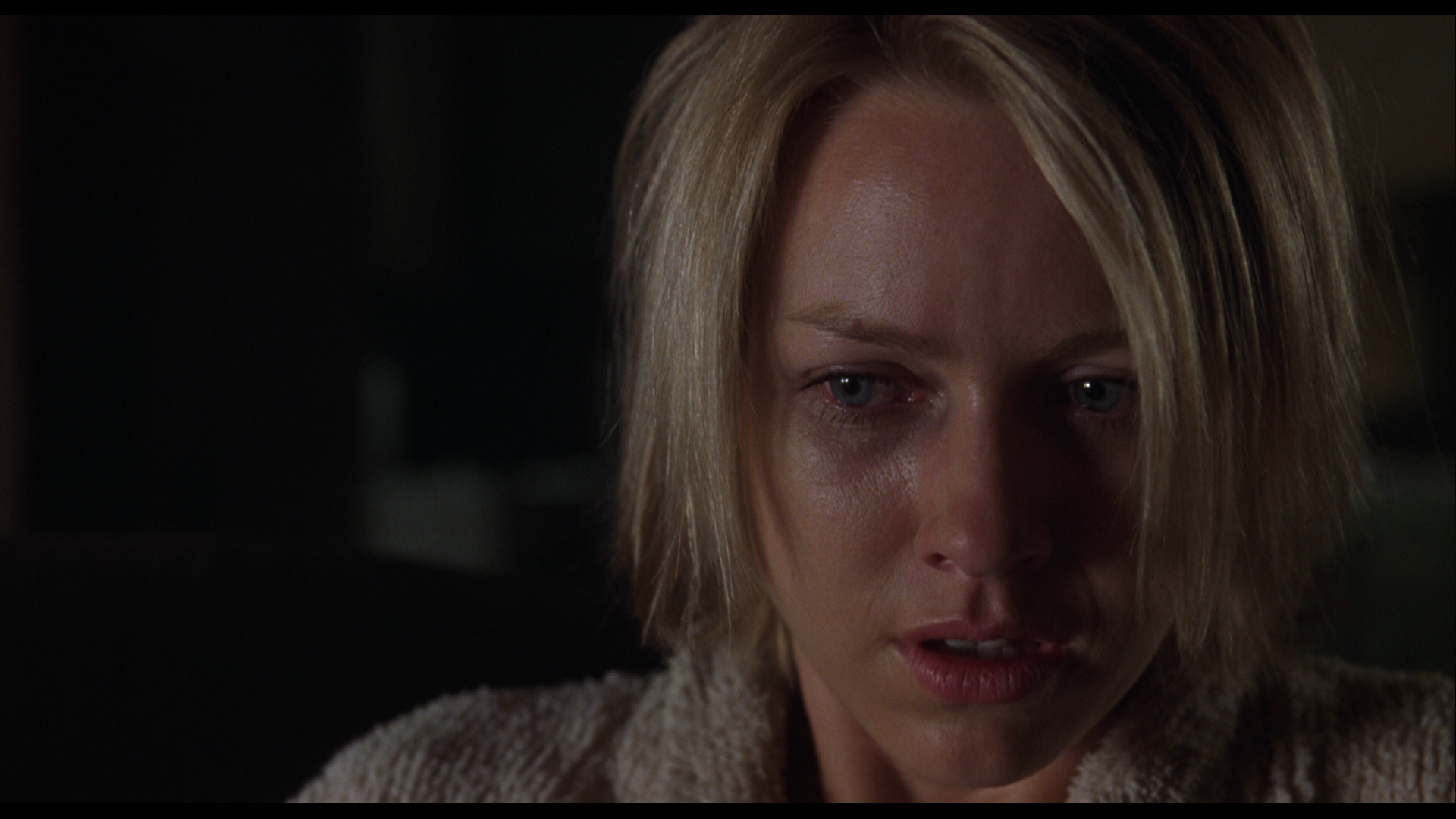
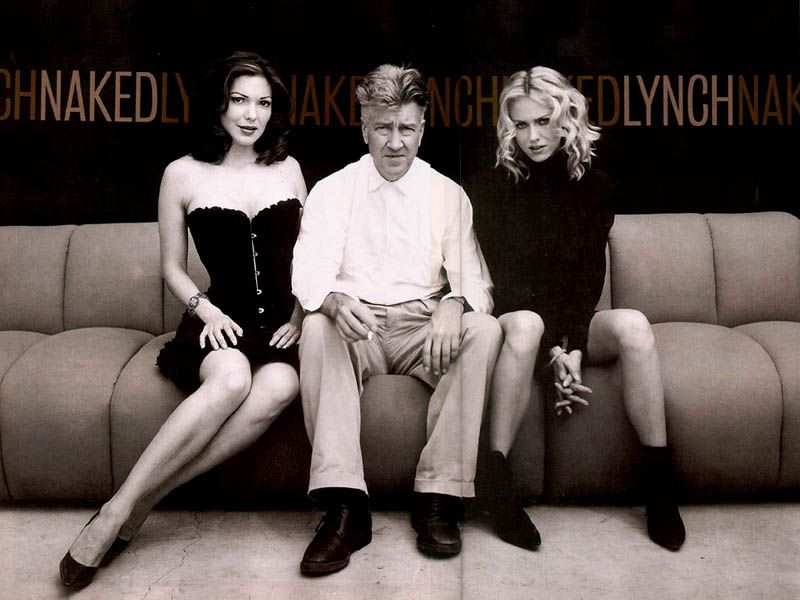
I’m rewatching Mulholland Drive (2001) ****

I really didn't like Mulholland Drive when I saw it at its premiere at the NZ Film Festival in 2001/2002, and this is the first time I’ve been back to David Lynch's film.

So I’m coming at this (very literal) review as someone who’s seen it before, has utterly vague memories of how the story plays out (there’s a blue box and a crazy director and a Lost Highway ‘reality’ twist in it), and who remembers the audience (and me) being profoundly alienated by the movie after it finished. What you're about to read are my real-time reactions, as I re-watch the film.

The movie starts with an upbeat highly stylized green-screen dance number. I have absolutely no memory of this. And no idea about how it thematically relates to the rest of the story. I do notice however, that for some reason it starts to become disturbing after about a minute – but I have no idea why (there are some discordant notes in the music, and possibly some subliminal images in the background, and – possibly – some disturbing facial expressions or body language from some of the dancers).

When we cut into the movie proper, I expect to see Naomi Watts (newly arrived to LA) leaving LAX in the middle of the day with an elderly couple: that’s my memory of how the movie starts.

Instead, we cut to the middle of the night and a violent noir based car crash and hunt for a missing person. Who is the beautiful woman I remember first appearing in the middle of the film. This stuff is perfectly executed: there’s a Lynchian off-centre quality to it, but it’s tight, makes me car about the as-yet-unnamed character, sets up a world surrounding her, and even has a lovely ending (showing how she plausibly sneaks into an empty house).

And from there we cut to something I also remembered happening in the middle of the film – so I completely throw out my assumptions that I have any idea what’s going to happen next – another perfectly executed sequence in which a man sitting in a diner describes a nightmare he had, and then we see him experience it in real life.

There are lots of nice techniques used in this ‘real nightmare’ sequence: camera angles gradually rising above the head of the man having the nightmare (to put him in a weak, vulnerable position); a threatening hum growing louder in the score; dialogue seeming to cut out as the panic in the scene increases (very reminiscent of the arrival of David Bowie in Fire Walk with Me).

At the moment, none of these three things seem to have anything to do with each other. My working hypothesis, then, is that Mulholland Drive is a movie of very cool, slightly-connected short films.

And now, 18 minutes into the film, Naomi Watts (who plays what I remember to be the main character) shows up.

Over the course of the next 50 minutes, the movie continues to present what appears to be great self-contained short films (a really funny casting meeting between a film director and two Mafioso; a series of pratfalls involving a hitman with really bad luck) – but we keep cutting back to Naomi Watts (Betsie), who is now interacting with the beautiful car-crash woman (Rita). The tone of their scenes and plot details that emerge establish Mulholland Drive fairly firmly as a noir (a bag full of thousands of dollars; a beautiful woman with amnesia; the sense that powerful forces are hunting for them).

However, there’s another tone that’s being layered in as well: horror. It comes from the scenes that surround the Betsie-Rita plot; from music cues; from events that happen to Betsie (a possibly psychic woman delivers a dire warning). In the cleverest use of subtext to deliver horror, Betsie and Rita have a conversation in the same diner where the man from the start of the movie relayed his nightmare. Without using any overt camera angles or musical cues, Lynch is effortlessly able to create tension – and the dread that the mysterious figure from the man’s nightmare will suddenly appear here.

There’s also the subtlest (and, then, increasingly slightly-less-subtle) hints of romance flickering to life between Betsie and Rita. I remember this becomes more important as the film goes on.

All the while, though, the film is knitting together the ‘short films’ into an over-arching plot: the unlucky hitman is (a) possibly working for the two Mafioso and (b) searching for Rita. The film director (Adam) has been forced to cast a woman in his film – a woman who looks a lot like Betsie. If he does cast Betsie, however, that will be the wrong woman – and very bad things will happen.

It’s the anticipation of that that’s keeping me interested in the film at the moment. The rest of it is good: coherent, funny, idiosyncratic and sexy – but I want to see how the Adam and Betsie sides of the plot collide.

And all the while, I’m remembering that at some point in the future there’s going to be a scene in a nightclub, and that the consequences of that scene will totally shift the tone and storyline of the film. I’m fascinated to know when that’ll happen, how much story will be left afterward (an epilogue? an entire act?), and whether I’ll be invested in that ‘reality twist’. I can certainly remember feeling betrayed or alienated by it last time I saw it.

Anyway, back in the moment: the film spends the next 20 minutes directly addressing all of the questions I’m interested in, and in a really fascinating and oblique way. There’s a audition, yes – but it’s both a fake-out (in that it’s revealed to be a different movie than Adam’s) and filled with really interesting subtext: about exploitation in Hollywood, about the different ways performance can be used to affect the emotional presentation of a script, and it also demonstrates that Betty actually has talent – something the film to date has been a little shy about dealing with, preferring to show her as a naïve country girl who might be a big shot in her hometown but who is out of her depth in LA.

(Speaking of which, Mulholland Drive also shows us a lot of different economic and geographic facets of LA. It has a real sense of place and feels complex.)


The Adam and Betty meeting also doesn’t go how I expected (instead of a sitcom misunderstanding there’s a complete capitulation), but it gives us something better: an attraction or connection between Adam and Betty that I want to see more of.

And from there, the movie hits its strongest streak of sustained narrative: following Betty and Rita through an investigation, a break-in, a discovery, sex and love, returned memories, a surreal performance, a disappearance, an amazing performance of Roy Orbison’s Crying (which really feels like we’re saying goodbye to our characters and the status quo – seriously, this is a transcendent moment in the film) and finally the truth about the blue box.

It’s during this streak that a bunch of overt optical effects start getting used: multiple images of Betty and Rita layered over each other while they panic; some odd lens flare en route to the performance; an almost Evil Dead camera push-in outside the mysterious Silencio club.

And then the twist.

I actually wish I was struggling to interpret what was going on: is this the afterlife? A flashback? Did Betty never really exist at all? Was the first 110 minutes of the film just a dream?

But at the moment, eight minutes in to the revelation of what’s on the other side of the blue box, the interpretation seems pretty obvious: what we’ve just watch is an idealized version of Diane’s love and life, and it’s either a dream or the final moments before she shoots herself.

However, rather than feeling betrayed by that (as I now remember I did during my first viewing), I can make the argument that the structure of the film so far has prepared me for this. I’ve spent a lot of time feeling like I was watching a series of short films. This section is also like a short film, but with a massive switch in tone: from horror-noir with a dash of romance to a piece about depression with a dash of the craziness and jealousy of a failed relationship.

(And to be fair, the film does lay in a lot of hints throughout the first hour and a half: among others, Betty describes the apartment she’s staying in as a “dream place”; when she arrives in LA – and there’s a lot of cute dialogue like that.)
  
The biggest problem with this “It was all a dream” structure is that the storylines I was invested in and wanted to see closure in won’t happen. I’ll never find out how Adam resolves his problems with the Mafia (although I can assume that everything ended happily after he chose ‘the right girl’ for his film). The unlucky hitman may not have a place in this new reality, so he’s a tangent. The man with the nightmare either doesn’t relate to the film or becomes a massive commentary and early hint about the nature of the film. This is a variant of what I call the ‘John Locke’ problem (from Lost): we think we’re following one character around, and then it turns out we’re actually following another.

Now, as the film continues, and shows me the close-to-the-starting shot of a car driving driving up a hill at night. What is Mulholland Drive trying to do now? Loop us back to the start of the film but with Betty/Diane in the car instead of Rita/Camilla?

No. It’s giving us a magical experience of Diane and Rita/Camilla apparently in love and going to a party hosted by Adam, … and then taking it all away from us in a wave of jealousy, loss, insecurity, not fitting in, barely repressed anger.

And then what the fuck?

The film cuts away from the party – an incredible hard-cut on Diane’s utter anger and the first frame of an emotional clusterfuck – into … another reality? That’s my first thought: that now we’re in the ‘real world’, one where Betty/Diane has become (or was all along) a hooker we saw incidentally in a previous scene, hanging out with the hitman.

And this hard-cut has taken us into the diner where the nightmare took place again – instantly raising a sensation of impending dread …

… this is, actually, pretty great stuff …

But it’s not another reality – it’s a flash-forward, to Diane putting a hit on Camilla.

Which gives me everything I need to (roughly) figure out the film’s true structure:
  • When we first enter/wake into this ugly new reality (after opening the blue box), that’s at the end of the timeline
  • Dianne and Camilla are friends
  • Camilla leaves Dianne
  • Dianne discovers Camilla is dating Adam, and that those two are getting married
  • Dianne orders the hit
  • Dianne, depressed (this is where we first switch into her reality)
  • The hit happens (perhaps it’s the failed murder attempt at the beginning?)
  • Dianne kills herself after being haunted.

I was going to rewatch the last 20 minutes of the film, to confirm this, but while I was putting the finishing touches on this post, Film Critic Hulk did it for me, in a great piece from someone who’s watching the film 11 times:


This is a insightful critique that confirms a lot of what I thought, but it's also given me a lot more to think about (including the role of the Cowboy). To my surprise, I now think I'll be rewatching this film again.


Saturday, April 21, 2012

What if we treated political parties like short-term projects (with a clear end-point)?

The default assumption is that a political party is a permanent part of the political landscape until it:

  • bleeds away enough voters to not exist anymore
  • collapses due to internal dysfunction
  • can't survive the de-election or loss of its leader

In an MMP environment, do we have to have permanent political parties? Especially if the results of the MMP review (which I'll contribute to soon) mean that the threshold for election is lowered from 5% of the vote to 2-3%.

Under those conditions, I think you could create a party that had a single clear objective (Write off all student loans; Implement an emissions trading scheme; whatever). A single objective allows you to promote your ideas clearly; it gives you something specific to achieve if you're negotiating to form a coalition government; it gives voters a clear sense of your decision-making priorities and what you're likely to do in government.(*)

(*) Well, it does as long as your project-based party clearly outlines 
what its principles are by which they will make decisions.

A project-based party would then exist in one of two states:

  • Dynamic: it's promoting its ideas, getting into government, implementing its ideas
  • Static: it's achieved it's ideas and is now sticking around to either consolidate its ideas into the political landscape or because it likes the idea of staying in power for the sake of it.

There are two advantages to a project-based party:

  • It's clear what the party stands for
  • It can advocate for ideas that are more extreme (shifting the Overton window).

Sunday, April 01, 2012

Rewatching West Wing Season 1

"One victory in a year stinks in the life of an administration."
                                                                Toby Ziegler

I used to think of The West Wing as a show about political geniuses who were inspiring in the way they overcame all obstacles to advance a progressive agenda.

One thing that my rewatch of the show is hammering home is how not true that is. Really, The West Wing is about a bunch of very smart characters who are in a little bit over their heads. They understand most of the rules of the game, but they don't have a plan. Instead they get distracted by the details, the everyday distractions, and the personal scandals they (often inadvertantly) create.

By the time episode 19 ('Let Bartlet be Bartlet'; the source of the Toby Ziegler quote, above) rolls around, we've seen one genuine achievement (getting a nominee onto the Supreme Court), and two or three minor legislative achievements (including a weak gun-control bill). The team is disenchanted with politics and their ability to make a difference and stay true to their values: a disillusionment that's been growing over the course of the series to date.

But at this point the series turns everything around and fires up the team. It's a really stirring  moment, and I'm looking forward to seeing what comes next - mostly because I know it doesn't last: Season 5 (after the re-election) is defined by a sense of 'drift' and aimlessness in the administration; Leo's return to the staff later on is marked by him setting up a chart identifying what they want to achieve in the time the team has remaining in the White House (a focus that is abandoned as the show continues). Even in the turnaround that's shown in this episode, there's no sense of objectives being set - as a result, the show seems to exist to illustrate various aspects of Washington DC political life, rather than show how a team advances their agenda.

However, these last episodes of Season 1 and opening episodes of Season 2 are great, as they remind us why these characters are an impressive team we want to root for.

Saturday, February 04, 2012

Could someone explain this weird piece of graphic design?

Found hanging in our bathroom at work over Christmas, with no clue as to who produced it or put it there, was this poster:


A list of holiday tips, using icons in the place of words. For instance, Tip 1 (in the top left) is Don't Drink and Drive, using pictures of a bottle and a car to represent 'Drink' and 'Drive'.

So, internet. What does this mean?

Sunday, January 15, 2012

What I'd like to play at Kapcon next weekend

Next weekend I'll be teaching and playtesting games at Kapcon, Wellington's best two days of gaming. Because of that, I won't have a chance to play many of the awesome games that are on offer. So I thought I'd look through the timetable and imagine an alternate timeline where I'm not busy - I'm just playing.

Here are the games I think'll be great:

Session 1
These Beasts Have Maiden Faces: Ivan runs Agon, the game of Greek warriors and demi-gods competing for glory.
The Mountain Witch: Russell (who I don't think I've met) runs a game of Ronin,  travelling together to the castle of the Mountain Witch, to claim the bounty in his head.


Session 2
White Rabbit: Karen is one of the most interesting game designers in New Zealand, and the word from the playtest reports of White Rabbit are very good.


Session 3
A Romantic Mystery (Hot Guys Making Out): Frank is running a session of Ben Lehman's HGMO, which by all accounts I've read is a gem of a game.


Session 4:
Freemarket: Russell again, running Luke and Jared's spectacular-sounding game of transhumans creating cool stuff in a post-scarcity reputation-based economy.


Session 5:
Love of Money: Dale has a great rep for running games.
CASE LAMBENT WITCH: IdiotSavant running a Charles Stross inspired Cthulhu game sounds like a blast to me.


Session 6:
I'd probably rest or head into the Games on Demand room where Steve from the prime timeline could run one of the following games for me


  • Left Coast: my game-in-playtest about science fiction authors in 1970s California struggling with madness, money troubles, and an alien invasion slowly encroaching into their lives.
  • Spione: In cold-war Berlin, truth is a weapon ... and the people you trust are the ones most likely to betray you.
  • Microscope: a game where you create an epic history in 3 hours
  • Umlaut: Heavy Metal! The very name drips with power and hairspray. Long of hair and tight of pants, play warriors on the stage of history, wielding your axes and mikes as your metal bands compete for fame and fortune
  • Monsterhearts: a game of supernatural romance, where you play teenage monsters toying with each other
  • My Life with Master: I'll be playtesting my scenario, My Life with the Snakes of Dr Oserlinde (which I'll be publishing later this year)

Sunday, January 08, 2012

Now downloading Louis CK's new special

It feels great to be paying an artist directly for their work. And the way he's set up his site for you to buy it is great. It's got an authentic "I am a human" tone; its privacy policy is pre-set to 'I won't spam you', and it gives you four downloads of the special.

'Hilarious' was really good, and I'm looking forward to checking this new one out.

Sunday, December 25, 2011

My project for the holidays: learn to edit by editing Monster of the Week

Mike's hired me to edit his game, Monster of the Week. It's exciting (because I've had a lot of fun editing and giving unsolicited feedback on games before).


It's also a completely new work process for me. I've peer reviewed and edited 10 page briefings and given overviews of novels before. However, it feels a little different to actually be working 'on the clock'. I'm being paid for about 10-12 hours of editing time, and I want to give Mike value for money.

At the moment, I think the best approach is to treat this in the same way I treated all the feedback I've received for Left Coast: I've read through the rules for Monster of the Week, making notes as I go. Now I'm going to create a mind-map of those notes and choose which of the issues I've identified are the most fundamental ones - the ones that'll make the biggest differences to the book. That's where I'll focus my efforts to start with - not on a line-by-line proof-read, but on a 'how could we present this information so that it feels like it's in the right place'.

I think my feedback (at this level) is going to feel more like the starting point for a conversation than a list of instructions to follow.

Collapse! A game about transitioning through peak oil

Writing games to help us imagine what life may be like after a massive social change is a design space I'm interested in exploring. Dave Pollard is designing a boardgame at the moment that looks interesting:


via Energy Bulletin - by kristinsponsler on 12/22/11

Some of you are aware that I have been working on a cooperative board game called Collapse! designed to help people learn and practice grassroots community-building and preparing locally for the various crises that may precede civilization's collapse. I've finally got a first outline draft of the game, and decided to share it with the world before I go any further. Here are the rules and some images of the game equipment that I have developed thus far, along with a list of what I still have to do to complete the game's development.


You can read more and give feedback to Dave directly on his blog: here.

Thursday, December 15, 2011

2011 has been a good year for gaming for me. What's it been like for you?

Reflecting on what I've achieved in 2011 in game design and playing - here's what's been going on for me:

  • Reading Steven Pressfield's The War of Art and feeding its insights about overcoming creative blocks into every area of my creative life, including gaming.
  • Participating in the second Festival of Flawless Victory, re-kickstarting my design of Left Coast.
  • Overcoming my fears of playtesting and getting feedback on my own games.
  • Working with Paul Czege, Jonathan Walton, Luke Walker, and Alasdair Sinclair on a convention scenario for My Life with Master.
  • Playing and giving feedback on McDaldno's Monsterhearts (the game of twisted supernatural romance).
  • Running and getting my first professional RPG editing gig on Mike Sands' Monster of the Week (the game of kick-ass monster hunting).
  • Finishing an epic Apocalypse World game and feeling like I'd learn three years worth of lessons about playing a protagonist.
  • Becoming better friends with the people I play with.
  • Being part of informally developing a supportive group of playtesters and game designers in Wellington, New Zealand.
  • Working hard on a honed, simplified, and signficantly revised version of Left Coast - to publish early next year.
What about you?

Sunday, December 11, 2011

What would happen if there was a by-election in Epsom and National won?

Let's say, for some reason, John Banks was unable to serve a full term as MP for Epsom. A by-election is held and a National candidate, rather than an ACT candidate wins.

According to my calculations at http://www.elections.org.nz/calculator/index.html (and using these results) this creates a Parliament of 121 seats, and the following blocs of parties:

National + United = 60
Green + Labour + Mana = 50
Maori = 3
New Zealand First = 8

That immediately creates some exciting options for coalitions and re-negotiation of confidence and supply agreements.

It would also take rhetorically take off the table everything that National and ACT agreed to in their confidence and supply agreement.

Is that right? Am I missing anything in my workings-out?

EDITED TO ADD: Graeme Edgeler posts about an even more intricate version of this type of scenario, here. Extrapolating from his post, it seems that ACT would not disappear from Parliament after this result:
[A] policy decision was taken that finality was more important than proportionality, and the possibility that an election petition (or by-election) could change multiple seats (e.g. by removing a party from Parliament because it no longer passed the one seat threshold) months after an election was thought to be the greater evil.

Friday, December 09, 2011

Should you tell the people playtesting your game what you're looking for (before you start playing)?


@drbunnyhops said (in my previous post) she was thinking about having some questions for people to consider while they play - but she wondered if that'd be too distracting.

I don't have enough experience with this to know for sure. The act of playtesting is almost always a sign that you're not sure how the game will play or if it works yet. It's pretty useful to admit that to everyone who's playing, right up front. Given that, it probably can't hurt to focus your playtesters' minds - perhaps by telling them about a couple of areas you’re interested in or that you think are weak

But there's another school of thought, which Ben Lehman articulated in his post: 'Playtesting: Stop' 

Decide what you need playtested. Think small. Start with the absolute bare minimum rules your game needs to achieve its goals. Identify the top 1-3 things you need tested. Ignore everything else. Create scenarios that will allow playtesters to focus and test these top priorities.  
Design your scenarios so what you’re testing isn’t obvious to the playtesters. Your scenario might be, “create a character” but what you’re specifically testing is “how long does it take”, “is stat allocation frustrating”, “does character creation give the GM enough information to design an adventure.” Don’t tell your playtesters what you are actually playtesting.  
Take caution that your scenario doesn’t influence your playtesters actions. Don’t ask leading questions or make leading statements. If you want to test “how long does this take”, in your scenario, don’t say “character creation is super fast”. Don’t influence!

Monday, December 05, 2011

Recording my latest Left Coast playtest could be the best game-writing decision I ever made

Mike, Simon and I played Left Coast last Sunday, and I decided to record it all on my cellphone. I'd taken a crack at simplifying the rules after the Scottish playtest (conducted by Gregor, Malcolm and Per) identified that the game had a lot of over-complicated and potentially unfun or game-breaking procedures in it.

Last Sunday's game was fun, and we all pointed out even more places where simplification was needed. In Simon's words, it's got an inspired setting and a functional core, but its overly-fussy mechanics are working against the laid-back vibe I want the game to help create. So: edits! However, reviewing the audio file has revealed a whole bunch of stuff that we didn't articulate and that I'm working on now. I think this next draft of the game is going to be far cleaner and simpler, with two radical changes that I'm looking forward to testing out.

Anyway, for my own future reference, here's what I'm doing with the audio recording:


  • listen to the whole thing, logging the conversation by recording the timecode where interesting comments occur 
  • identify moments that (in hindsight) are unacknowledged examples of procedural clunkiness and clunky procedures
  • review this log and create a mind-map of the comments that seem to obviously group together (into categories like 'Simple Edits', 'Playtester Questions', 'Radical Ideas')
  • listen to the logged points that don't seem obvious, and put them on the mind-map too
  • use the recording to adjust the rules to reflect how I explain them in person
  • identify examples of play

Monday, November 28, 2011

Is Breaking Bad about putting more and more pressure on ordinary people?

Because if that's it's thing - having to make decisions under lots of pressure, and those decisions leading to terrible consequences and even more terrible decisions that need to be made - then I can see how (a) it becomes a great but tough watch, like Mike said, and (b) how, after a few seasons, it might be difficult to find a plausible, satisfying way to wrap up the show. However, it's great to see the writers keep re-focusing the responsibility back onto Walt, any time it looks like he's going to run away from making a choice.

And the show has won a lot of credit from me by making Walt's wife (Skylar) a character who  takes smart, completely-believable actions. It gives me confidence that eventually the whole cast are going to be well-motivated and interesting.

About Breaking Bad's visual style

I'd describe it as sympathetic but impersonal. The camera (and the script) treats Walt, his family, and Captain Cook as people it likes, but there's also with a degree of distance: for instance, when Walt's lying unconscious on the carwash floor, or the Captain's in the car with his former cooking-partner, Emilio. I got the impression that anyone could die at any point, and the camera would just be happy to watch it happen and then keep recording what happens next.

A good tone for this sort of low-crime show to hit.

Sunday, November 27, 2011

OK, Breaking Bad is off to a good start.

It's done a fantastic job of creating characters who are either sympathetic or memorable assholes, and it's doing the 'reasonably smart people trying to figure out the logistics of committing crime', which is totally my favourite genre. But most impressive of all, the pilot episode did an outstanding job of conveying Walt White's complex thought processes and making the decisions he makes believable entirely via subtext and performance - no need to resort to voice-overs, clumsy commentary by other characters, or on-the-nose speeches.

Looking forward to Episode 2.

Monday, October 10, 2011

I'm working on a plan to deal with all the feedback on my Philip K. Dick game (Left Coast)

One of the things I only recently realised about creative projects is how much crap builds up around me while I'm writing them: it's like I excrete pages of notes and scraps of paper filled with random ideas and shower-inspired insights.

My first great leap forward in writing organisation was to put all of these into a folder marked "Next Draft". My second great leap forward was to actually look at them.

It's that process of looking at the notes that helps me make decisions about what's in and what's out: what insights have stuck and still ring true, and which insights have helped me move on to a deeper understanding of the project but are no longer relevant.

As I mentioned in my previous post (How would you process feedback on something you've written), I'm working out how to apply all the feedback I've received for Left Coast, my game about science fiction authors. I put all of these notes onto a one-page mind-map, so that I can get a sense of how much there is to do, and what themes have emerged from the feedback. The mind-maps for Left Coast is filled with people's observations from playing and reading the game, and it's also got a section called 'Big Questions' - which is about challenging myself to go deeper into the feedback and test my assumptions.

The other thing I'm doing (and have been doing for a while now, to great effect) is I write a 'Future Vision' of what I want this stage of the project to end up like. This gives me a concrete end-point, which in turn forces me to stop and publish it rather than constantly rework it. The Future Vision for Left Coast looks like this:

I’ve published a massively simplified version of Left Coast that contains radically culled procedures for play and which clearly explains who does what (and when). This version is designed and written to inspire people to play, so it contains plenty of example NPCs, story seeds (and anything else I think is necessary for this ‘half-done’ draft). 
The game is laid out cleanly (with my Times New Roman layout). It’s divided into five sections: i) brief intro to game and some playtesting advice, ii) an ‘inspirational’ essay, iii) how to create PCs and setting, iv) how to play, and v) an afterword.
What I do this is write out where I am right now, and (vitally) I keep adjusting this 'Present Reality' every time I make changes. The Present reality for Left Coast, as at 10 October 2011, looks like this:
I’ve decided to write this draft for ‘my’ group initially, rather than for wider publication: my suspicion is I’ll get more done this way. 
Having added all the feedback to my mind-map, I now need to think about what needs to be done and prioritise it. Now that I’ve saved the rules summary onto my desktop, I suspect the simplest way forward is to run through my Rules Summary two or three times, adjusting it based on the mind-map of feedback, my marked up rules summary, and my marked up rules - and then review where I am. 
So, I need to start that process by putting the mind-map right in front of me and tackling point after point. 
… Then I can comb through the expanded rules for material for the ‘essay’ (which may be unnecessary for this ‘me’ draft). 
I should probably organize a one-afternoon long playtest with Simon, hopefully Mike, and Sophie for November. 
I need to ID all the ‘vibey’ stuff in the main rules, strip it out of the procedures and put it into an ‘essay’ about how you play Left Coast and why you’d want to play it. I’ll put the rules summary stuff after that. I also think that having four sample characters, each with four or five hooky options for NPCs in their ratings will be a good thing to do. 
It needs a table of contents, and I need to look at the Guide to Writing Free RPGs for some advice.
(This process of having a Future Vision and adjusting your Present Reality comes from a fascinating book called How to Make Your Dreams Come True by Mark Foster. It's a free download, and worth a read.)

Tuesday, October 04, 2011

How would you process feedback on something you've written?

I'm writing a game called Left Coast, where you play science-fiction authors teetering on the brink of sanity. In July, I pulled together my notes and created a draft that I thought would be fine for others to play. Since then, I've received feedback from:

- Wayne, who's read it
- Simon, who's read it
- various commentators on Story Games
- Mike, who I playtested it with
- various commentators on the Forge
- Malcolm, Gregor and Per, who have playtested it without me

That's a lot of feedback (which has all been stored in my 'Left Coast - Next Draft' folder). Now I have to pull it all together and make some decisions about what it all means.

First, I'm reading through it all and looking for any feedback that almost everyone seems to be giving me. Usually I get overwhelmed by the thought of doing that, so I'm converting the feedback into a mind-map, so I can group similar comments and observations together.

It's already obvious, just from working through feedback from the first five people, that the game is still too complicated: I've layered on so many procedures, and 'mandatory elements' and 'things to keep in mind', that people are having to spend all their time trying to figure out how to make the game work (rather than finding out whether the game actually does work).

So I have two next steps: simplify as much of the procedures as I can, while digging deeper to see if there's anything fundamental that's lying underneath the feedback: stuff that's non-obvious but is actually the 'real' work that needs to be done.


What about you? How do you process all the information when you get lots of feedback about one of your projects?