.gif)
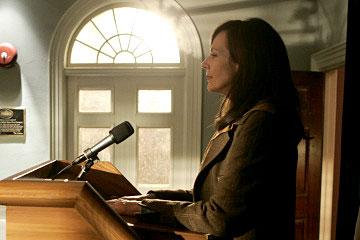
* The stereotypical 'speaker reciting from the bullet-pointed list on the slide right in front of them'.
This is one of the starting points for the book I'm reading; Presentation Zen is about making better presentations - ones that help you communicate more effectively (or at least not bore your audience). This is something I've been interested in for a while; it ties into one of the potential new things I'm going to do.
Designing a presentation is a creative act
A presentation involves transforming facts or opinions into a story. I haven't read very much of Presentation Zen yet, but I suspect this is going to be one of the fundamental principles of its approach.
And now I think about it, that transformation can be applied to a lot of things: advertising, editorialising, propaganda. Reflecting on it, I realise that makes me a little uneasy: communicating in order to share your insights is something I'm fine with; communicating in order to persuade the audience brings up memories of feeling manipulated. I guess presentations can have an ethical dimension to them.
The author, Garr Reynolds, suggests that the first thing to do when given the opportunity to create a presentation is to slow down. Take the opportunity to think about what is important and what isn't. This leads into ideas of:
- Restraint (in preparation)
- Simplicity (of design)
- Naturalness (of presentation)